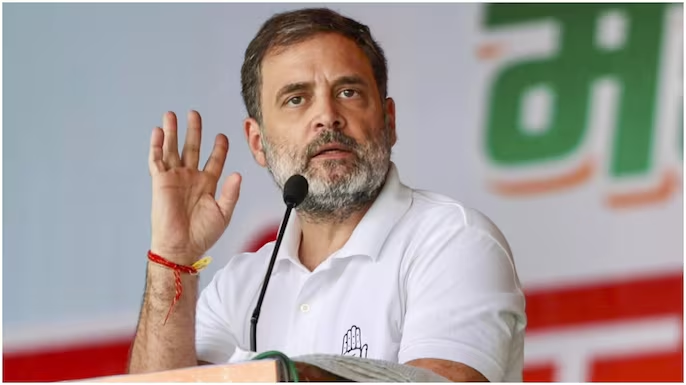
In a significant political development ahead of the Kerala Assembly elections, Rahul Gandhi is set to hit the campaign trail with full force, beginning with two high-profile roadshows in Pathanamthitta district. The move is being seen as a calculated effort by the Congress-led United Democratic Front (UDF) to regain political momentum and reconnect with voters across the state.
As election activity intensifies, Gandhi’s presence is expected to energise party workers, draw large crowds, and reinforce the UDF’s position as a strong challenger to the ruling Left Democratic Front (LDF). With Kerala known for its politically aware electorate and closely fought contests, such high-visibility campaigns could play a decisive role in shaping voter perception.
Congress Steps Up Campaign Strategy In Kerala
The decision by Rahul Gandhi to lead roadshows in Pathanamthitta reflects a broader strategy by the Congress to strengthen its grassroots connect in Kerala. The district holds both symbolic and electoral importance, often witnessing tight contests and diverse voting patterns.
The UDF is aiming to capitalise on Gandhi’s popularity and his ability to connect with voters across demographics. His campaign is expected to focus on local issues such as unemployment, rising cost of living, and governance concerns, while also addressing broader national themes like democracy and institutional integrity.
By combining local and national narratives, the Congress hopes to create a compelling campaign message that resonates with voters.
Pathanamthitta: A Politically Crucial District
Pathanamthitta has long been considered a politically sensitive district in Kerala. It has witnessed intense electoral battles in the past and continues to play a key role in determining the overall outcome of elections in the state.
The district’s demographic diversity, including urban and rural populations, makes it a microcosm of Kerala’s broader political landscape. Issues such as development, employment, and infrastructure often dominate voter concerns here.
Rahul Gandhi’s roadshows are expected to address these issues directly, allowing the Congress to position itself as a party that understands and prioritises local needs.
UDF’s Bid To Regain Political Ground
The United Democratic Front has been working to rebuild its support base after facing setbacks in previous elections. Gandhi’s campaign is part of a larger effort to unify party workers and mobilise voters across constituencies.
The alliance is focusing on presenting a clear vision for Kerala’s future, emphasising economic growth, job creation, and improved governance. By highlighting perceived shortcomings of the current government, the UDF aims to convince voters that a change in leadership is necessary.
Gandhi’s roadshows are expected to serve as a platform for communicating this vision effectively.
Leadership Factor In Election Campaign
Leadership plays a crucial role in shaping election outcomes, and Rahul Gandhi’s involvement underscores the importance of national figures in regional politics.
As Leader of the Opposition in the Lok Sabha, Gandhi brings both visibility and credibility to the campaign. His ability to engage with voters and articulate key issues is seen as a major asset for the Congress.
Through direct interaction during roadshows, Gandhi is expected to build a personal connection with voters, which can significantly influence electoral outcomes.
Roadshows As A Powerful Political Tool
Roadshows remain one of the most effective methods of political outreach in India. They allow leaders to connect directly with large audiences, creating a sense of immediacy and engagement.
In Pathanamthitta, Gandhi’s roadshows are expected to attract significant public participation, with supporters lining the streets to catch a glimpse of the leader. Such events not only boost morale among party workers but also generate media attention, amplifying the campaign’s reach.
The visual impact of large crowds and enthusiastic participation often plays a key role in shaping public perception.
Key Issues Likely To Dominate Campaign
The Kerala election campaign is expected to revolve around several key issues, including:
Employment and job creation
Economic development and investment
Governance and transparency
Social welfare and public services
Rahul Gandhi is likely to address these issues during his roadshows, presenting the UDF’s policies and proposals as solutions to the challenges faced by the state.
By focusing on both immediate concerns and long-term development goals, the Congress aims to appeal to a wide spectrum of voters.
Political Contest Between UDF And LDF
Kerala’s political landscape is characterised by a strong contest between the Congress-led UDF and the Left Democratic Front. Power has alternated between these alliances over the years, making elections highly competitive.
The upcoming elections are expected to be no different, with both sides intensifying their campaigns and focusing on key constituencies.
For the UDF, the challenge lies in overcoming anti-incumbency factors and presenting a cohesive alternative. Gandhi’s campaign is aimed at addressing these challenges and strengthening the alliance’s position.
Grassroots Mobilisation And Cadre Energy
One of the key objectives of Gandhi’s roadshows is to energise party workers at the grassroots level. A motivated cadre is essential for effective campaigning, particularly in a state like Kerala where voter engagement is high.
The presence of a national leader often boosts morale among workers, encouraging them to intensify their efforts. This, in turn, can lead to better voter outreach and increased support for the party.
Youth And First-Time Voters
The Congress is also focusing on attracting young voters, who play a crucial role in determining election outcomes. Rahul Gandhi’s appeal among youth is expected to be a significant factor in the campaign.
Issues such as employment, education, and opportunities for growth are likely to be highlighted, with the aim of connecting with first-time voters and addressing their aspirations.
Media And Public Perception
High-profile campaigns like Gandhi’s roadshows often receive extensive media coverage, which can influence public perception. Positive coverage can amplify the campaign’s message, while large turnouts can create a perception of growing support.
The Congress is likely to leverage both traditional and digital media to maximise the impact of these events.
Challenges Ahead For Congress
Despite the momentum generated by Gandhi’s campaign, the Congress faces several challenges, including strong competition from the ruling alliance and the need to address internal organisational issues.
The party will need to maintain consistency in its messaging and ensure effective coordination among its leaders and workers.
The roadshows led by Rahul Gandhi in Pathanamthitta mark a crucial phase in the Kerala Assembly election campaign. As the United Democratic Front seeks to regain momentum, these events are expected to play a significant role in shaping voter sentiment and energising party workers.
With elections approaching, the intensity of campaigning is set to increase, and the outcome will depend on how effectively parties connect with voters and address their concerns.