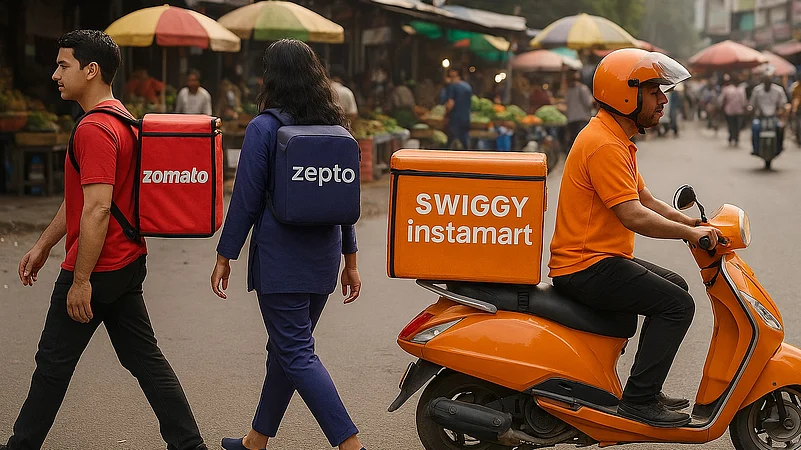
Swiggy and Zepto, two of India’s leading quick commerce platforms, have quietly removed the 10-minute delivery claim from their marketing, logos, and advertisements, reflecting a shift in how rapid delivery services present themselves to consumers amid operational realities and evolving competitive dynamics in the on-demand delivery sector. The change signals a broader industry trend away from ultra-fast delivery guarantees that placed intense pressure on logistics networks and raised questions about feasibility, reliability, and sustainability, marking a new phase in quick commerce where companies balance customer expectations with practical delivery timelines and brand positioning.
Transformation of quick commerce claims and industry expectations
Quick commerce companies initially differentiated themselves in a crowded retail and food-delivery landscape by promising astonishingly fast deliveries, often within 10 minutes, a claim that generated consumer excitement and high expectations. These ultra-rapid delivery promises became central to the brands’ identities, appearing prominently in their advertisements, app interfaces, and logos. The underlying idea was simple: offer unparalleled speed to win market share and lock in customer loyalty in an increasingly competitive digital marketplace.
However, delivering on such aggressive timelines proved to be operationally demanding. Ensuring that orders are picked, packed, and delivered within a few minutes requires intensive coordination, extensive hyperlocal inventory networks, and near-constant readiness of delivery personnel. In practice, this model imposed significant strain on logistics infrastructure and workforce management, while also making it difficult to consistently meet consumer expectations — especially during peak demand hours or in areas with challenging traffic conditions.
Swiggy’s quick commerce arm, known for fast grocery deliveries and everyday essentials, adjusted its public claims by removing the “10-minute delivery” language across its marketing materials. Similarly, Zepto, which built much of its brand appeal around lightning-fast deliveries of groceries and essentials, also refined how it portrays delivery speed to customers. The changes were subtle in execution — customers might notice differences in app descriptions, promotional banners, and brand aesthetics where the previous focus on 10-minute speed is absent or downplayed.
While neither company has issued expansive public statements highlighting this shift, observers note that the transition reflects a pragmatic response to operational challenges and evolving consumer behaviour. As quick commerce enters a more mature phase, companies are increasingly emphasising reliability, product availability, and overall customer experience rather than singularly highlighting delivery speed as a headline claim. This shift indicates recognition that consumers value consistent and dependable service, even if it means adjusting expectations away from the extraordinary promise of deliveries in minutes.
Industry analysts also suggest that removing ultra-fast delivery claims could help quick commerce platforms reduce pressure on delivery personnel, enable better alignment with realistic service levels, and avoid potential regulatory or consumer backlash over unmet expectations. Quick commerce firms operate in a dynamic environment where customer trust is paramount, and overpromising can lead to dissatisfaction if expectations are not fulfilled consistently.
The change in branding also reflects strategic recalibrations within the companies as they compete not only against each other but also against traditional retail and larger e-commerce players. Consumers today have a range of options for purchasing products, from conventional supermarkets and online marketplaces to neighbourhood kirana stores and delivery apps. In such an ecosystem, differentiators like product quality, pricing, service reliability, and user experience increasingly shape customer loyalty, prompting quick commerce companies to broaden their value propositions beyond delivery speed alone.
Moreover, data-driven insights from user behaviour likely informed this transition. As firms analysed delivery performance and customer satisfaction metrics, they may have found that focusing too heavily on delivery time — at the expense of accuracy, order completeness, and overall satisfaction — was not optimal for long-term engagement and retention. By recalibrating their messaging to highlight a more balanced set of benefits, these platforms can position themselves as dependable everyday delivery solutions rather than niche services defined solely by speed.
Branding evolution and sustainability in rapid delivery ecosystems
The adjustment in branding and advertising strategies also aligns with wider conversations about sustainability and responsible growth in the quick commerce sector. Rapid delivery models that prioritise extreme speed can strain logistical resources, increase operational costs, and contribute to inefficiencies in last-mile delivery systems. Critics have pointed out that ultra-fast deliveries may lead to higher emissions, unnecessary trips, and logistical redundancies, raising questions about environmental impact and economic sustainability.
In response, companies may be recalibrating their public image to reflect more responsible service promises while still maintaining competitive delivery speeds that appeal to customers. By stepping away from rigid “10-minute” commitments, quick commerce firms can adopt messaging that emphasises fast but realistic delivery windows, transparency about expected service times, and customer-centric values such as convenience, reliability, and broad product selection.
The evolution in branding also allows platforms like Swiggy and Zepto to highlight other strengths, such as partnerships with local sellers, curated product categories, user-friendly app features, and loyalty programmes that enhance overall customer value. In an environment where customer choice is abundant, diversifying brand messaging beyond a single metric empowers quick commerce companies to compete on multiple fronts and deepen customer engagement.
At the same time, this transition may influence how consumers perceive and interact with rapid delivery services. While the allure of ultra-fast deliveries captured attention in earlier stages, customers increasingly prioritise seamless experiences, accurate order fulfilment, and transparent communication about delivery times. Adjusting expectations through refined brand claims can align customer perception with real-world delivery performance, reducing frustration and fostering trust.
From an operational standpoint, quick commerce networks are also evolving to support these shifting priorities. Investments in inventory management, route optimisation technologies, workforce training, and customer support systems are becoming central to service delivery models. These enhancements contribute to consistent performance and help platforms meet a range of customer needs beyond the narrow metric of minutes-to-door delivery.
The quick commerce industry continues to innovate, experimenting with hybrid models that balance speed with efficiency and sustainability. Urban micro-fulfilment centres, data-driven demand forecasting, and agile logistics networks exemplify how platforms are adapting to deliver both immediate value and long-term growth potential. Within this broader transformation, branding changes serve as an external reflection of deeper strategic shifts underway.
Overall, the move by Swiggy and Zepto to remove the “10-minute delivery” claim from their public presence reflects a nuanced response to the evolving realities of rapid delivery ecosystems. By recalibrating their messaging, these companies are aligning customer expectations with operational capabilities, emphasising comprehensive service value, and positioning themselves for sustainable growth in a competitive landscape that rewards reliability, convenience, and innovation.