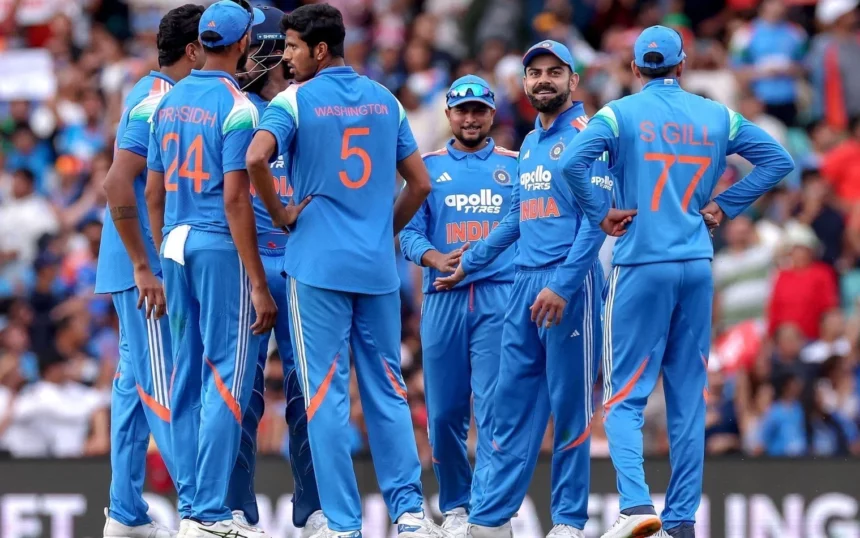
The second one day international between India and New Zealand delivered a gripping contest as New Zealand produced a composed and confident run chase to defeat India and level the series, turning a competitive total into a memorable away victory. Played on a batting-friendly surface, the match highlighted individual brilliance, tactical discipline, and the fine margins that often decide high-quality limited-overs cricket between two evenly matched international sides.
India build a competitive total through composure and key partnerships
Batting first, the India national cricket team approached the innings with the aim of setting a challenging target while preserving wickets for a strong finish. The top order began cautiously, respecting the new ball and the disciplined lengths bowled by New Zealand’s seamers. Early movement and tight lines prevented India from accelerating freely, resulting in a steady rather than explosive start. As the innings progressed, Indian batters focused on rotating strike and finding gaps, aware that a solid platform was essential on a surface expected to remain good for batting.
The middle overs became crucial as wickets fell at regular intervals, disrupting momentum. At this stage, KL Rahul emerged as the anchor, displaying patience and shot selection that balanced caution with controlled aggression. His innings was marked by intelligent placement, strong running between the wickets, and an ability to punish loose deliveries without taking unnecessary risks. Rahul’s calm presence allowed other batters to play around him, contributing valuable runs while maintaining scoreboard pressure.
Contributions from players like Shubman Gill added stability during phases when India threatened to lose direction. Gill’s timing and fluency helped maintain momentum, even as New Zealand’s bowlers continued to search for breakthroughs. The visitors’ bowling attack remained disciplined, varying pace and using the dimensions of the ground effectively to limit boundary opportunities.
As the innings moved into its final phase, India sought to capitalise on the platform built earlier. Rahul accelerated intelligently, bringing up a well-earned century that underlined his growing stature in the one day format. His unbeaten knock ensured that India finished with a competitive total, crossing the 280 mark and setting New Zealand a demanding target. While the innings lacked an extended period of dominance, the overall score reflected resilience and adaptability in the face of sustained pressure.
From a strategic perspective, India’s total appeared defendable, provided the bowlers could strike early and apply consistent pressure. The pitch offered true bounce and value for shots, but disciplined bowling and sharp fielding were expected to keep the chase in check. With a strong total on the board, India entered the second innings confident of pushing for a series lead.
Mitchell leads new zealand’s composed chase to series-levelling victory
Chasing a challenging target, the New Zealand national cricket team adopted a measured approach, resisting the temptation to chase quick runs in the early overs. Openers focused on preserving wickets and assessing conditions, knowing that a long chase required patience and clarity of thought. Although India’s bowlers maintained discipline initially, New Zealand’s batters were content to keep the required run rate under control through steady accumulation.
The defining phase of the match arrived with the emergence of a commanding partnership led by Daryl Mitchell. Mitchell’s innings was a masterclass in one day batting, combining solid defence with timely aggression. He played the ball late, targeted gaps with precision, and showed exceptional awareness of match situations. His ability to adapt to both pace and spin allowed New Zealand to steadily gain the upper hand.
Support from Will Young proved equally important, as the pair built a partnership that gradually shifted momentum away from India. Young’s calm stroke play complemented Mitchell’s authority, enabling New Zealand to maintain composure even as India tried multiple bowling combinations. The partnership neutralised India’s plans, rendering short-pitched tactics and spin variations largely ineffective.
As the chase progressed, pressure visibly eased on the New Zealand camp. Boundaries came at regular intervals, and the required rate steadily declined. India’s bowlers struggled to find breakthroughs, and lapses in fielding further compounded the challenge. Mitchell, growing in confidence, began to dominate proceedings, bringing up a century that effectively sealed the contest. His innings reflected maturity, fitness, and mental strength, qualities that have increasingly defined his role in the New Zealand batting lineup.
The finishing touches were applied with minimal drama as New Zealand crossed the target with overs to spare. The successful chase not only marked one of their most impressive performances on Indian soil but also levelled the series, setting up a decisive final match. The victory showcased New Zealand’s ability to adapt to subcontinental conditions and highlighted their depth and balance as a one day side.
For India, the result served as a reminder of the challenges posed by quality opposition, particularly when bowlers fail to capitalise on key moments. While the batting effort offered positives, the inability to break partnerships proved costly. As the series moves toward its conclusion, both teams carry momentum, confidence, and clear areas of focus, promising another compelling contest in the decider.