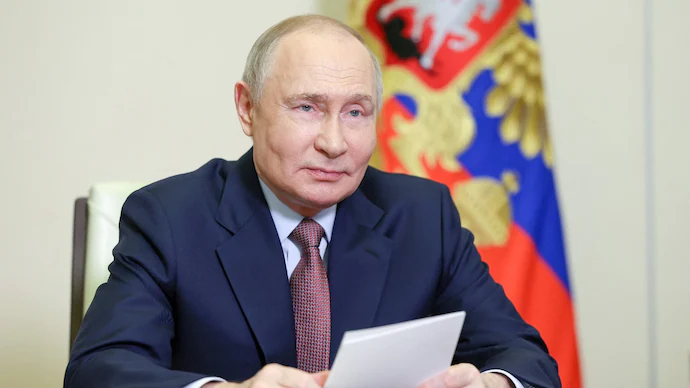
The ongoing Russia-Ukraine War entered another sensitive diplomatic phase after Vladimir Putin announced a temporary ceasefire for May 8 and May 9 to coincide with Russia’s Victory Day commemorations marking the defeat of Nazi Germany during World War II.
However, the Russian announcement was quickly followed by a separate response from Volodymyr Zelenskyy, who declared that Ukraine would implement its own ceasefire beginning earlier on the night of May 5 and May 6.
The exchange of ceasefire declarations once again highlighted the deep mistrust and political tensions that continue to define relations between Moscow and Kyiv even while both governments publicly discuss temporary pauses in hostilities.
According to a statement issued by Russia’s defence ministry, Moscow expects Ukraine to respect the May 8-9 truce while Russia conducts nationwide commemorative ceremonies linked to the eighty-first anniversary of Soviet victory in what Russia refers to as the Great Patriotic War.
Russian authorities stated that military forces would take all necessary measures to guarantee the security of Victory Day celebrations across the country.
The ministry also issued one of the strongest warnings seen in recent weeks, declaring that any Ukrainian attempt to disrupt commemorative events in Moscow or other Russian regions would trigger a large retaliatory missile strike targeting central Kyiv.
Russian officials claimed that such attacks had previously been avoided because of humanitarian considerations but warned that the situation could change if Russia’s national celebrations were threatened.
The statement further advised civilians in Kyiv and personnel working at foreign diplomatic missions to leave the city in advance if necessary. The unusually direct warning immediately attracted global attention because of its explicit mention of possible escalation.
Victory Day Holds Massive Symbolic Importance for Russia
Victory Day remains one of the most important national commemorations in Russia.
Every year on May 9, Russia marks the Soviet Union’s victory over Nazi Germany during World War II through large military parades, patriotic ceremonies and public remembrance events.
The annual celebration traditionally features tanks, missile systems and advanced military hardware displayed during the central parade in Moscow before large crowds and international guests.
However, this year’s commemorations are expected to appear significantly different because of security concerns linked to the ongoing war in Ukraine.
Russian authorities have already indicated that military equipment may not be displayed extensively during the parade due to fears regarding potential Ukrainian attacks, drone strikes or sabotage attempts.
Security conditions inside Russia have become increasingly sensitive over the past year following multiple reported drone incidents and attacks targeting strategic infrastructure and military facilities.
The Kremlin’s ceasefire declaration therefore appears aimed not only at reducing immediate security risks but also at preserving the symbolic significance of Victory Day celebrations during wartime.
Political analysts believe the Russian leadership views this year’s commemorations as especially important because the war in Ukraine has increasingly been framed domestically as part of a broader struggle against Western influence and perceived threats to Russian national security.
Zelenskyy Announces Separate Humanitarian Pause
Shortly after Moscow’s announcement, Ukrainian President Volodymyr Zelenskyy issued a separate response through a message published on Telegram after participating in the European Political Community summit held in Armenia.
Zelenskyy stated that Ukraine would implement its own ceasefire beginning at midnight on the night of May 5 and May 6.
Unlike the Russian proposal, the Ukrainian declaration did not specify an exact ending date but emphasised that Ukraine would act “symmetrically” from the declared moment onward.
The Ukrainian president argued that Russia had repeatedly ignored Kyiv’s earlier calls for a meaningful and lasting ceasefire and accused Moscow of prioritising symbolic military anniversaries over human life.
Zelenskyy stated that humanitarian concerns and civilian protection should take precedence over political celebrations and criticised the Russian proposal as lacking seriousness.
His comments reflected the deep mistrust that continues dominating diplomatic communication between Kyiv and Moscow despite repeated international appeals for negotiations.
Political observers noted that the Russian and Ukrainian announcements differed significantly in tone and messaging.
Russia presented its ceasefire largely as a security measure connected to national commemorations, while Ukraine framed its own pause primarily as a humanitarian initiative intended to protect civilians and reduce violence.
Ceasefire Announcements Come Amid Continuing Battlefield Fighting
The competing ceasefire declarations arrive while heavy fighting continues across multiple regions of Ukraine.
Despite repeated diplomatic appeals for negotiations and de-escalation, battlefield confrontations between Russian and Ukrainian forces have remained intense in recent months.
Western governments continue providing military and financial assistance to Ukraine, while Russia maintains that its military campaign is necessary for national security and regional stability.
International analysts believe the latest ceasefire declarations are unlikely to produce any long-term diplomatic breakthrough because neither side appears willing to compromise on core strategic objectives.
Since the beginning of the war, previous attempts at temporary ceasefires and humanitarian corridors have often collapsed amid accusations of violations from both sides.
Temporary holiday truces and evacuation agreements repeatedly failed because of continued shelling, operational distrust and conflicting battlefield priorities.
War Continues to Shape Global Geopolitics
The Russia-Ukraine conflict has dramatically reshaped international politics, energy markets and security alliances since large-scale fighting intensified in 2022.
Ukraine and its Western allies continue describing the conflict as an unjustified invasion violating international law and Ukrainian sovereignty.
Russia, meanwhile, continues defending its military operations as necessary to counter security threats and protect Russian strategic interests.
Diplomatic efforts aimed at achieving a broader settlement remain stalled because of deep disagreements over territorial control, sovereignty and future security arrangements.
Ukraine insists that any lasting peace agreement must involve the restoration of territorial sovereignty and withdrawal of Russian forces.
Russia continues defending territorial claims and strategic military objectives linked to occupied regions.
The latest ceasefire announcements therefore reflect not only immediate military calculations but also broader political messaging directed toward domestic audiences, international allies and global public opinion.
For Russia, the Victory Day ceasefire announcement reinforces themes of patriotism, national resilience and symbolic wartime continuity.
For Ukraine, the separate humanitarian pause allows Kyiv to position itself internationally as prioritising civilian life while rejecting Russian political narratives surrounding the conflict.
International Attention Focuses on Upcoming Victory Day Events
Global diplomatic circles and financial markets are closely monitoring developments surrounding the proposed ceasefires because any major escalation during Victory Day celebrations could further destabilise regional security conditions.
Analysts note that wartime ceasefire announcements tied to symbolic anniversaries often carry psychological, political and propaganda significance in addition to military considerations.
Meanwhile, civilians in both Russia and Ukraine continue facing uncertainty, displacement and humanitarian hardship as the conflict enters another prolonged phase.
The war has already produced enormous civilian casualties, infrastructure destruction and refugee displacement across the region.
As May 9 approaches, international attention is expected to remain heavily focused on Moscow, Kyiv and the evolving military situation surrounding the ceasefire declarations.
Whether the temporary pauses ultimately reduce violence even briefly remains uncertain, but the latest exchange between Putin and Zelenskyy has once again demonstrated the fragile and deeply contested nature of diplomacy within the Russia-Ukraine war.
The coming days may therefore become significant not only for military developments but also for understanding how both governments intend to manage national symbolism, public messaging and international pressure during one of the most politically sensitive periods of the conflict this year.