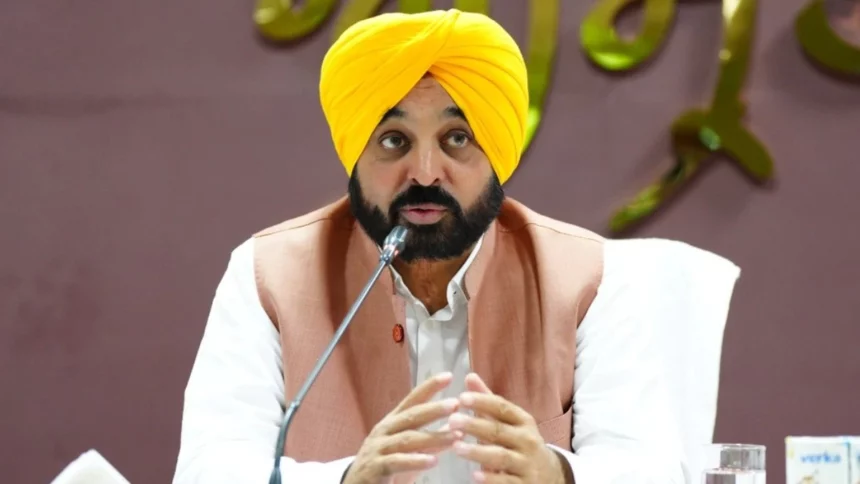
Punjab Chief Minister Bhagwant Mann returned to his official duties after being discharged from the hospital, immediately immersing himself in addressing the state’s unprecedented flood crisis. His arrival comes at a critical juncture, as Punjab reels under one of the worst natural disasters in recent memory, with massive loss of life, widespread displacement, and severe damage to agriculture and infrastructure. Bhagwant Mann’s emotional statement upon resuming office, declaring himself not the Mukh Mantri but the “Dukh Mantri” of Punjab, underscored his determination to stand in solidarity with affected communities and to prioritise both immediate relief and long-term rehabilitation.
Flood Crisis and Humanitarian Impact
The floods in Punjab have left a trail of destruction across the state, affecting thousands of families and inundating entire villages. According to the latest reports, the death toll has surpassed 45, and over 1.75 lakh hectares of agricultural land have been severely damaged, jeopardising the livelihoods of farmers and labourers alike. The scale of devastation has created an acute humanitarian crisis, with relief camps overwhelmed and resources stretched thin. Families displaced by the floods face challenges ranging from temporary shelter and food shortages to the disruption of education and healthcare services.
Bhagwant Mann’s return from the hospital was timely, as state authorities and disaster management teams had been operating under immense pressure to coordinate rescue, relief, and recovery efforts. His presence brought a renewed sense of urgency and direction to the ongoing operations. Bhagwant Mann emphasised that effective flood management requires not only the prompt disbursement of aid but also a hands-on approach to understanding the ground realities and the specific needs of affected communities. The Chief Minister’s invocation of the Punjabi proverb “Dukh sanjha karan naal dukh adha reh janda hai” reinforced his commitment to empathy, signaling that his administration intends to work closely with citizens to share both their grief and responsibilities in rebuilding the state.
The impact of the floods has been particularly severe in regions with low-lying agricultural fields and riverine areas. Farmers have reported complete destruction of standing crops, and infrastructure such as roads, bridges, and irrigation systems has been damaged, further complicating relief and rehabilitation efforts. Local economies are facing disruption as markets remain closed and transport networks remain partially submerged, affecting the supply of essential commodities. The magnitude of these challenges requires coordinated action from both state and central governments, alongside support from local communities and civil society organisations.
Government Response and Relief Measures
Immediately upon resuming office, Bhagwant Mann convened a series of high-level meetings with senior officials, district administrators, and disaster management authorities to assess the progress of rescue and relief operations. These sessions focused on evaluating the distribution of essential supplies, the effectiveness of temporary shelters, and the logistics of compensating farmers for crop and property losses. Bhagwant Mann instructed officials to expedite compensation processes and ensure that relief materials reached even the most remote villages without delay. He emphasised transparency, accountability, and efficiency in all aspects of the relief and rehabilitation process.
The state government, under Bhagwant Mann’s guidance, has prioritised restoring essential services such as electricity, water supply, and road connectivity in affected areas. Special teams have been deployed to monitor flood-prone zones and assist with evacuation efforts, while additional manpower has been mobilised to distribute food, medical aid, and hygiene kits to displaced populations. Efforts are also underway to restore education by setting up temporary learning centres for children in relief camps, and to provide psychological support to communities traumatized by the floods.
Prime Minister Narendra Modi visited the flood-hit states of Punjab and Himachal Pradesh to review the extent of the damage and evaluate ongoing rehabilitation measures. Conducting aerial surveys of affected regions and holding review meetings with state administrations, the PM announced immediate relief packages amounting to Rs 1,600 crore for Punjab and Rs 1,500 crore for Himachal Pradesh. These funds are aimed at accelerating rescue operations, providing direct aid to affected families, and facilitating the restoration of critical infrastructure. The central government’s intervention complements the state’s efforts, ensuring that resources are available to tackle both immediate needs and long-term recovery requirements.
Bhagwant Mann’s return to active administration also signals a renewed commitment to collaboration with central authorities, including ministries overseeing disaster management, agriculture, and rural development. By engaging directly with officials at all levels, Bhagwant Mann aims to fast-track critical decisions, coordinate funding and logistics, and prioritise the most severely affected districts. The Chief Minister has stressed the importance of proactive governance, urging administrators to adopt a hands-on approach that combines immediate relief measures with strategic planning for post-flood reconstruction.
Political and Social Significance of Bhagwant Mann’s Return
Bhagwant Mann’s declaration of himself as the “Dukh Mantri” carries both political and symbolic weight. It represents a break from conventional political rhetoric, framing leadership in terms of empathy and direct engagement with citizens’ suffering rather than mere ceremonial duties. This approach has resonated with many residents, who view his personal involvement in relief operations as a commitment to shared responsibility and solidarity. Bhagwant Mann’s hands-on style also reflects a broader political strategy aimed at reinforcing public trust, particularly at a time when natural disasters have heightened scrutiny of government responsiveness and efficiency.
The Chief Minister’s engagement with local communities has extended beyond administrative directives. Bhagwant Mann has been personally visiting affected villages, interacting with farmers, and understanding the nuances of the crisis on the ground. These interactions provide critical insights that inform state-level decision-making and ensure that relief measures are tailored to the specific needs of diverse communities. By balancing political responsibility with humanitarian concern, Bhagwant Mann’s leadership style exemplifies the integration of governance with social empathy, demonstrating that effective administration during crises requires both strategic planning and emotional intelligence.
The Punjab floods have also sparked wider public discourse on disaster preparedness, infrastructure resilience, and climate-related vulnerabilities. Bhagwant Mann’s return and proactive engagement have underscored the importance of coordinated disaster management policies that combine early warning systems, robust drainage networks, and rapid response mechanisms. As floods increasingly affect the region due to erratic weather patterns and changing climatic conditions, the administration’s efforts to learn from current challenges and implement preventive measures are critical for long-term resilience.
Bhagwant Mann’s leadership during this crisis also highlights the interconnectedness of humanitarian, economic, and social considerations. The immediate focus on rescue, relief, and rehabilitation is complemented by long-term initiatives to rebuild agricultural productivity, restore livelihoods, and strengthen community infrastructure. By integrating short-term emergency response with strategic planning for sustainable recovery, the administration aims to ensure that Punjab emerges stronger and more resilient in the aftermath of the floods.
The ongoing flood response has involved coordination with multiple stakeholders, including local governments, civil society, volunteers, and international agencies where relevant. Bhagwant Mann has emphasised the importance of inclusive participation, encouraging communities to actively contribute to rebuilding efforts and to share knowledge about local needs. This participatory approach strengthens governance outcomes and fosters a sense of shared responsibility, ensuring that relief measures are both effective and socially inclusive.
In addition to physical reconstruction, Bhagwant Mann has also prioritised support for mental health and social well-being. Recognising the psychological toll of displacement and loss, the administration is working to provide counselling services, community support programs, and mechanisms for social reintegration. These efforts reflect a comprehensive understanding of disaster management, which addresses both tangible and intangible impacts on affected populations.
By combining immediate humanitarian action, strategic oversight, and social engagement, Bhagwant Mann’s leadership seeks to transform the state’s response to the floods into a model of effective crisis management. His return from the hospital and direct involvement in relief operations reinforces the central message that governance during disasters requires presence, empathy, and decisive action. The Chief Minister’s approach demonstrates that leadership is not only about policy directives but also about standing shoulder to shoulder with citizens in times of adversity, sharing their burdens, and providing both material and moral support.
The Punjab flood crisis underscores the urgent need for climate adaptation strategies, improved disaster preparedness, and resilient infrastructure. Bhagwant Mann’s administration is actively working to integrate lessons from this crisis into long-term planning, including improvements in flood forecasting, emergency response coordination, and the strengthening of public utilities and agricultural systems. By focusing on both immediate relief and systemic improvements, the state aims to reduce vulnerability and enhance resilience against future natural disasters.
Through his active engagement, Bhagwant Mann has also set a precedent for transparent communication and accountability. Regular updates, public briefings, and media engagement ensure that citizens remain informed about relief efforts, compensation processes, and reconstruction timelines. This transparency strengthens trust between the government and affected communities, providing assurance that relief initiatives are being executed effectively and equitably.
Bhagwant Mann’s return to office after hospitalisation reflects a broader commitment to governance that prioritises citizen welfare over ceremonial functions. By positioning himself as the “Dukh Mantri,” he signals that leadership is fundamentally about empathy, action, and solidarity. This approach not only addresses immediate needs but also lays the groundwork for resilient recovery and long-term preparedness, ensuring that Punjab can rebuild and strengthen its social, economic, and infrastructural foundations in the wake of one of its most devastating floods in history.