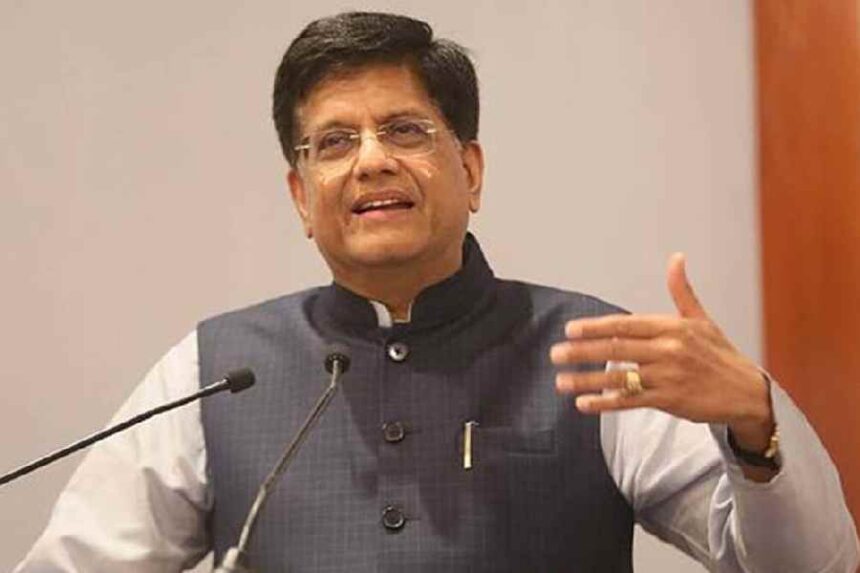
Commerce Minister Piyush Goyal recently highlighted the strategic importance of India’s partnership with the European Union, positioning it as a model for global geopolitics rooted in shared values and mutual respect. Speaking at an event alongside Maros Sefcovic, EU Commissioner for Trade and Economic Security, Piyush Goyal stressed that the India-EU relationship is one of complementarity rather than competition. Against the backdrop of international trade tensions, particularly the tariff pressures imposed by US President Donald Trump, Piyush Goyal underscored India’s commitment to enhancing bilateral trade, expanding business opportunities, and unlocking the full potential of the partnership in ways that extend beyond mere economic considerations to have a global impact.
India-EU Relations: Complementarity and Strategic Alignment
Piyush Goyal articulated that India and the European Union share a common vision for sustainable, inclusive, and high-standard economic growth. He noted that the partnership transcends conventional trade considerations, reflecting deeper alignment in values such as rule of law, fair play, quality standards, and environmental sustainability. “We complement each other, we do not compete with each other,” Piyush Goyal affirmed, framing the relationship as a model for cooperative engagement in a multipolar world. This emphasis on complementarity reflects a strategic vision in which India and the EU can jointly leverage their economic and geopolitical strengths to promote stability, prosperity, and mutual influence on the global stage.
The minister highlighted that India’s 1.4 billion citizens, alongside its business community and government, view Europe not just as a trade partner but as a strategic ally whose principles align closely with those of India. This alignment, he noted, can foster trust, collaborative innovation, and shared growth, enabling both regions to address contemporary global challenges such as economic uncertainty, climate change, and international security. The shared vision between India and the EU provides a foundation for policy coordination, joint ventures, and technological cooperation, enhancing the potential for long-term economic and strategic benefits for both sides.
Trade Pressures and the Path Toward a Balanced Free Trade Agreement
Piyush Goyal’s remarks were set against the backdrop of US trade pressures under the Donald Trump administration, which had called for significant tariffs on both India and China as part of a broader strategy to influence Russia amid the Ukraine conflict. These tariff measures included a 25% reciprocal duty on Indian goods, coupled with an additional 25% levy linked to imports of discounted Russian crude, effectively raising the total tariff burden on India to 50%, among the highest globally. Such measures created challenges for Indian exporters and reinforced the need for diversification of trade relationships beyond reliance on the US market.
In this context, Piyush Goyal emphasized the significance of a robust, fair, and mutually balanced Free Trade Agreement between India and the European Union. He expressed confidence that both economies, given their scale, technological capabilities, and market potential, could benefit significantly from such an agreement. By fostering free trade and eliminating barriers, the FTA would facilitate smoother movement of goods and services, promote innovation, and create new opportunities for businesses on both sides.
Piyush Goyal also stressed that economic agreements inherently involve give-and-take and that while no agreement can be perfect, the ongoing efforts to negotiate terms are designed to maximize mutual benefit. India aims to leverage its strengths in technology, manufacturing, and skilled labor to attract EU businesses, while European firms gain access to India’s large and rapidly growing market. The minister called on businesses to actively engage in research and development in India, highlighting the country’s potential to serve as a hub for innovation and production, which could have a ripple effect on the global market.
The India-EU partnership is expected to set a precedent for global geopolitical cooperation by demonstrating how large economies can collaborate on the basis of shared principles, rather than competition. This model, according to Piyush Goyal, offers a roadmap for other nations seeking to navigate the complexities of international trade and strategic alignment in a world increasingly defined by multipolarity and economic interdependence.
Moreover, Piyush Goyal’s vision includes the creation of joint opportunities for sustainable growth and high-quality development, reflecting both India’s domestic priorities and Europe’s emphasis on environmental and social governance. By aligning trade, investment, and policy frameworks, the partnership is poised to foster innovation, strengthen global supply chains, and promote inclusive economic participation. The collaboration between India and the EU is positioned as a counterbalance to unilateral trade measures and protectionist policies, ensuring that both partners can jointly pursue stability, resilience, and shared prosperity.
Amid discussions of potential secondary sanctions by European capitals on countries like India and China for purchasing Russian oil and gas, Piyush Goyal’s remarks underscore India’s commitment to maintaining constructive relationships with the EU while navigating global trade and geopolitical challenges. By emphasizing trust, collaboration, and shared values, India seeks to reinforce the resilience of its trade and strategic engagements in an unpredictable international environment.
The minister’s statements also reflected a broader understanding of global economic interdependencies. He acknowledged that trade policies, tariffs, and protectionist measures can have far-reaching effects on industries and labor markets. By diversifying trade relationships and strengthening cooperation with partners such as the EU, India aims to mitigate the risks associated with policy unpredictability and ensure sustained economic growth. This approach emphasizes the need for strategic foresight, careful negotiation, and mutual respect as essential elements of successful international partnerships.
In addition to economic and strategic considerations, Piyush Goyal highlighted the broader global significance of the India-EU partnership. By working together on trade, investment, and policy coordination, both sides can influence global standards, set benchmarks for sustainable development, and promote inclusive growth. This collaboration has the potential to create opportunities not just within India and Europe, but across other regions of the world, extending the benefits of cooperative engagement to a wider international audience.
Piyush Goyal’s remarks also addressed the human and business dimensions of international trade. By promoting free and fair trade, reducing barriers, and encouraging innovation, India and the EU can enhance employment, facilitate skill development, and strengthen industrial capacities. This approach reflects a commitment to ensuring that trade agreements contribute to social as well as economic prosperity, benefiting communities and workers in both regions.
Through his remarks, Piyush Goyal conveyed a long-term vision for India-EU relations, one that balances immediate economic gains with strategic and diplomatic considerations. The focus on complementarity over competition highlights India’s commitment to fostering collaborative, sustainable, and mutually beneficial partnerships. This perspective encourages businesses, policymakers, and civil society to view international trade not merely as a transaction, but as a platform for shared growth, innovation, and strategic alignment.
Ultimately, Piyush Goyal’s vision for India-EU ties emphasizes the importance of trust, shared values, and long-term strategic engagement. By focusing on collaboration, sustainability, and inclusive growth, the partnership aims to create a framework for cooperation that can withstand external pressures and geopolitical uncertainties. Through free trade, investment in innovation, and mutual support, India and the EU seek to demonstrate that economic interdependence and shared principles can form the basis for a strong, resilient, and forward-looking international partnership.
The minister’s remarks reinforce the idea that India and the European Union are not competitors but complementary partners, whose collaboration can serve as a global model for constructive, strategic, and sustainable international engagement. By embracing this philosophy, both regions can contribute meaningfully to global prosperity, stability, and the advancement of shared principles in trade, governance, and diplomacy.
The India-EU partnership, as articulated by Piyush Goyal, reflects a holistic approach that integrates economic strategy, diplomatic alignment, and shared values. It offers a framework for addressing contemporary challenges, maximizing opportunities, and fostering long-term stability in a complex and interconnected global landscape. The emphasis on complementarity, strategic cooperation, and mutual respect underscores the potential for India and the EU to lead by example in shaping the future of international relations, demonstrating that collaboration and shared vision can generate lasting benefits for nations and their citizens alike.
This strategic vision positions India as a proactive global player, capable of engaging with multiple partners simultaneously, while maintaining its economic, diplomatic, and strategic priorities. The India-EU partnership serves as a template for global cooperation, emphasizing the importance of rules-based engagement, mutual benefit, and sustainable development as guiding principles for international relations.
By fostering trust, promoting innovation, and supporting inclusive growth, India and the EU are not only strengthening their bilateral ties but also setting an example for other countries to follow. The partnership highlights the potential for economic collaboration to drive strategic alignment, enhance global governance, and ensure shared prosperity in an increasingly complex and multipolar world.
The collaborative framework envisioned by Piyush Goyal underscores that India and the EU can jointly navigate challenges posed by trade disputes, tariff pressures, and geopolitical uncertainty. By leveraging each other’s strengths, the two regions can create a resilient and adaptable economic partnership capable of weathering global disruptions while promoting sustainable and inclusive development.
Through a combination of strategic foresight, practical economic measures, and principled diplomacy, India and the EU aim to solidify a partnership that extends beyond transactional trade, offering a model of collaboration for global policymakers and businesses. Piyush Goyal’s remarks reaffirm that in an era of protectionism and geopolitical flux, the values of complementarity, trust, and shared purpose remain essential for meaningful and lasting international partnerships.
By highlighting the long-term benefits of collaboration over competition, Piyush Goyal provides a roadmap for policymakers, business leaders, and international stakeholders seeking to navigate the complexities of the modern global economy. The India-EU partnership, he emphasized, represents a strategic alignment capable of delivering economic, social, and geopolitical dividends to both regions while contributing positively to the global community.
This vision positions India and the EU as forward-thinking, cooperative, and mutually supportive partners, demonstrating that economic interdependence and shared values can overcome external pressures and create sustainable opportunities for growth, innovation, and strategic influence worldwide.