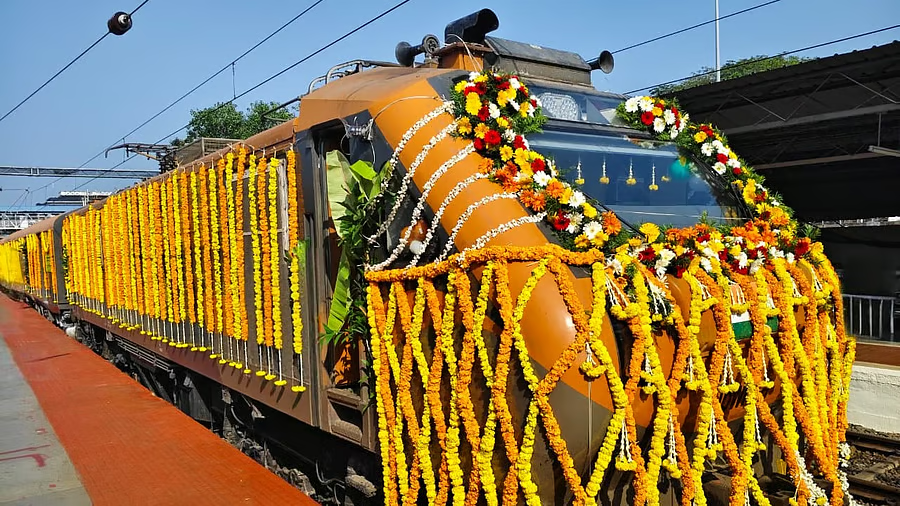
India’s rail modernisation drive gathered fresh momentum as the prime minister flagged off three additional Amrit Bharat Express trains, taking the total number of such services across the country to twenty-seven and reinforcing the government’s emphasis on affordable, efficient and passenger-centric long-distance travel.
The latest flag-off ceremony marked another milestone in the evolving transformation of the national railway system, which is being reshaped to meet the growing mobility needs of a rapidly urbanising and economically expanding population. With each new Amrit Bharat Express added to the network, the railways aim to bridge regional gaps, improve travel comfort and reduce journey times, particularly on high-demand intercity and interstate routes. The expansion also reflects a broader infrastructure vision in which rail connectivity is positioned as a backbone of inclusive growth, linking cities, towns and rural regions through reliable and modern transport.
The programme has steadily gained visibility since its launch, with successive additions signalling a shift towards upgraded non-air-conditioned long-distance services that balance comfort and affordability. The flagging off of three more trains not only increases numerical strength but also deepens the geographic spread of the Amrit Bharat Express network, strengthening rail links in regions that depend heavily on trains for daily travel, employment and commerce.
Expanding connectivity through amrit bharat express services
The Amrit Bharat Express category has been conceived as a modern upgrade of traditional express trains, designed to enhance passenger experience without significantly increasing fares. These trains are equipped with improved seating, better lighting, upgraded toilets, enhanced safety features and a more refined interior layout, offering a noticeable improvement over older rolling stock. By focusing on long-distance routes that see sustained passenger demand, the railways have positioned these services as a practical alternative for travellers who seek comfort but remain cost-conscious.
The three newly flagged-off trains strengthen connectivity across key corridors, particularly in the southern part of the country, where rail travel remains a lifeline for millions. These routes link important urban centres, educational hubs and commercial towns, enabling smoother movement of people and supporting regional integration. Improved connectivity also benefits tourism, as reliable train services encourage travel across states and promote access to cultural and natural destinations.
From an operational perspective, the growing Amrit Bharat Express fleet helps distribute passenger load more evenly across the network. By introducing additional services on busy routes, the railways can reduce overcrowding on existing trains, improve punctuality and offer passengers greater choice in planning their journeys. This is particularly significant during peak travel seasons, festivals and holidays, when demand often outstrips capacity.
The expansion of these services also aligns with the broader objectives of Indian Railways to modernise its image and operations while retaining its role as the most accessible mode of transport for the masses. Rather than relying solely on premium or high-fare trains, the focus on Amrit Bharat Express reflects a strategy that prioritises inclusivity and scale, ensuring that improvements in comfort and reliability reach a wide segment of society.
For passengers, the growing network represents a tangible improvement in everyday travel. Students commuting between states, workers travelling for employment, families visiting relatives and small traders transporting goods all stand to benefit from more frequent and dependable services. As these trains become a familiar part of the rail landscape, expectations around service quality are also likely to evolve, pushing the system towards higher standards across categories.
Infrastructure vision and national significance of the rail expansion
The continued rollout of Amrit Bharat Express trains is closely tied to the government’s larger infrastructure vision, in which transport connectivity is seen as a catalyst for economic development and social cohesion. Railways, in particular, play a unique role in India due to their unmatched reach and capacity. By investing in modern rolling stock and expanding service offerings, policymakers aim to ensure that rail travel remains competitive in an era of expanding road and air networks.
The flag-off of the latest trains by Narendra Modi underscores the political and symbolic importance attached to railway development. Public inaugurations of new services have become a recurring feature of infrastructure policy, signalling accountability and visibility while reinforcing the message that connectivity remains a national priority. These moments also highlight the central role railways continue to play in shaping India’s development narrative.
Beyond passenger convenience, the expansion of the Amrit Bharat Express network has wider economic implications. Improved rail connectivity reduces travel time and cost, facilitating labour mobility and enabling businesses to access wider markets. Regions connected by efficient train services often experience increased economic activity, as better transport links attract investment, support tourism and encourage the movement of goods and services.
The emphasis on upgrading conventional express trains rather than focusing exclusively on premium offerings reflects an understanding of India’s diverse travel needs. While high-speed and luxury trains capture attention, the bulk of railway passengers rely on affordable long-distance services. Enhancing these trains delivers broad-based benefits and ensures that modernisation does not remain confined to a limited segment of travellers.
Institutionally, the growing Amrit Bharat Express fleet also represents a step towards standardisation and efficiency. Newer coaches with improved design and technology simplify maintenance, enhance safety and reduce operational disruptions. Over time, this can contribute to better punctuality and lower lifecycle costs, strengthening the financial sustainability of rail operations.
As the number of Amrit Bharat Express trains rises to twenty-seven, the programme has moved beyond experimentation into consolidation. Its success will ultimately be measured not only by numbers but by reliability, passenger satisfaction and integration with the wider network. Each additional train adds momentum to a broader transformation that seeks to balance tradition and modernity, scale and quality, affordability and comfort.
In this evolving landscape, the expansion of the Amrit Bharat Express network reflects a deliberate effort to redefine everyday rail travel in India. By focusing on practical improvements and widespread impact, the initiative highlights how incremental upgrades, implemented at scale, can reshape one of the world’s largest transport systems and reinforce railways as a central pillar of national mobility.