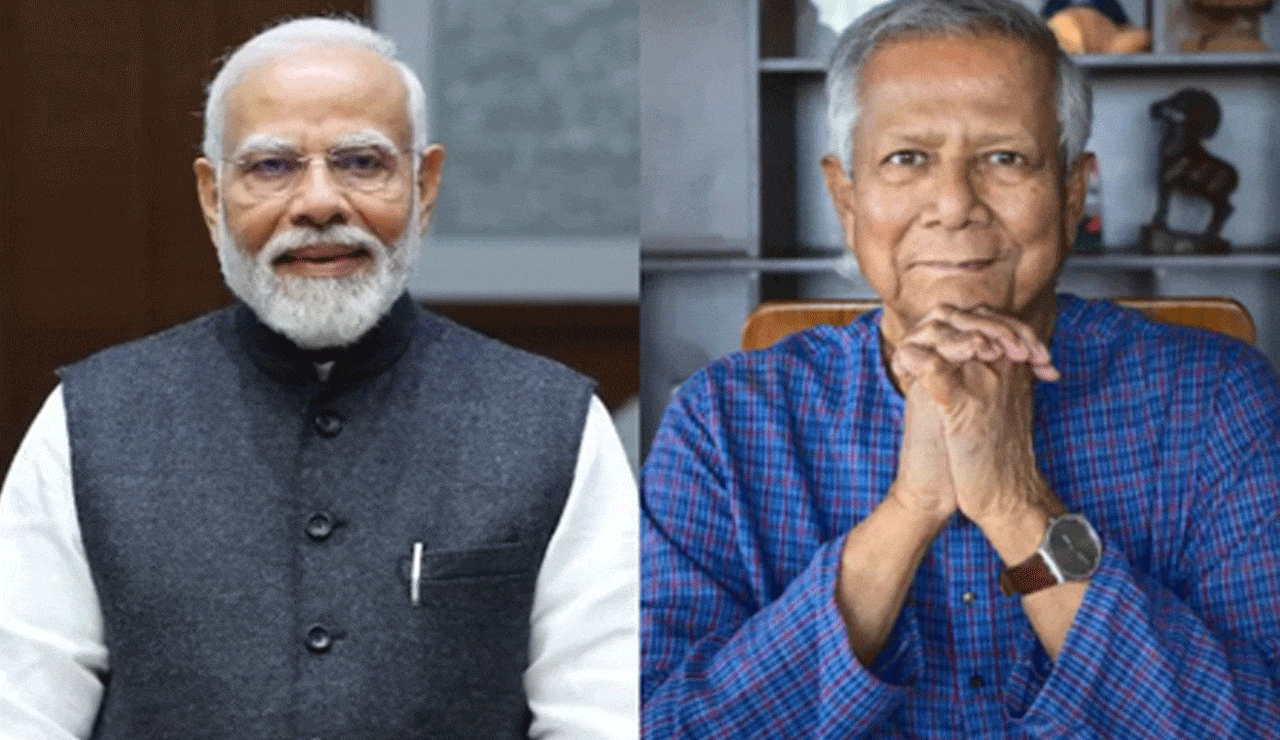
In a letter to Muhammad Yunus, Prime Minister Narendra Modi extended his greetings to Bangladesh on its National Day, reinforcing India’s commitment to strengthening bilateral relations based on mutual sensitivity to each other’s concerns. In the letter, PM Narendra Modi also highlighted the “spirit of Liberation War” that has shaped the relationship between the two countries, acknowledging the shared sacrifices and history that have contributed to the enduring partnership.
While addressing the strained ties between India and Bangladesh over concerns regarding religious minorities in the latter country, PM Narendra Modi’s message emphasized the importance of mutual respect and understanding. He reiterated India’s dedication to fostering peace, stability, and prosperity in the region, with the promise of further advancing cooperation between the two nations.
PM Narendra Modi conveyed his greetings to Muhammad Yunus and the people of Bangladesh, recognizing the National Day as a reminder of their shared history. The letter stated that the “spirit of the Liberation War” continues to guide the relationship, ensuring the continued growth and benefit for both nations in various sectors. The message was also an expression of India’s resolve to build upon this historical bond to ensure further progress.
The Prime Minister’s emphasis on “mutual sensitivity” in his message is seen as a diplomatic effort to manage the delicate issue between the two countries, particularly the recent reports of attacks on religious minorities, including Hindus, in Bangladesh. India has voiced concerns about these attacks, attributing them to political motivations rather than communalism, which has been a point of tension between New Delhi and Dhaka.
Both PM Narendra Modi and Muhammad Yunus are set to participate in the upcoming Bimstec summit in Bangkok on April 3-4. The summit presents an opportunity for the two leaders to engage in direct discussions and explore ways to further the ties between India and Bangladesh. External Affairs Minister Dr. S. Jaishankar has also confirmed that India will continue to maintain regular dialogue with the interim government in Bangladesh, addressing concerns as they arise.
The letter highlights the complex diplomatic landscape in which both nations are striving to maintain their relationship, while also addressing issues of internal and external significance that could impact their partnership.