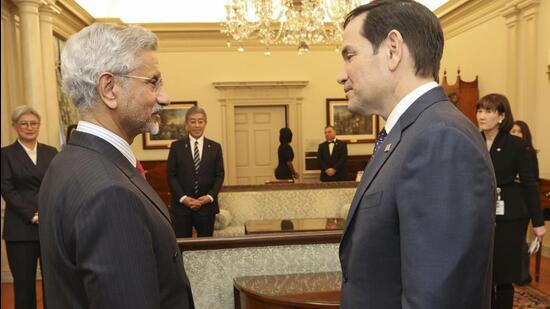
In the wake of rising tensions over the U.S. administration’s recent decision to impose steep tariffs on Indian imports, India and the United States have moved to accelerate discussions on their long-pending Bilateral Trade Agreement. On Monday evening, External Affairs Minister S. Jaishankar spoke to U.S. Secretary of State Marco Rubio over the phone, marking the first high-level dialogue between the two countries since President Donald Trump’s announcement of a 26% tariff on all Indian goods. The conversation signals a joint intent to stabilize trade ties amid escalating global economic uncertainties.
Tariffs trigger fresh urgency in talks
The phone call between S. Jaishankar and Marco Rubio comes against the backdrop of widespread concern across global markets, including in India, over the “reciprocal tariffs” unveiled by President Donald Trump last week. The new tariffs, aimed at countries that the U.S. claims have benefited disproportionately from trade deals, included a blanket 26% rate on all imports from India. This move has raised alarm among Indian exporters and industry stakeholders who fear a major blow to sectors such as pharmaceuticals, textiles, and IT services.
During their conversation, both leaders acknowledged the need to address trade imbalances while also preserving the momentum of strategic cooperation between the two nations. According to diplomatic sources, there was a clear understanding on both sides that the current turbulence should not derail the broader partnership that has strengthened over the past decade. The urgency to conclude the Bilateral Trade Agreement quickly stems from the desire to introduce structured mechanisms that can prevent such tariff shocks in the future.
Trade agreement back on the front burner
The India-U.S. Bilateral Trade Agreement has been under negotiation for several years but has remained stalled due to disagreements over market access, intellectual property rights, and regulatory standards. With fresh pressure now mounting due to the tariff measures, both governments appear more inclined to fast-track talks and finalize a deal that could offer mutual economic protection.
While no specific timeline has been announced yet, officials on both sides are expected to resume technical-level discussions in the coming days. The hope is to signal progress before the next major bilateral summit, and possibly announce an interim agreement that could ease current tensions.