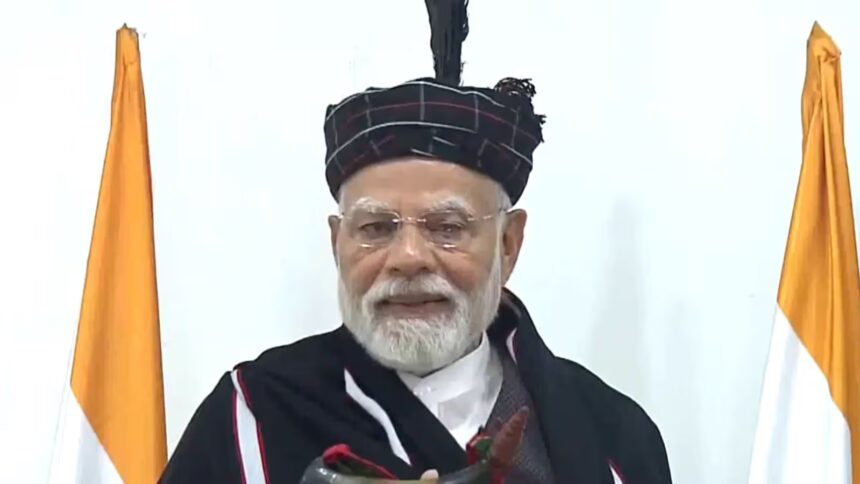
Prime Minister Narendra Modi’s visit to Manipur today marks his first to the northeastern state since the outbreak of ethnic violence in 2023. The visit comes after more than two years of unrest that left the state deeply scarred, with widespread killings, arson, and mass displacement. Thousands of families are still living in relief camps, and the state remains under President’s Rule following the resignation of Chief Minister N Biren Singh in February 2025. PM Modi’s presence carries both symbolic and practical significance, reflecting the central government’s effort to engage directly with affected communities, assess reconstruction needs, and reassure citizens of continued development and security oversight. While supporters see the visit as a long-awaited step toward restoring stability, critics argue that its brevity and ceremonial nature may limit its effectiveness in addressing the deep-rooted tensions in Manipur.
Historical Context and the 2023 Ethnic Violence
Manipur has long been divided along ethnic lines between its valley and hill communities. The Meitei population, predominantly Hindu with a small Muslim minority known as Meitei Pangals, constitutes around 53 percent of the state and primarily resides in the Imphal Valley, which covers only a fraction of Manipur’s land. Meiteis have historically been better represented in education, business, and politics, and for years have advocated for inclusion in the Scheduled Tribe (ST) list to protect land and employment rights.
The hill districts are home to the tribal communities, primarily the Kukis and Nagas, who together make up nearly 40 percent of the population. The Kukis, mostly Christian, live in districts like Churachandpur, Kangpokpi, and Chandel and trace their ancestry to migrations from Myanmar. The Nagas, also predominantly Christian, inhabit other hill districts. Historically, tensions between these groups have flared periodically, often over land, resources, and political representation. While religious differences exist, the 2023 conflict was rooted mainly in territorial and constitutional disputes, rather than faith.
The unrest in 2023 was triggered by a High Court directive in April to consider the inclusion of Meiteis in the ST category. This raised fears among the Kukis that it would open tribal lands to settlement by Meiteis. In early May, the All Tribal Students’ Union of Manipur (ATSUM) organized a “Tribal Solidarity March,” which escalated into widespread violence across Churachandpur and other districts. Over 200 people were killed, thousands were displaced, and police armouries were looted, leaving approximately 4,000 weapons in circulation. Villages were torched, and both churches and temples were attacked. Manipur effectively split into Meitei-dominated valley zones and Kuki-dominated hill zones, with buffer areas patrolled by central forces.
The violence continued to escalate over the following months, resulting in targeted killings, abductions, and renewed clashes. Several high-profile incidents, including the kidnapping and murder of Meitei women and children, further intensified communal fears and mistrust. The crisis ultimately led to political instability, culminating in Chief Minister N Biren Singh’s resignation in February 2025 and the imposition of President’s Rule.
PM Modi’s Agenda and Development Initiatives
Prime Minister Modi’s visit comes more than two years after the initial violence and carries a dual purpose: addressing immediate humanitarian concerns and laying the groundwork for long-term development. PM Modi is scheduled to interact with internally displaced persons in both Churachandpur and Imphal. In Churachandpur, a Kuki-majority region, he will lay the foundation stones for projects worth approximately Rs 7,300 crore, including drainage and asset management initiatives as well as the Manipur Infotech Development (MIND) project. In Imphal, a Meitei-majority area, he will inaugurate projects valued at over Rs 1,200 crore, including the new police headquarters and civil secretariat. These efforts reflect a clear intention to provide tangible infrastructure benefits while signaling the central government’s continued engagement in the region.
Beyond infrastructure, PM Modi’s public engagements include rallies in both Churachandpur and Imphal, designed to reach displaced families and local citizens directly. Security preparations are extensive, with army deployments, buffer zones, and restrictions in sensitive areas such as Kangla Fort to ensure safety. Screens broadcasting the Prime Minister’s events have been installed across towns to maximize outreach. By combining high-visibility development projects with direct engagement, the visit is intended to address both the immediate humanitarian crisis and longer-term economic revitalization.
Political Reactions and Local Perspectives
The announcement of PM Modi’s visit has drawn mixed reactions. Opposition parties, particularly the Congress, have criticized the trip as largely symbolic and insufficient in addressing the underlying issues. Rahul Gandhi referred to the visit as “no big deal,” highlighting the broader national issue of “vote chori” while questioning whether the brief visit could meaningfully impact peace and reconciliation. Jairam Ramesh labeled the visit a “farce,” emphasizing that spending less than three hours in Manipur would not contribute to resolving the ongoing tensions or the humanitarian challenges faced by displaced populations.
Local voices present a nuanced picture. Retired Lieutenant General LN Singh described the visit as a “first stone” in the process of rebuilding both infrastructure and trust, while Churachandpur leader Ginza Vualzong termed the visit “historic,” expressing hope for a political solution. Conversely, Congress’s Keisham Meghachandra Singh dismissed the visit as purely symbolic, questioning whether it would bring any tangible resolution to the conflict. BJP leaders, including Sambit Patra and former Chief Minister N Biren Singh, welcomed the visit, highlighting its potential to open pathways for reconciliation and rebuilding civic confidence.
Ethnic Fault Lines and Socio-Political Dynamics
The division between valley and hill communities remains a central challenge for Manipur. Meiteis, concentrated in the valley, seek ST status to protect land rights and maintain political influence. The Kukis and Nagas, representing the hill districts, resist such inclusion, fearing erosion of tribal protections and encroachment on their ancestral lands. This historical divide has periodically erupted into conflict, including violent episodes in 1993, and underlies much of the mistrust that persists today.
The 2023 violence amplified these fault lines, resulting in mass displacement and heightened communal anxiety. While both communities have legitimate grievances, the clash over ST recognition exposed deeper concerns about political representation, resource allocation, and constitutional safeguards. Buffer zones and security measures have mitigated direct clashes but have not resolved underlying tensions, leaving communities cautious and wary even in periods of calm.
The Human Cost and Current Situation
Since the outbreak of violence in May 2023, over 260 people have died, and thousands remain displaced, living in segregated relief camps. Many residents are unable to return to their homes due to territorial divisions, mistrust, and security concerns. President’s Rule continues to maintain administrative control, with the state assembly under suspended animation until 2027. Security forces enforce buffer zones to prevent direct confrontation, but cross-border factors, including migration and smuggling from Myanmar, continue to complicate the situation.
The human impact of the conflict is profound. Families have endured trauma, displacement, and economic disruption, while communities remain polarized along ethnic lines. Schools and businesses have reopened in some areas, but the legacy of violence continues to shape social relations and civic trust. The Prime Minister’s visit, though brief, is seen as an opportunity to acknowledge the suffering of affected families and to provide both material and psychological reassurance to communities in distress.
Looking Ahead: Hopes and Challenges
Despite moments of calm, mistrust between Meitei and tribal communities remains a significant obstacle to reconciliation. Displaced families continue to seek safe return, and the need for a comprehensive resolution addressing both political and social grievances is urgent. Development projects and public engagements by the central government aim to demonstrate a commitment to stability and growth, but the long-term success of these initiatives will depend on sustained dialogue, inclusive governance, and careful management of ethnic sensitivities.
By visiting both Churachandpur and Imphal, PM Modi signals an intention to balance engagement with both communities, addressing historical inequities while fostering trust. Infrastructure development, coupled with direct outreach to displaced families, is intended to provide immediate relief and longer-term socio-economic benefits. At the same time, political parties, civil society, and local leaders will closely scrutinize the effectiveness of these measures, debating whether they can genuinely reduce tensions and promote durable peace.
PM Modi’s visit represents a multidimensional approach that combines humanitarian concern, infrastructure development, political signaling, and public engagement. It underscores the central government’s commitment to addressing immediate crises while attempting to lay the foundation for sustainable stability and reconciliation in a region long marked by ethnic divisions and historical grievances.