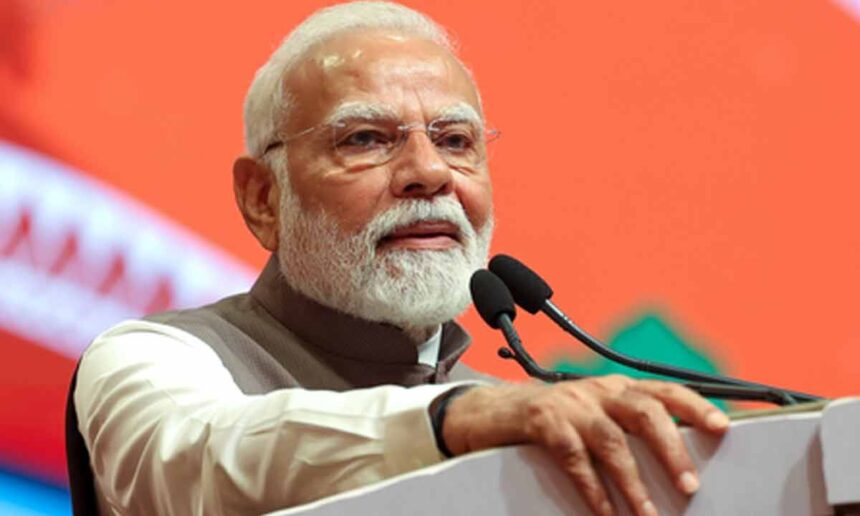
Prime Minister Narendra Modi commenced a two-day visit to Gujarat on Monday, marking one of the most significant series of developmental inaugurations in the state this year. During the visit, the Prime Minister is set to inaugurate and lay foundation stones for projects totaling Rs 5,477 crore, spanning urban development, roads, railways, water supply, housing, and industrial infrastructure. PM Modi’s arrival in Ahmedabad in the evening was followed by a 3-kilometer roadshow from Naroda to Nikol, which is expected to draw nearly one lakh people along the route, underscoring the enthusiasm and public interest surrounding his visit. The series of initiatives reflects the state and central governments’ continued focus on enhancing infrastructure, connectivity, and quality of life for residents, while also opening new avenues for economic growth.
Major Urban and Housing Initiatives in Ahmedabad and Gandhinagar
One of the key highlights of the Prime Minister’s visit is the inauguration of 1,449 houses and 130 shops constructed under the Pradhan Mantri Awas Yojana (Urban) at Ramapir Tekra, a slum cluster in Ahmedabad. These constructions, completed at a cost of Rs 133.42 crore, are part of the in-situ redevelopment component of the scheme, which aims to provide residents with safe and dignified housing while revitalizing urban areas. This project not only addresses the housing needs of the economically weaker sections but also contributes to improved urban planning and local infrastructure.
In addition to housing, PM Modi will lay the foundation stone for the upgradation of the SP Ring Road in Ahmedabad, which will be converted from four lanes to a six-lane controlled-access expressway under the hybrid annuity model. This upgrade is designed to significantly ease traffic congestion, reduce travel time, and enhance regional connectivity for commuters and businesses alike.
Under the Jal Jeevan Mission, a Rs 27 crore water pumping station and a 23-kilometer trunk main pipeline in Daskroi taluka will be inaugurated. This project aims to provide clean drinking water to ten villages under the Ahmedabad Urban Development Authority’s jurisdiction, marking a significant step toward sustainable water infrastructure and public health improvements.
Ahmedabad city will also see the foundation of several other development projects, including a stormwater drainage system for Shela, Manipur, Godhavi, Sanathal, and Telav areas, along with the development of Law Garden and Mithakhali Precinct with modern street furniture. New water distribution stations will be established in Thaltej, Naranpura, and Chandkheda wards, while a mini sports complex in Sarkhej and the redevelopment of the railway overbridge between Sabarmati and Ahmedabad stations are also planned. These projects reflect a comprehensive approach to urban development, integrating infrastructure, recreation, and water management to improve the quality of life for city residents.
The Prime Minister will also oversee the widening and redevelopment of key roads in Ahmedabad, including the conversion of 24-meter and 30-meter roads into four-lane thoroughfares under Town Planning Schemes 139/C, 141, and 144 at a total cost of Rs 38.25 crore. In Gandhinagar, urban development projects worth Rs 281 crore will be inaugurated, including sewage pumping stations in Randheja, a stormwater drainage line in Pethapur, and a 72-crore road parallel to the Metro Rail from Dholakuva to Pancheshwar Circle. Work will also begin on water and sewer lines in Koba, Raysan, and Randesan, along with the renovation of the Bhat-Motera Link Road. These initiatives are expected to enhance urban infrastructure, improve sanitation, and strengthen civic amenities, highlighting the focus on modern, sustainable urban development.
Railway, Road, and Industrial Projects Across Gujarat
In Mehsana district, PM Modi will launch projects totaling Rs 1,796 crore, including major railway developments. These include the doubling of the 65-kilometer Mehsana-Palanpur railway line, the gauge conversion of the 37-kilometer Kalol-Kadi-Katosan line, and the 40-kilometer Becharaji-Ranunj line. Alongside these infrastructure upgrades, PM Modi will flag off two trains—a passenger service between Katosan Road and Sabarmati, and a car-loaded freight train from Becharaji—strengthening regional connectivity and facilitating the movement of goods and passengers across the region.
Road infrastructure is also a key focus of the Prime Minister’s visit. PM Modi will inaugurate the widening of the Viramgam-Khudad-Rampura road and lay foundation stones for six-lane underpasses along the Ahmedabad-Mehsana-Palanpur route. A railway overbridge on the Ahmedabad-Viramgam road will also be inaugurated, which is expected to ease traffic congestion and improve commuter safety while supporting regional economic activity.
Industrial growth and sustainable mobility initiatives are another highlight of the visit. On Tuesday, PM Modi is scheduled to inaugurate the production line for Maruti Suzuki’s first electric vehicle, the e-Vitara, at the company’s Hansalpur facility near Ahmedabad. This marks a significant step toward promoting clean energy and electric mobility in India, aligning with national goals of reducing carbon emissions and fostering sustainable industrial development. PM Modi will also launch the localised production of hybrid battery electrodes and flag off battery electric vehicle exports to 100 countries, reflecting India’s growing capacity in advanced manufacturing and green technology.
The comprehensive nature of PM Modi’s visit demonstrates a coordinated effort to integrate multiple sectors—urban development, transportation, water supply, energy, and industry—into a cohesive vision for Gujarat’s growth. By investing in both urban infrastructure and industrial advancement, these projects aim to stimulate economic activity, generate employment opportunities, and enhance the overall standard of living for citizens.
The Prime Minister’s engagements in Ahmedabad, Gandhinagar, and Mehsana collectively highlight the government’s focus on improving connectivity, modernising infrastructure, and supporting technological innovation. Whether it is the redevelopment of slum areas, expansion of road networks, upgrading of railway lines, or promotion of electric vehicle manufacturing, the initiatives signal a strong commitment to balanced and inclusive development across urban and semi-urban areas.
By linking housing, water management, road expansion, railway upgrades, and industrial growth, PM Modi’s visit underscores a holistic approach to state development. Each project, while addressing immediate infrastructure needs, also lays the groundwork for long-term economic growth, urban resilience, and environmental sustainability. The combination of civic, transportation, and industrial projects ensures that the benefits of these initiatives extend across multiple layers of society, reaching urban populations, rural communities, and local businesses alike.
The Prime Minister’s focus on urban development through the Pradhan Mantri Awas Yojana, stormwater drainage systems, water pipelines, and road expansions highlights the government’s commitment to enhancing urban livability while ensuring infrastructure keeps pace with rapid urbanization. At the same time, the launch of the e-Vitara production line and hybrid battery manufacturing reflects India’s readiness to embrace modern industrial technologies and environmentally sustainable practices, positioning Gujarat as a hub for industrial innovation and green growth.
With nearly one lakh people expected to gather along the roadshow route and at project launch sites, the visit also underscores the strong engagement between the government and citizens, reflecting public interest in infrastructure improvements, urban development, and economic opportunities. The simultaneous inauguration of multiple projects across the state, including both rural and urban areas, demonstrates a strategy of inclusive growth that bridges gaps between city centers and peripheral regions.
Overall, PM Modi’s Gujarat visit represents a multi-sectoral push for accelerated development, integrating transportation, housing, water, industrial innovation, and civic amenities into a unified framework. These projects, with an aggregate investment exceeding Rs 5,400 crore, are poised to boost economic activity, generate employment, improve infrastructure, and enhance connectivity throughout the state, ensuring that Gujarat continues on its path of sustained growth and modernization.