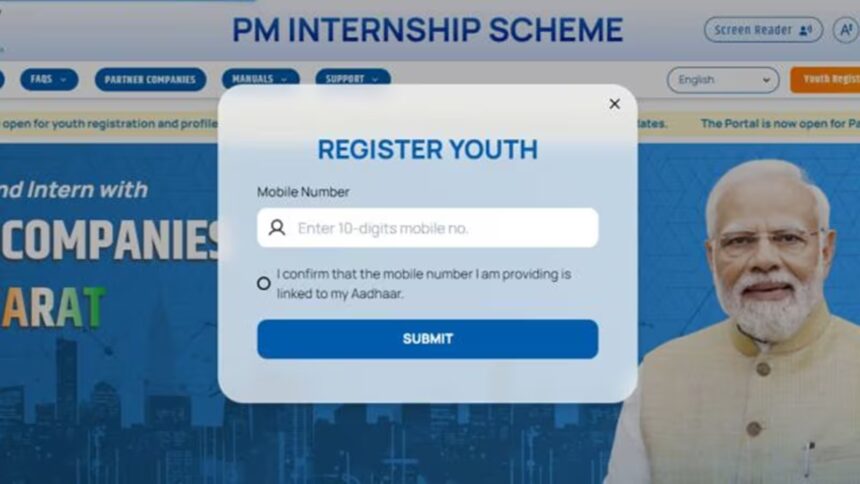
The Prime Minister Internship Scheme (PMIS), launched in 2024-25 with the aim of providing young professionals opportunities to gain experience in top Indian companies, has witnessed unexpectedly low participation despite a large number of internship offers. While the government targeted 1.25 lakh internships in the pilot phase, only a fraction of selected candidates ultimately joined the companies. This discrepancy has raised questions about the effectiveness of the program’s implementation, the preferences of applicants, and the structural challenges that may influence youth engagement in such government-led initiatives. The pilot project, which began on October 3, 2024, is being closely analyzed to inform the full-scale rollout, which seeks to provide internships to one crore youth in the top 500 companies over the next five years.
Participation Gap and Candidate Perspectives
The PM Internship Scheme, managed by the Ministry of Corporate Affairs, was designed as a strategic initiative to provide young graduates exposure to real-world corporate environments, enabling them to acquire practical skills that would enhance their employability. During the first year of the pilot, 280 partner companies posted more than 1.27 lakh internship opportunities. However, of the over 6.21 lakh applications received from approximately 1.81 lakh candidates, only around 82,000 offers were extended by the companies. Of these, roughly 28,000 candidates accepted, and only 8,700 eventually joined their internships in the first round. This translates to an acceptance rate of 33 percent but a joining rate of merely 6 percent of all offered positions.
The low joining rate has been attributed to multiple factors, with location considerations emerging as a major concern. Many candidates were hesitant to relocate to different cities or states for the internship due to personal or familial constraints, cost of living considerations, or lack of suitable accommodation. Duration of the internship also played a crucial role, with some students perceiving the period as either too long, which could interfere with ongoing studies or other personal commitments, or too short, which might limit meaningful skill acquisition and professional experience. Additionally, several candidates prioritized higher education or entrance examinations over immediate corporate exposure, leading them to defer or decline internship opportunities.
Feedback surveys conducted by the Ministry of Corporate Affairs and outbound calls made by the PMIS call centre helped identify these factors. Candidate perspectives, combined with inputs from industry stakeholders, associations, and state governments, painted a clear picture of challenges in aligning internship offers with expectations and practical realities. These insights have informed the government’s approach to planning for a full-scale rollout and improving the scheme’s appeal and accessibility for youth across the country.
Second Round Insights and Strategic Evaluation
The second round of the PM Internship Scheme commenced on January 9, 2025, with an expanded pool of 327 partner companies posting over 1.18 lakh internship opportunities. This round received 4.55 lakh applications from more than 2.14 lakh candidates. While over 82,000 offers were extended and 24,000 candidates accepted them, the actual joining rate continued to remain low relative to the total number of offers. The registration and profile completion data indicate that in the first round, over 3.38 lakh candidates completed profiles and registration processes, while in the second round, the number rose slightly to 3.46 lakh.
The evaluation of the pilot phase revealed several lessons critical to the success of the scheme’s broader implementation. It became evident that a mismatch between candidate expectations and internship offerings was a recurring issue. Companies often had specific requirements regarding the duration, location, and profile of interns, while candidates had individual priorities that were not always compatible. To address this, the government is considering strategies such as offering flexible location options, shorter or modular internship programs, and closer alignment with academic calendars.
The government also recognized that better communication regarding the potential benefits of internships could improve participation. Highlighting career growth prospects, networking opportunities, and skill-building potential may incentivize more candidates to join despite logistical or scheduling challenges. Industry engagement remains key, with partner companies encouraged to accommodate candidate preferences to enhance acceptance and retention rates. Stakeholder consultations and analysis of the outcomes of the pilot project are expected to inform policy decisions and modifications before the full-scale rollout.
Overall, while the initial rounds have faced participation challenges, they have provided a rich dataset for evaluating candidate behavior, preferences, and barriers to engagement. The lessons drawn from these insights will help refine selection processes, offer management, and internship structure to ensure that the PM Internship Scheme meets its ambitious goal of providing meaningful corporate exposure to a substantial number of young Indians over the coming years. The experience underscores the importance of tailoring government-led initiatives to the practical realities of the target population while maintaining the strategic vision of youth empowerment and skill development.