The spiritual conference dedicated to Tamil deity Lord Murugan in Madurai turned into a political flashpoint as BJP leaders accused the DMK government of creating obstacles for the event. Despite facing restrictions, the conference went ahead after a court order and witnessed significant public turnout. BJP leaders claimed victory, stating that while the state government tried to block the celebration, the judiciary ensured it could proceed, making it a symbolic win for their cultural and political campaign.
Court Clears Way Amid Police Restrictions
The event, officially known as Muruga Bakthargalin Aanmeega Maanadu (Spiritual Conference of Devotees of Murugan), was originally planned as an 11-day religious and cultural celebration in Madurai. However, Tamil Nadu police imposed multiple restrictions, including limiting the duration to just three days. The organisers, backed by right-wing outfit Hindu Munnani and supported by the BJP, approached the Madurai bench of the Madras High Court. On June 13, the court permitted the conference to take place, albeit with the condition that the organisers must follow all police directives.
BJP’s Tamil Nadu president Nainar Nagendran, addressing the gathering, said the court’s approval was a moral win over the DMK government’s resistance. “We may not have received justice from the government, but the judiciary stood by us. This event is a triumph for our culture,” Nagendran said.
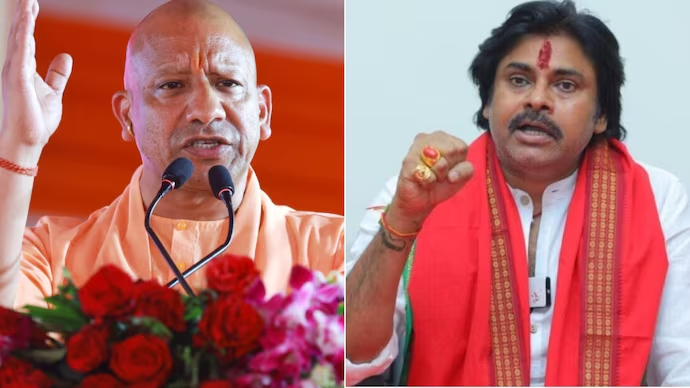
Held under tight security, the venue showcased artistic replicas of the six sacred abodes of Lord Murugan (known locally as Arupadai Veedu), attracting thousands of devotees. The event saw participation from BJP allies and key leaders, including Andhra Pradesh deputy chief minister Pawan Kalyan, former BJP state president K Annamalai, and AIADMK leaders.
Religious Sentiments and Political Messaging Collide
The Murugan conference became a platform for several BJP leaders to voice their broader criticism of the ruling DMK. Pawan Kalyan, speaking in Tamil, said those who mock Hindu culture under the guise of secularism “will soon vanish.” His comments were aimed at the DMK’s ideological roots in rationalism.
Union home minister Amit Shah, who had earlier visited Madurai on June 8 and urged people to attend the event, is expected to return to Tamil Nadu in July—his third visit since April—as the BJP intensifies its groundwork ahead of the 2026 state elections. Shah had also brought up the sensitive Thiruparankundram issue during his last visit.
In February, tensions had erupted at the Thiruparankundram Murugan temple near Madurai when Hindu Munnani protested against demands from some Muslim groups to rename the surrounding hillock, which also houses a dargah, as “Sikander Malai.” While locals from both communities claimed peaceful coexistence, Shah accused the DMK of disrespecting Hindu traditions and sentiments.
At Sunday’s event, Annamalai said, “Despite rain, five lakh people came today to show their faith. This turnout is a message to the ruling party.” He added that Hinduism is under threat, citing attacks like the one in Pahalgam and linking it to India’s military response under Operation Sindoor.
This isn’t the BJP’s first attempt to position Lord Murugan at the center of its political narrative in Tamil Nadu. Ahead of the 2021 assembly elections, the party launched the Vetri Vel Yatra—named after Lord Murugan’s spear—led by then state president L Murugan. Though the yatra faced restrictions and had a limited public response, it generated political buzz, especially when BJP leaders defied police orders and were arrested. The slogan “Vetrivel, Veeravel” later became a key rallying cry for the party during its election campaign.
Interestingly, the DMK too had organised a two-day Lord Murugan conference last August. Seen as a counter to BJP’s attempts to portray the ruling party as anti-Hindu, the move was part of the DMK’s effort to manage the backlash following deputy chief minister Udhayanidhi Stalin’s controversial remarks on Sanatana Dharma.