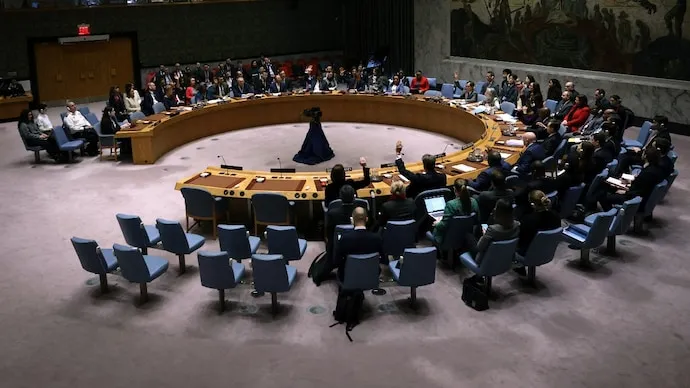
In the wake of the Pahalgam terror attack that killed 26 people, the United Nations Security Council is set to hold closed-door consultations on Monday to address growing tensions between India and Pakistan. The meeting, initiated at Pakistan’s request, comes as both nations ramp up diplomatic moves, with India taking stern measures in response to the cross-border strike.
Pakistan, currently a non-permanent member of the 15-nation Security Council, requested an emergency consultation following India’s actions after the April 22 attack. The attack, which targeted mostly tourists in the Kashmir region, has led India to suspend the Indus Waters Treaty, cancel all visas issued to Pakistani nationals, and ban all imports from the country. Greece, which holds the UNSC presidency for May, scheduled the meeting for the afternoon of May 5.
The Security Council includes five permanent members with veto power—China, France, Russia, the UK, and the US—and ten non-permanent members. In addition to Pakistan and Greece, the current non-permanent members include Algeria, Denmark, Guyana, Panama, South Korea, Sierra Leone, Slovenia, and Somalia.
India Rallies International Support
India has intensified diplomatic outreach in the aftermath of the attack. External Affairs Minister S. Jaishankar engaged in conversations with several UNSC member states, excluding China and Pakistan, to underline the need for accountability. He emphasized the importance of bringing the attackers and their backers to justice. Jaishankar also held discussions with the Greek foreign minister and welcomed Greece’s firm stance against cross-border terrorism, describing it as a reflection of the deepening strategic partnership between the two nations.
In separate conversations, Jaishankar also spoke with UN Secretary-General Antonio Guterres, Russian Foreign Minister Sergey Lavrov, US Secretary of State Marco Rubio, UK Foreign Secretary David Lammy, and French Foreign Minister Jean-Noël Barrot.
UN’s Call for Calm Amid Escalation
UN officials have voiced concern over the heightened tensions. Spokesperson Stephane Dujarric strongly condemned the Pahalgam terror attack and called on both nations to exercise maximum restraint to avoid escalation. UN Secretary-General Guterres also individually called Indian and Pakistani leaders to express his concern and stress the importance of resolving disputes through peaceful, constructive dialogue.
Greece’s UN Ambassador Evangelos Sekeris acknowledged the gravity of the situation, calling the attack “heinous” and expressing hope that Monday’s meeting could provide a platform for meaningful discussions to ease tensions between the two nuclear-armed neighbors.