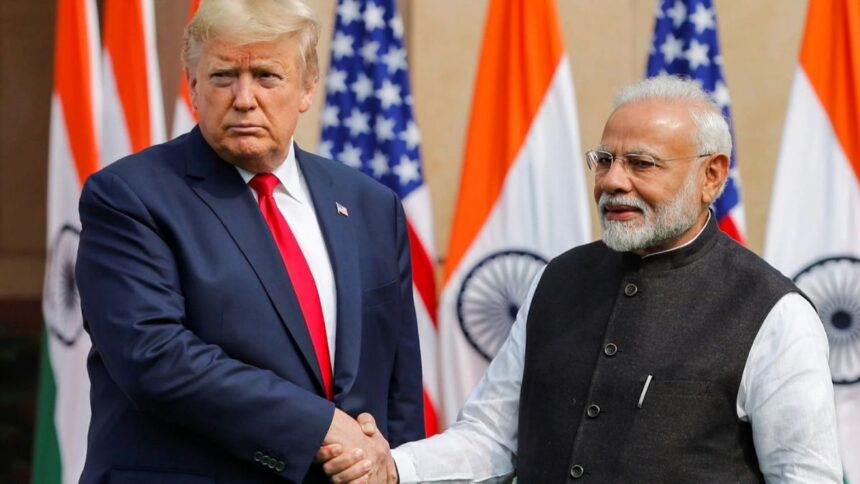
Following the recent trade agreement between India and the United States, the Indian government has signaled a strategic pivot in its crude oil procurement strategy, encouraging state-owned refiners to increase imports from the US and Venezuela while reducing reliance on Russian oil. This policy shift is intended to diversify India’s energy sources, strengthen bilateral relations with Washington, and align with broader geopolitical and economic considerations, though officials have emphasized that all decisions will be guided by national interest and market realities. The government’s guidance to oil companies comes amid a backdrop of global energy market volatility, rising freight costs, and ongoing diplomatic developments, reflecting India’s commitment to balancing energy security, economic prudence, and strategic partnerships.
India’s energy landscape has long been influenced by the availability, pricing, and logistical convenience of crude oil imports, with Russian and Middle Eastern supplies historically forming the backbone of the country’s procurement strategy. However, in the wake of the India-US trade deal, the emphasis on procuring light-sweet crude from the United States represents a significant adjustment. American crude, while chemically suited for refineries that can handle low-sulfur oils, poses challenges for India’s existing infrastructure, which is largely optimized for medium and heavy crude varieties. In addition, the geographic distance between the United States and India adds to freight costs, making the economics of such imports a careful consideration for government and private refiners alike. Nevertheless, the policy push reflects a broader diplomatic objective: fostering stronger economic ties with the United States and signaling India’s willingness to participate in global energy market realignments.
Strategic Diversification and Procurement Priorities
In a circular issued to state-owned oil companies, the government has suggested that any crude oil purchased from the international spot market through tenders should prioritize American supplies. Similarly, Venezuela has been highlighted as a secondary but strategically significant supplier, with purchases to be executed through private negotiations with global traders. This guidance reflects the government’s dual approach of leveraging competitive international markets while maintaining control over strategic energy resources. While the US has publicly emphasized India’s agreement to reduce or halt purchases of Russian crude, Indian officials have maintained that all procurement decisions will continue to be informed by national interest, price considerations, and logistical feasibility.
Analysts have noted that diversifying India’s crude oil sources not only mitigates potential supply disruptions but also enhances the country’s bargaining power in international energy markets. American crude, characterized by its light-sweet properties, allows refiners to produce higher yields of petrol and diesel per barrel, albeit at a higher cost than heavy-sour grades. Venezuelan crude, on the other hand, shares chemical characteristics with Russian oil, making it compatible with India’s existing refinery configurations while providing an alternative supply route that can be negotiated privately. The combined approach allows India to maintain operational flexibility, reduce overreliance on any single supplier, and respond more effectively to price fluctuations or geopolitical contingencies.
The Indian government has emphasized energy security as the primary guiding principle in this recalibration of oil imports. While bilateral agreements, trade commitments, and diplomatic signaling are important, policymakers stress that decisions on crude sourcing will continue to prioritize the nation’s long-term energy stability and affordability. In recent years, India’s domestic consumption of petroleum products has grown steadily, reflecting the expanding economy, rising transportation demands, and increasing industrial activity. Ensuring a diversified supply chain has therefore become a critical aspect of India’s energy policy, enabling the country to maintain price stability, prevent market shocks, and secure uninterrupted refining operations.
Challenges in Scaling US and Venezuelan Oil Imports
While the strategic rationale for shifting toward US and Venezuelan crude is clear, practical challenges remain in scaling imports from these sources. One significant issue relates to refining capacity. Most Indian refineries are designed for medium and heavy crude grades, including the high-sulfur oil historically sourced from Russia and Venezuela. American light-sweet crude, though chemically advantageous for gasoline and diesel yields, is less compatible with existing refinery configurations, necessitating technical adjustments or blending with heavier grades. This factor complicates large-scale adoption and increases operational costs, which companies must weigh against long-term strategic benefits.
Freight and logistics present another challenge. Shipping oil from the United States to India involves significantly longer transit times compared to sourcing from Russia, West Africa, or the Middle East. Rising global freight rates have further increased the cost of importing American crude, making it comparatively expensive on a per-barrel basis. Venezuela presents a somewhat different scenario: the geographical proximity is closer, and existing trade channels have been reestablished following partial easing of US sanctions, but the political and regulatory environment remains a variable that could affect reliability and pricing.
Despite these hurdles, Indian refiners have begun taking steps to secure supplies from these new sources. State-owned companies, including Indian Oil Corporation (IOC), Bharat Petroleum Corporation Limited (BPCL), and Hindustan Petroleum Corporation Limited (HPCL), have collectively purchased approximately four million barrels of Venezuelan crude in recent months. These acquisitions represent a cautious but deliberate effort to diversify away from traditional Russian supplies while ensuring compatibility with India’s existing refining infrastructure. Private companies such as Reliance Industries have also participated in Venezuelan oil purchases, marking a notable return to the South American market for the first time since mid-2025.
The capacity to import US crude on a larger scale remains a work in progress. Current estimates suggest that Indian refiners could handle approximately 400,000 barrels per day from the US, nearly double last year’s average of 225,000 barrels per day. However, this potential expansion depends on market conditions, price competitiveness, and the diplomatic environment surrounding India-Russia and India-US energy relations. Ministry of Petroleum officials and government-owned oil companies have largely refrained from making official statements, highlighting the sensitivity of energy diplomacy and the need to balance international signaling with domestic economic considerations.
India’s historical engagement with Venezuelan oil also provides important context for current procurement strategies. Following US sanctions in 2019, India temporarily ceased oil imports from Venezuela, despite the South American nation’s status as an OPEC member with the world’s largest oil reserves. In 2023-2024, partial easing of sanctions allowed India to resume purchases, averaging between 63,000 and 100,000 barrels per day in 2024. In 2025, these imports increased to approximately $1.41 billion, reflecting renewed commercial engagement and the growing importance of Venezuela as an alternative supplier. These developments demonstrate the dynamic nature of India’s energy procurement strategy, influenced by shifting geopolitical conditions, sanctions regimes, and global market dynamics.
Technical and Economic Considerations of Crude Grades
A key factor in India’s decision-making process is the chemical composition and refining suitability of different crude types. Light-sweet crude, such as that produced in the United States, contains low sulfur levels, making it easier and cleaner to process into high-value products like petrol and diesel. Heavy-sour crude, which characterizes much of Venezuelan and Russian oil, is higher in sulfur content and more viscous, requiring specialized refining processes that India’s existing refineries are well-equipped to handle. While light-sweet crude offers operational advantages in terms of yield and environmental compliance, the higher cost and logistical complexity make it a strategic choice that must be carefully balanced against economic considerations.
The interplay of these technical characteristics with global market dynamics shapes India’s procurement strategy. Light-sweet crude imports from the US allow refiners to diversify feedstock, enhance product quality, and potentially gain leverage in fuel pricing. Heavy-sour alternatives, particularly from Venezuela, maintain compatibility with existing infrastructure and provide a cost-effective source that supports India’s energy security objectives. Balancing these two dimensions—technical suitability and cost-efficiency—is a central focus of government guidance and commercial planning, ensuring that India’s energy needs are met while maintaining fiscal responsibility.
The broader context for these shifts is also strategic. The India-US trade agreement, by emphasizing energy engagement, creates an opportunity for India to strengthen economic and diplomatic ties with Washington. By demonstrating willingness to diversify away from Russian supplies, India signals alignment with US interests without compromising its own strategic autonomy. At the same time, maintaining access to Venezuelan and other global supplies ensures flexibility in procurement, enabling India to respond to price fluctuations, geopolitical developments, or disruptions in traditional supply channels.
The government’s directive to prioritize US and Venezuelan crude reflects this dual objective: enhancing bilateral cooperation while safeguarding domestic energy security. By guiding state-owned refiners to consider these sources in spot market purchases, the policy seeks to gradually recalibrate India’s oil portfolio. At the same time, private sector involvement in Venezuelan oil imports demonstrates market adaptability, providing commercial actors with opportunities to participate in shaping India’s strategic energy mix.
The evolution of India’s crude oil imports also illustrates the complex interconnection between energy policy, global trade agreements, and domestic market stability. Decisions regarding source countries, grades of crude, and procurement mechanisms are influenced not only by technical and logistical considerations but also by diplomatic signaling, trade commitments, and political priorities. The careful balancing act undertaken by Indian policymakers reflects the importance of energy security as both an economic imperative and a geopolitical tool, ensuring that India remains resilient in a volatile global energy market.
As India prepares to expand imports from the US, ongoing monitoring of prices, refining capabilities, and diplomatic relations will remain critical. The ability to scale light-sweet crude imports while maintaining cost-efficiency and operational reliability represents both a challenge and an opportunity for Indian refiners. Similarly, Venezuelan oil imports will continue to play a complementary role, supporting infrastructure compatibility, cost containment, and strategic diversification. Together, these measures reflect a calculated and pragmatic approach to securing India’s energy future while responding to evolving global trade dynamics and geopolitical pressures.
The recalibration of India’s oil import strategy underscores the broader objective of strengthening energy security while maintaining strategic autonomy. By emphasizing US and Venezuelan crude without abruptly cutting off Russian supplies, India balances international expectations with domestic priorities. The government’s approach illustrates a careful, phased strategy aimed at diversifying supply, managing costs, and mitigating risks associated with global energy volatility.
India’s renewed focus on US and Venezuelan crude imports represents a multidimensional strategy that integrates technical refining considerations, cost management, diplomatic signaling, and energy security imperatives. By prioritizing these sources in spot market purchases, the government seeks to enhance the resilience and sustainability of India’s energy sector, positioning the country to navigate global market uncertainties while maintaining autonomy over its strategic energy decisions.