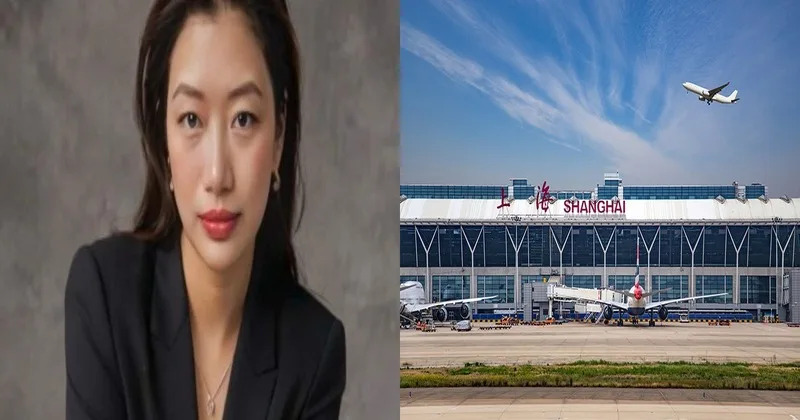
An Indian woman from Arunachal Pradesh faced an 18-hour ordeal at Shanghai Pudong Airport when Chinese authorities declared her Indian passport invalid, citing her birthplace as Arunachal Pradesh, which they claimed as Chinese territory. The incident has prompted India to lodge a strong protest with Beijing, calling the detention grounds “ludicrous” and reaffirming that Arunachal Pradesh is an integral part of India. The ordeal, involving denial of food, restricted access to communication, and public humiliation, has highlighted broader issues of national sovereignty, international aviation norms, and the challenges faced by citizens traveling abroad under politically sensitive circumstances.
Detention and Harassment at Shanghai Pudong Airport
Prema Wangjom Thongdok, a UK-based Indian financial adviser originally from Rupa in West Kameng district of Arunachal Pradesh, recounted her harrowing experience while transiting through Shanghai on November 21, 2025. Traveling from London to Japan with a short layover, Thongdok was singled out during routine security checks, and her Indian passport was confiscated by immigration officials who claimed it was invalid. The justification for this action, according to the officers, was that her place of birth, Arunachal Pradesh, is allegedly Chinese territory.
During the prolonged detention, Thongdok said she was subjected to humiliating treatment. Immigration officials mocked her repeatedly, questioned her nationality, and suggested that she apply for a Chinese passport. The officials reportedly stated, “Arunachal is not part of India” and ridiculed her for asserting her Indian identity. Airline personnel at Shanghai Pudong Airport allegedly mirrored this behavior, refusing to provide assistance or allow her to board the onward flight to Japan, despite her having a valid Japanese visa. She was left in a state of uncertainty, unable to access basic amenities or communicate freely due to restricted internet access in China, which prevented her from using Google or other online resources.
The incident was not only distressing but also unprecedented for Thongdok, who noted that she had transited through Shanghai the previous year without any issue. This time, she endured prolonged delays without clear information, food, or water, exacerbating the physical and mental strain of the detention.
After several hours of being held, Thongdok managed to contact friends in the United Kingdom and sought urgent assistance from the Indian consulate in Shanghai. Within an hour, Indian officials arrived at the airport, intervened with Chinese authorities, arranged for food, and facilitated her release. Although she was ultimately able to leave China, she had to reroute her journey through Thailand and continue her work remotely from there.
The treatment she received, she emphasized, was a direct challenge to India’s sovereignty and caused significant distress, humiliation, and financial disruption. Thongdok has written to India’s Ministry of External Affairs requesting that the matter be addressed firmly with China, and she has sought compensation for the harassment, emotional distress, and financial losses incurred during the 18-hour ordeal.
Sovereignty, Diplomatic Implications, and International Aviation Norms
The incident has sparked immediate diplomatic responses from India. The Indian government lodged a strong protest with Beijing, condemning the grounds for detention as “ludicrous” and reiterating that Arunachal Pradesh is an integral part of India. The Indian consulate in Shanghai highlighted that the detained woman was fully entitled to hold and travel with an Indian passport and stressed that Chinese actions violated international civil aviation conventions, including the Chicago and Montreal Conventions. These regulations are designed to ensure smooth and secure international travel and to prevent arbitrary restrictions or interference with passengers based on political claims.
Experts note that such incidents carry far-reaching implications for India-China relations and international aviation operations. By targeting a citizen solely based on the political sensitivities surrounding Arunachal Pradesh, China has not only embarrassed an individual but also challenged India’s territorial sovereignty in an overt and highly visible manner. This approach, according to analysts, risks creating unnecessary tensions in diplomatic engagement and raises concerns for Indian citizens traveling through politically sensitive regions abroad.
The case also underscores the challenges faced by travelers in regions with restricted internet access. Thongdok, unable to access online resources due to the absence of Google and other commonly used platforms in China, struggled to gather information and contact relevant authorities promptly. This added a layer of difficulty to an already stressful situation and highlighted the reliance on timely consular intervention in protecting citizens’ rights overseas.
In addition, the incident illustrates broader issues of national identity and citizenship. Despite residing in the United Kingdom for years, Thongdok retained her Indian passport out of allegiance to her country, emphasizing her desire to remain an Indian citizen. She stated that, while holding a British passport might have prevented such an ordeal, her connection to India and her refusal to relinquish her citizenship reflects the enduring attachment of Indian citizens abroad to their national identity.
Diplomatic sources confirm that India has emphasized the need for immediate rectification and fair treatment of its citizens traveling internationally. The government’s approach is to ensure that no Indian, particularly from sensitive border regions such as Arunachal Pradesh, faces arbitrary detention or discriminatory treatment. The swift response by Indian consular officials in Shanghai, who intervened directly at the airport, ensured that Thongdok was released and her onward journey resumed safely.
This incident also highlights the vulnerability of Indian citizens in regions where territorial disputes or political sensitivities intersect with international travel. It serves as a reminder of the importance of robust consular support, proactive diplomatic engagement, and adherence to international aviation standards to safeguard citizens’ rights and freedoms.
Personal Impact and Broader Reflections
For Thongdok, the experience was both physically and emotionally taxing. Confined to the airport for more than 18 hours, she endured hunger, humiliation, and uncertainty. The questioning of her nationality and repeated assertions that she was “Chinese” rather than Indian left her feeling vulnerable and distressed. She emphasized that the ordeal represented not only a personal affront but also an affront to the sovereignty of India and the dignity of its citizens.
She expressed relief at the intervention by the Indian consulate, which ensured she received food, was able to contact the necessary authorities, and could eventually leave the country safely. Despite the distressing circumstances, she highlighted that her attachment to India remains unwavering, underscoring her decision to retain her Indian passport and her identity as a citizen of India.
Beyond the personal narrative, the case raises important questions about how geopolitical disputes manifest in the treatment of individual citizens. Arunachal Pradesh, a state administered by India but claimed by China, has become a focal point of diplomatic friction. Incidents like Thongdok’s detention illustrate how ordinary citizens can become entangled in larger geopolitical conflicts and suffer consequences that extend far beyond bureaucratic inconvenience.
Analysts and commentators have also noted that such incidents can have a chilling effect on international travel and global commerce. Passengers from politically sensitive regions may face undue scrutiny, delays, and harassment, which in turn can affect business, tourism, and diplomatic exchanges. The episode serves as a cautionary tale for policymakers, highlighting the need for clear communication, protective measures, and proactive consular strategies for citizens traveling through regions with political tensions.
The incident has drawn widespread attention on social media, with Thongdok narrating her experience on X, generating public discussion about citizenship, sovereignty, and the responsibilities of governments in protecting their nationals. Her story emphasizes the human dimension of geopolitical disputes, demonstrating how political disagreements can translate into tangible challenges for individuals attempting to exercise their right to travel freely and safely.
The incident at Shanghai Pudong Airport serves as a stark reminder of the intersections between citizenship, national sovereignty, and international travel norms. It underscores the importance of robust diplomatic mechanisms, vigilant consular support, and adherence to international law in safeguarding citizens’ rights. Thongdok’s experience highlights both the vulnerabilities faced by individuals in politically sensitive regions and the critical role of timely and effective intervention by national authorities to ensure the safety, dignity, and rights of citizens abroad.
This event also reinforces India’s stance on Arunachal Pradesh as an integral part of its territory and underscores the government’s commitment to protecting its citizens against discriminatory practices abroad. The swift resolution, achieved through diplomatic channels and consular intervention, demonstrates India’s capacity to respond decisively to such incidents while sending a clear message on sovereignty, national identity, and the protection of citizens.