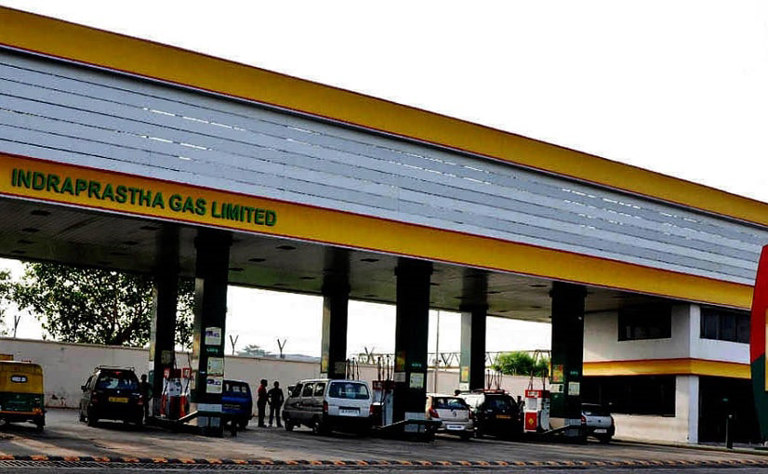
Consumers across India are expected to see a reduction in Compressed Natural Gas and domestic Piped Natural Gas prices from January 1, as a newly rationalised tariff framework introduced by the Petroleum and Natural Gas Regulatory Board comes into force, promising savings of Rs 2–3 per unit for households and vehicle users.
The announcement marks a significant policy shift aimed at making cleaner fuels more affordable and accessible, while also simplifying the tariff regime that governs the transportation of natural gas across the country. The revised structure is expected to benefit millions of consumers who rely on CNG for transportation and PNG for household cooking needs, reinforcing the government’s broader objective of increasing the share of natural gas in India’s overall energy mix. Officials have described the move as a consumer-centric reform that balances affordability with the financial sustainability of gas distribution companies.
The PNGRB’s decision follows a detailed review of the existing tariff mechanism, which had been in place since 2023 and was based on distance-linked zones. According to the regulator, the earlier structure had become complex and resulted in uneven costs for consumers in different parts of the country. By introducing a unified and simplified framework, the regulator aims to ensure more uniform pricing benefits while maintaining transparency and predictability in gas transportation charges.
Unified tariff structure and expected consumer savings
At the heart of the reform is the introduction of a simplified two-zone tariff system, replacing the earlier three-zone, distance-based structure. Under the previous framework, natural gas transportation tariffs were divided into three slabs based on the distance gas travelled through pipelines. Consumers in areas located within 200 kilometres of supply points were charged Rs 42 per unit, those in the 300 to 1,200 kilometre range paid Rs 80 per unit, and those beyond 1,200 kilometres faced the highest tariff of Rs 107 per unit. While this system reflected logistical considerations, it also led to significant price disparities across regions.
Explaining the rationale behind the change, AK Tiwari, Member of the Petroleum and Natural Gas Regulatory Board, said the regulator decided to rationalise the tariff to make it simpler and more equitable. Under the new arrangement, the number of zones has been reduced to two, with the first zone applying uniformly to CNG and domestic PNG consumers across the country. The unified tariff for this zone has been fixed at Rs 54, a level significantly lower than the earlier higher slabs of Rs 80 and Rs 107.
According to Tiwari, this restructuring will translate into direct savings of around Rs 2–3 per unit for consumers, although the exact benefit will vary depending on the state and the applicable local taxes. For households using PNG in their kitchens and for motorists relying on CNG, this reduction is expected to provide tangible relief, especially at a time when fuel and household expenses remain a key concern for many families.
The impact of the new tariff structure is expected to be widespread. The PNGRB has stated that the benefits will extend across 312 geographical areas covered by 40 City Gas Distribution companies operating in different parts of India. These CGD networks form the backbone of urban and semi-urban gas supply, catering to both residential consumers and the transport sector. By mandating a uniform tariff for the first zone on a pan-India basis, the regulator aims to ensure that consumers in distant regions are no longer disproportionately burdened by higher transportation charges.
Importantly, the PNGRB has made it clear that the benefits of the rationalised tariff must be passed on to end consumers. The regulator has said it will actively monitor compliance to ensure that CGD companies reflect the reduced transportation costs in retail prices. According to Tiwari, the regulator’s role is not only to oversee the sector but also to strike a balance between consumer interests and the operational viability of companies involved in gas transportation and distribution.
The move is also seen as a step towards greater transparency in pricing. By reducing the number of zones and setting a clear, unified rate for a large segment of consumers, the PNGRB hopes to make the tariff structure easier to understand for both consumers and industry stakeholders. This clarity is expected to reduce disputes, improve regulatory certainty, and encourage further investment in gas infrastructure.
Expansion of gas infrastructure and long-term impact on energy transition
Beyond immediate price relief, the revised tariff framework is closely linked to India’s broader strategy to expand the use of natural gas as a cleaner alternative to traditional fossil fuels. The government has identified the City Gas Distribution sector as a key driver of growth in natural gas consumption, with CNG and PNG playing a central role in reducing emissions from transport and household cooking.
AK Tiwari said that licenses have already been granted to ensure that CGD networks eventually cover the entire country. These licenses have been awarded to a mix of public sector undertakings, private companies, and joint ventures, reflecting a diversified approach to sectoral growth. The aim is to extend access to piped natural gas and CNG beyond major cities, reaching smaller towns and underserved regions over time.
The PNGRB has positioned itself not only as a regulator but also as a facilitator in this expansion process. Tiwari noted that the board has been actively engaging with state governments and local authorities to address operational challenges faced by CGD companies. These efforts have included facilitating discussions that have led several states to reduce Value Added Tax on natural gas and streamline permission processes for laying pipelines and setting up infrastructure.
Such measures are expected to complement the new tariff structure by lowering overall costs and accelerating project implementation. For CGD operators, reduced regulatory friction and more predictable tariffs can improve project viability and encourage faster network rollout. For consumers, this translates into wider availability of CNG and PNG, along with more stable and affordable pricing over the long term.
The government’s push to provide subsidised and rationalised gas for CNG and domestic PNG consumption is also aligned with national environmental and energy goals. Natural gas is widely regarded as a transition fuel that can help reduce dependence on more polluting fuels such as coal, petrol, and diesel. By making gas more affordable and expanding access, policymakers hope to encourage a shift towards cleaner energy choices among households and transport users.
Industry observers note that the CGD sector’s growth potential remains significant, particularly as urbanisation continues and demand for cleaner fuels rises. The combination of infrastructure expansion, tax rationalisation by states, and now a simplified tariff regime suggests a coordinated effort to strengthen the sector. Over time, this could contribute to higher gas penetration, improved air quality in cities, and reduced carbon intensity in India’s energy consumption.
At the same time, the PNGRB has emphasised the need to balance consumer benefits with the financial health of operators. Tiwari pointed out that while tariffs have been rationalised, the regulator remains mindful of the costs involved in maintaining and expanding pipeline infrastructure. The two-zone structure is intended to ensure that operators can recover reasonable costs while avoiding excessive charges that could discourage consumption.
As the January 1 implementation date approaches, CGD companies are expected to update their pricing structures to reflect the new tariff regime. Consumers, particularly those in regions that previously fell under higher-distance zones, are likely to notice the change in their monthly fuel expenses. For many households and commercial users, even a modest per-unit reduction can translate into meaningful savings over time.
Overall, the tariff rationalisation announced by the PNGRB represents a significant step in India’s ongoing efforts to reform its energy pricing mechanisms. By simplifying the structure, mandating the pass-through of benefits, and supporting infrastructure growth, the regulator aims to create a more consumer-friendly and future-ready gas market. As natural gas continues to play a larger role in India’s energy transition, measures such as these are expected to shape both consumption patterns and investment decisions in the years ahead.