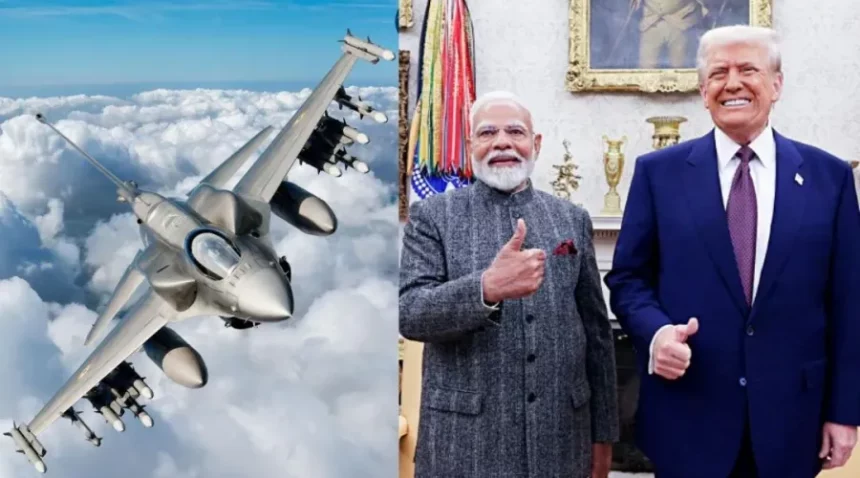
Islamabad has raised strong objections following US President Donald Trump’s announcement that his administration is working towards providing India with F-35 stealth fighter jets. This statement, made during Trump’s meeting with Indian Prime Minister Narendra Modi, has triggered concerns in Pakistan, with the government cautioning that such a move could destabilize the military balance in South Asia, weaken strategic stability, and obstruct efforts for long-term peace in the region.
In response to the announcement, Pakistan urged the global community to adopt a balanced approach and avoid a “one-sided view” that deviates from ground realities. During a weekly press briefing, a spokesperson for Pakistan’s Ministry of Foreign Affairs (MOFA) emphasized the country’s deep concerns over the planned transfer of advanced military technologies to India, stating that such steps exacerbate military imbalances in the region and undermine strategic stability. The spokesperson further stressed that such developments are not conducive to achieving durable peace in South Asia and urged international partners to take a holistic and objective view of the region’s security dynamics rather than endorsing positions that appear biased and unrealistic.
The announcement regarding the potential sale of F-35 fighter jets was made by Trump during a joint press briefing with PM Modi, where he reiterated the commitment to expanding military cooperation between the United States and India. Trump highlighted that starting this year, military sales to India would increase by billions of dollars, with a long-term plan to pave the way for India’s acquisition of the advanced F-35 stealth fighters.
While Trump’s remarks suggested a significant development in India-US defense ties, India’s Foreign Secretary Vikram Misri later clarified that no formal procurement process for the F-35 had been initiated. He explained that in India, military platforms are typically acquired through a structured process that includes issuing a request for proposal (RFP), evaluating responses, and engaging in negotiations. As of now, no such process has begun regarding the acquisition of F-35 jets, indicating that the matter is still at a preliminary stage and has not yet progressed to formal negotiations.
The broader military partnership between India and the United States continues to deepen across multiple domains, including air, land, sea, space, and cyberspace. Discussions between the two leaders also led to the introduction of the Autonomous Systems Industry Alliance (ASIA), a new initiative aimed at strengthening industrial collaboration and enhancing the development of autonomous defense systems, particularly in underwater domain awareness.
Both countries have reiterated their commitment to expanding joint training programs, military exercises, and operational coordination while integrating advanced technologies to enhance their defense capabilities. One of the key highlights of these discussions was the upcoming “Tiger Triumph” tri-service military exercise, which will be held in India. This exercise is expected to be larger in scale and complexity compared to previous editions and is set to enhance interoperability between the armed forces of both nations.
Additionally, India and the United States have agreed to improve logistics, intelligence sharing, and force mobility to strengthen their military presence in the Indo-Pacific region. These measures align with the objectives of the “US-India COMPACT for the 21st Century,” a strategic initiative launched by PM Modi and President Trump to advance military partnerships, accelerate commerce, and integrate new technologies. The collaboration is expected to reinforce security frameworks in the region while expanding defense cooperation between the two democracies.
Alongside discussions on defense cooperation, Trump made another significant announcement during the joint briefing, confirming the approval of the extradition of Tahawwur Hussain Rana, who is accused of involvement in the 26/11 Mumbai terror attacks. Trump described Rana as one of the key plotters behind the horrific 2008 Mumbai attacks and asserted that his administration had cleared the way for his extradition to India, where he will face justice.
Tahawwur Rana, a Pakistani-origin businessman, was convicted for his role in facilitating the attacks that led to the deaths of 166 people. His co-conspirator, David Headley, had previously pleaded guilty and testified against him. The decision to extradite Rana marks a crucial development in India’s pursuit of justice for the victims of the 26/11 attacks and underscores the deepening counterterrorism cooperation between India and the United States.
The series of announcements made during PM Modi’s visit to the United States underscore the evolving nature of India-US relations, with a strong focus on defense, counterterrorism, and strategic collaboration. While the proposed military deals signal Washington’s intent to strengthen India’s defense capabilities, Pakistan’s vocal opposition highlights the persistent geopolitical tensions in South Asia. As discussions on military sales continue, the impact of such developments on regional security dynamics will remain a subject of close international scrutiny.