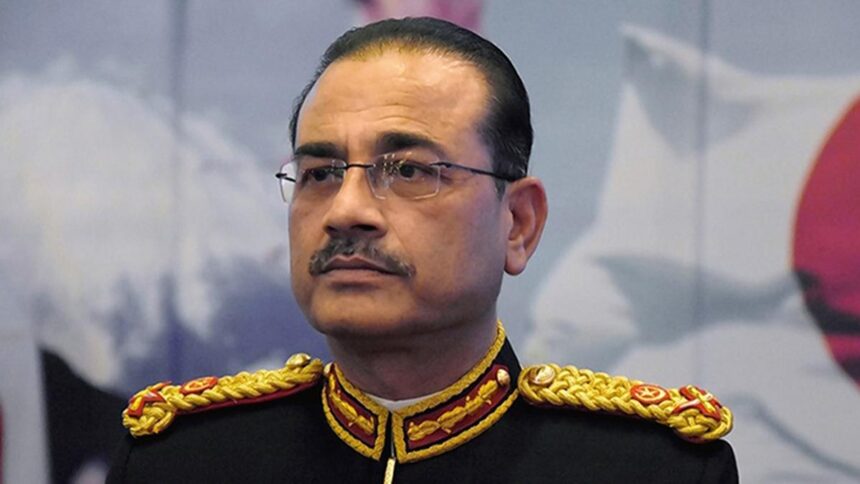
Pakistan Army Chief General Asim Munir has come under intense scrutiny and criticism after making controversial remarks at a diaspora event in Belgium, claiming that India was “forced to beg for a ceasefire” during the recent India-Pakistan confrontation and that US President Donald Trump had intervened to mediate. Asim Munir, addressing around 500 members of the Pakistani community at a closed-door felicitation organised by the Overseas Pakistani Foundation at Groot-Bijgarden Castle near Brussels on August 11, portrayed Pakistan as having delivered a decisive response to India while falsely asserting that the international community, including the United States, had been involved in brokering peace. These claims, however, stand in sharp contrast to the facts presented by the Indian government after Operation Sindoor and reflect a pattern of exaggerated narratives by Pakistani military officials.
Asim Munir’s Assertions and the Reality of the Ceasefire
During his 40-minute address to the Pakistani diaspora, General Asim Munir painted a dramatic picture of Pakistan’s response to Indian military actions. He claimed that Pakistan had delivered a “befitting reply” to India, reportedly shooting down advanced Indian aircraft and earning global recognition. Asim Munir further alleged that India had long propagated a false narrative of victimhood regarding terrorism while secretly supporting cross-border terrorism in Pakistan, Canada, and the United States. He argued that the international community “respects only power,” suggesting that India had no option but to seek a ceasefire, allegedly prompting former US President Donald Trump to step in to mediate between the two nations.
These assertions, however, contradict verified accounts and official communications from the Indian side. Indian officials have clarified that the ceasefire between India and Pakistan was achieved through standard DGMO-level channels without US intervention. Notably, US Secretary of State Marco Rubio did contact Indian External Affairs Minister S. Jaishankar on May 10 to relay that Pakistan was seeking a ceasefire, following India’s targeted strikes on the Nur Khan airbase using BrahMos and SCALP missiles. Jaishankar, however, emphasized that any ceasefire proposal needed to originate from Pakistan’s DGMO through established diplomatic channels if Rawalpindi was serious about de-escalation. This exchange underscores that Asim Munir’s depiction of India pleading for a ceasefire and invoking Donald Trump’s mediation is factually inaccurate and politically misleading.
The event in Belgium, attended by the Pakistani diaspora from across Europe, was highly controlled. Invitees were barred from carrying mobile phones or recording devices, ensuring that Asim Munir’s narrative went largely unchallenged in the immediate forum. By claiming Pakistan had delivered a strong military response, Asim Munir attempted to bolster his image as a steadfast guardian of the nation, asserting that he had no political ambitions but remained committed to protecting Pakistan’s sovereignty. Observers note that these statements, while theatrically aggressive, fit a long-standing pattern of hyperbolic military rhetoric intended to project strength both domestically and internationally.
Historical Context and Asim Munir’s Pattern of Rhetoric
This is not the first instance where General Asim Munir has used exaggerated claims to project Pakistan’s military posture. During a recent visit to the United States, Asim Munir reportedly made several hollow threats aimed at conveying Pakistan’s nuclear capabilities. Addressing the Pakistani diaspora in Tampa, Florida, he warned that Pakistan would not hesitate to use nuclear weapons if its national survival were threatened. Media reports quoted Asim Munir as stating, “We are a nuclear nation. If we think we are going down, we’ll take half the world down with us.” These comments, widely perceived as nuclear sabre-rattling, were immediately met with diplomatic concern and criticism from Indian officials.
Indian authorities have consistently dismissed such claims as part of a familiar pattern of aggressive rhetoric by Pakistan’s military leadership. Analysts argue that these statements are intended to assert dominance and signal military strength, particularly when Pakistan’s leadership enjoys Western attention or seeks to influence domestic politics. The Ministry of External Affairs (MEA) labelled Asim Munir’s claims as “nuclear sabre-rattling” and highlighted the recklessness inherent in such rhetoric. An official MEA statement noted that the international community could draw its own conclusions about the irresponsibility of such statements, particularly in a country where the military operates closely with terrorist groups. This statement reflected broader concerns about the reliability of Pakistan’s nuclear command and control, raising questions about stability and accountability in strategic decision-making.
The historical context of India-Pakistan conflicts further underscores the exaggeration in Asim Munir’s claims. While tensions along the border and cross-border terrorist incidents have periodically escalated, India’s military strategy has consistently involved precise, measured responses aimed at achieving tactical objectives without broad-scale escalation. Operation Sindoor, which Asim Munir referenced, involved targeted strikes on strategic locations, demonstrating India’s capability and resolve. The Indian government’s clear communication and adherence to established military protocols stand in contrast to Asim Munir’s narrative, which sought to inflate Pakistan’s role and assert its global standing.
International Implications and Diplomatic Backlash
Asim Munir’s statements have broader implications for India-Pakistan relations and regional stability. By falsely claiming that the United States mediated a ceasefire and that India had been compelled to beg for peace, Asim Munir not only misrepresented facts but also risked undermining diplomatic protocols and trust. Such exaggerations can exacerbate tensions and complicate ongoing efforts to manage border security and conflict resolution.
Indian officials have pointed out that rhetoric of this nature is symptomatic of Pakistan’s domestic political structure, where the military wields substantial influence and often dominates strategic decision-making. Analysts suggest that Asim Munir’s public assertions may also indicate political ambitions, despite his own denials. The pattern of exaggeration and hyperbolic threats is viewed as a strategy to consolidate support within Pakistan’s military and civilian spheres, projecting an image of strength to both domestic and international audiences.
Moreover, the international community has increasingly taken note of such statements, particularly in the context of nuclear risk management. Nuclear sabre-rattling, as highlighted by India’s MEA, raises serious concerns about the safety and command protocols of Pakistan’s nuclear arsenal. When military officials make unverified or exaggerated claims regarding the use of strategic weapons, it increases global apprehension and can impact regional security dynamics. Diplomats, security analysts, and policy experts monitor such rhetoric closely, emphasizing the need for accurate communication and responsible engagement in high-stakes environments.
Asim Munir’s remarks also reflect Pakistan’s broader narrative regarding India and terrorism. By alleging that India discreetly supports trans-border terrorism while projecting itself as a victim, Asim Munir continues a longstanding line of argument frequently advanced by Pakistan’s military and political leadership. India, however, has consistently rejected these allegations, highlighting that cross-border terrorism emanating from Pakistan’s soil has been a persistent challenge for regional peace. The contrast between Asim Munir’s claims and India’s verified actions illustrates the gap between perception and reality in the narratives propagated by Pakistan’s military.
Domestic Audience and Diaspora Engagement
The choice of venue and audience for Asim Munir’s remarks also reveals a strategic dimension to his communication. By addressing the Pakistani diaspora in Belgium and the United States, Asim Munir aimed to consolidate support among overseas Pakistanis while projecting an image of military strength and decisiveness. Events such as the one at Groot-Bijgarden Castle are carefully curated, allowing military leaders to present unchallenged narratives and bolster nationalistic sentiments. The emphasis on power, military prowess, and nuclear capabilities plays into domestic and diaspora perceptions, reinforcing Asim Munir’s image as a decisive guardian of Pakistan’s interests.
Observers note that the Pakistani military’s engagement with diaspora communities often serves multiple purposes: fundraising, influence-building, and narrative shaping. Asim Munir’s statements, delivered in a controlled environment with restricted communication devices, ensured that his narrative could be propagated without immediate scrutiny or rebuttal. Such engagements are part of a broader strategy to maintain the military’s influence both within Pakistan and among expatriate communities who play a role in shaping perceptions and political discourse abroad.
Analysis of Strategic Messaging
From a strategic perspective, Asim Munir’s claims illustrate the complex interplay between military communication, domestic politics, and international diplomacy. By exaggerating Pakistan’s role in the conflict and misrepresenting India’s actions, Asim Munir sought to convey a sense of invincibility and deterrence. However, the factual discrepancies in his statements, particularly regarding the role of the United States and the circumstances of the ceasefire, expose a gap between narrative and reality.
Indian officials’ sharp rebuttals, labeling these remarks as irresponsible and reckless, highlight the importance of factual accuracy in diplomatic communication. The emphasis on nuclear sabre-rattling and unverified claims also reinforces concerns about transparency, control, and accountability within Pakistan’s strategic institutions. Analysts argue that such rhetoric, while designed to intimidate or impress, may ultimately undermine Pakistan’s credibility on the international stage and complicate regional peace efforts.
The broader takeaway from Asim Munir’s statements is the persistence of militarized narratives in Pakistan’s strategic culture. These narratives serve to reinforce the military’s centrality in national decision-making and to project power externally, even when actual capabilities or actions may not align with the rhetoric. By understanding these dynamics, policymakers and analysts can better contextualize the statements, anticipate potential escalations, and engage in measured diplomatic responses.