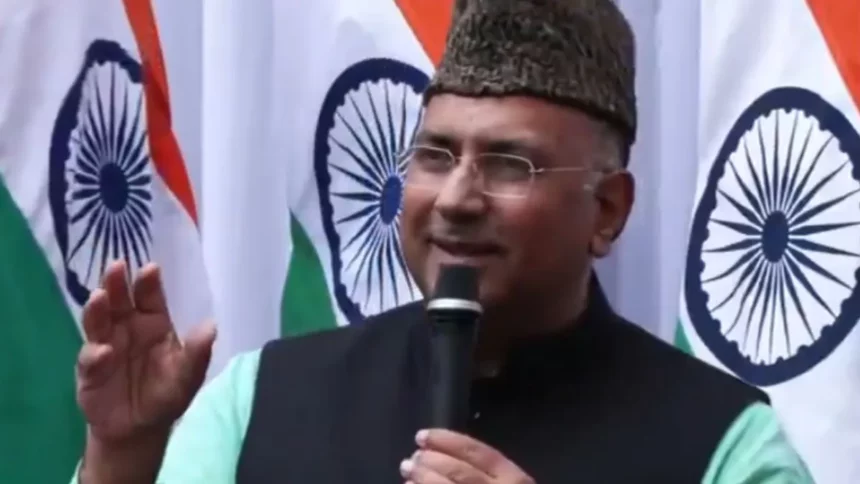
In a powerful diplomatic and public outreach in London, Indian parliamentarians strongly condemned Pakistan for its continued support of terrorism, even as it seeks international sympathy and aid. During an interaction with the Indian diaspora, BJP MPs Gulam Ali Khatana, Ravi Shankar Prasad, Daggubati Purandeswari, Samik Bhattacharya, and Shiv Sena (UBT) MP Priyanka Chaturvedi highlighted Pakistan’s duplicity, where it pleads for help globally while nurturing terror networks on its soil. The leaders were part of an all-party delegation that aimed to amplify India’s firm message: it will not tolerate terrorism and will respond with resolve, without requiring third-party mediation.
Pakistan’s Hypocrisy and Reaction to Democratic Growth in Kashmir
BJP MP Gulam Ali Khatana lashed out at Pakistan for “begging on one side and spreading terror on the other.” Speaking at India House in London, he asserted that India doesn’t need foreign intermediaries to defend itself. He pointed to Pakistan’s unease after Article 370 was abrogated, noting how increased voter participation, improved infrastructure, and women’s rights in Kashmir have unnerved Islamabad. Despite India sharing significant river water with Pakistan, Khatana said, what India receives in return is infiltration, drugs, and bloodshed.
Highlighting the impact of three decades of terror in Kashmir, he reminded the audience of the loss of over 40,000 lives and the displacement of Kashmiri Pandits. He accused Pakistan’s military of trying to destabilize the region to preserve its own dominance, fearing a truly democratic and peaceful Kashmir.
Pakistan’s Terror Ties and Historical Violence Highlighted
Former Union Minister MJ Akbar warned of a “fascist terror” reminiscent of ethnic cleansing, comparing modern-day Pakistan’s ideology to the rise of Hitler. He underscored Pakistan’s violent origins and its continued genetic addiction to violence, which, he argued, is now institutionalized. He cited historical incidents such as the Calcutta killings of 1946 and the genocide in Dhaka in 1971 to underline Pakistan’s violent path.
Priyanka Chaturvedi criticized Pakistan for hosting top terrorists, including Osama bin Laden, and promoting radical ideologies. She recalled Pakistan’s Army Chief General Asim Munir’s speech just days before the Pahalgam attack, which emphasized religious differences. In contrast, she said, Indian Muslims stood firmly with their government against terror. India’s response, she asserted, reflected national unity and strength against cross-border extremism.
Indian High Commissioner Vikram Doraiswami praised the Indian diaspora’s role in strengthening bilateral ties and projecting India’s global image. He emphasized their contribution to the UK’s growth, reiterating that Indians are seen as pillars of both nations’ progress due to their hard work and resilience.