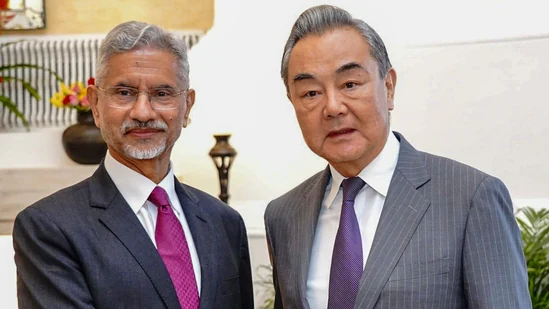
India and China appear to be taking a cautious but significant step towards normalising bilateral ties, as Chinese Foreign Minister Wang Yi assured India that his country will resume critical supplies of fertilizers, rare-earth minerals, and tunnel boring machines. The development comes amid ongoing strategic dialogue, reflecting a pragmatic approach from both sides to strengthen economic and infrastructural cooperation while managing sensitive geopolitical concerns. During his meeting with External Affairs Minister S. Jaishankar, Wang Yi’s assurances marked a positive shift after months of trade disruptions, signalling that both nations are navigating a delicate balance between collaboration and caution in the wake of regional and global uncertainties.
Resumption of Strategic Supplies and Economic Engagement
During the recent high-level interactions, External Affairs Minister S. Jaishankar highlighted India’s pressing requirement for key imports including urea, NPK, and DAP fertilizers, rare-earth minerals critical for the auto and electronics industries, and tunnel boring machines essential for road and urban infrastructure projects. Chinese Foreign Minister Wang Yi assured that Beijing is ready to resume these crucial supplies, ending a near year-long halt that had impacted Indian industries and agriculture. Fertilizer imports from China constitute nearly 30 percent of India’s total requirements, playing a pivotal role in sustaining agricultural productivity, while rare-earth minerals are integral to auto components and other advanced manufacturing sectors. Tunnel boring machines, meanwhile, are indispensable for India’s expanding urban development and road infrastructure projects, making the resumption of these supplies an important boost for ongoing and future projects.
The discussions on resuming these supplies were framed within a broader context of improving bilateral economic engagement. While the dialogue was cordial and forward-looking, both sides appeared conscious of the broader geopolitical environment, particularly US foreign policy, which continues to influence regional alignments and trade strategies. The officials acknowledged that prevailing policies in Washington could impact both India and China, and maintaining ongoing communication is vital to mitigating uncertainties and ensuring uninterrupted supply chains. This pragmatic approach highlights a shift towards constructive economic engagement, even as the two countries carefully navigate strategic and political sensitivities.
Strategic and Border Concerns Remain Central
While economic cooperation took center stage during the S. Jaishankar-Wang meeting, discussions on boundary and border-related issues were deliberately deferred to higher-level strategic dialogues. National Security Advisor Ajit Doval is expected to address these matters in the upcoming Special Representative level talks, focusing on de-escalation along the 3,488-kilometer Line of Actual Control (LAC). Although previous tensions in Ladakh have eased, with patrolling arrangements and boundary frictions partially addressed, both Indian and Chinese forces remain deployed along critical border points, necessitating further dialogue to ensure a complete pullback of troops and prevent future confrontations.
In addition to border security, EAM S. Jaishankar reaffirmed India’s position on Taiwan, clarifying that there has been no shift in India’s longstanding stance. India continues to maintain a diplomatic presence to foster economic and cultural exchanges, aligning its approach with global norms while safeguarding strategic interests. The meeting underscored the delicate balancing act required in the bilateral relationship: advancing economic and infrastructural cooperation while ensuring that strategic and security imperatives are not compromised.
Analysts note that the resumption of critical supplies from China represents more than just a trade gesture; it reflects a cautious thawing of relations and an understanding of mutual interdependencies. Both nations recognize that ongoing dialogue is essential not only to address immediate economic needs but also to create a framework for sustained engagement amid regional uncertainties. While the broader strategic environment, influenced by global powers and shifting alliances, continues to pose challenges, the decision to resume critical supply lines indicates a willingness to prioritize pragmatic cooperation alongside security considerations.
In the coming months, India-China relations are expected to be shaped by dual tracks: economic collaboration and strategic dialogue. The resumption of fertilizers, rare-earth minerals, and tunnel boring machines will provide immediate benefits to India’s agricultural, industrial, and infrastructural sectors. Concurrently, the Special Representative talks led by NSA Ajit Doval will aim to create a more stable and predictable security environment along the LAC. Both tracks, while distinct in nature, are interlinked, as economic confidence often complements strategic stability, and vice versa.
The positive outcome of the S. Jaishankar-Wang meeting also reflects a shared understanding of the need to insulate bilateral cooperation from external pressures. In particular, discussions acknowledged the influence of US policies, which have the potential to affect trade and security dynamics in the region. By strengthening direct communication and addressing immediate economic needs, both India and China aim to reduce vulnerabilities and avoid disruptions in critical sectors. This measured approach highlights a nuanced understanding of contemporary geopolitics, where economic pragmatism and strategic foresight must operate in tandem.
As India prepares for ongoing Special Representative level talks, the focus on de-escalation and strategic clarity will be crucial in determining the trajectory of the bilateral relationship. The resumption of supply chains serves as a tangible outcome of preliminary diplomatic efforts, while the resolution of border and security concerns will require careful negotiation and continued dialogue. The dual emphasis on economic engagement and strategic stability signals a comprehensive approach to India-China relations, balancing immediate requirements with long-term objectives.