The political debate in Tamil Nadu deepened on Monday as opposition parties, led by the Dravida Munnetra Kazhagam (DMK), prepared to move an impeachment motion in Parliament against Justice GR Swaminathan of the Madras High Court. The move comes in response to his recent judgment concerning the lighting of the Karthigai Deepam lamp atop Madurai’s Thiruparankundram hill, a decision that has reignited long-standing sensitivities surrounding the sacred site and its religious practices. With the 2026 state assembly elections approaching, the issue has rapidly evolved from a localised dispute into a significant political flashpoint, prompting national-level legislative action.
Opposition mobilises parliamentary support to initiate action against Justice GR Swaminathan
The opposition bloc has gathered the necessary political momentum to formally initiate impeachment proceedings. According to senior leaders familiar with the developments, DMK MPs have already secured the required number of signatures in the Lok Sabha to move the motion. Under constitutional provisions, the removal of a sitting High Court judge requires at least 100 signatures from members of the Lok Sabha and 50 from members of the Rajya Sabha before the motion can be admitted.
A senior DMK parliamentarian said the party intends to move the motion on Tuesday or Wednesday, emphasising that the process is already at an advanced stage. A second MP confirmed that they have “received 100 signatures from the Lok Sabha,” marking a critical milestone toward formally initiating the impeachment procedure. Discussions are ongoing with partners in the broader opposition bloc to ensure coordinated action, with a Congress MP from Tamil Nadu stating that Congress lawmakers have already signed the petition and expect the collective decision regarding the motion to be finalised imminently.
These parliamentary manoeuvres highlight the gravity with which the opposition regards Justice Swaminathan’s ruling. Leaders argue that his interpretation of the legal and cultural issues surrounding the lighting of the Karthigai Deepam lamp has implications far beyond the specific religious practice at Thiruparankundram. They assert that the judgment risks altering the delicate balance of communal harmony in the region and could potentially embolden groups that seek to politicise religious spaces.
The impeachment motion represents not only a direct challenge to the judge’s conduct but also an attempt to draw national attention to what the opposition perceives as judicial overreach in matters tied deeply to Tamil Nadu’s social fabric. This rare step of moving against a sitting judge underscores the intense political environment in the state and the growing apprehensions that judicial decisions might influence the socio-religious climate in unpredictable ways.
Religious sensitivities at Thiruparankundram hill and renewed tensions ahead of 2026 elections
Thiruparankundram hill, located near Madurai, is a site of immense religious significance. It encompasses the Subramaniya Swamy Temple, the Kasi Viswanathan Temple, and the Sikkander Badusha Dargah, representing centuries of coexistence among diverse faith practices. For decades, the hill has been free from conflict, with communities maintaining traditional customs without major disputes.
However, this fragile equilibrium began to shift earlier this year. In February, members of the Hindu Munnani launched protests after certain individuals were accused of consuming meat on the hillock. The incident sparked outrage among sections of the Hindu community, who viewed the act as disrespectful to the sanctity of the area. Although local authorities attempted to diffuse the situation, the episode planted the seeds for renewed contestation over how the site should be regulated and what behaviors are acceptable in its sacred surroundings.
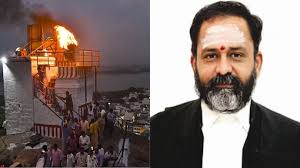
The controversy resurfaced with Justice Swaminathan’s judgment on the lighting of the Karthigai Deepam lamp—a major Hindu ritual celebrated annually with deep religious fervor. The ruling has been interpreted by opposition leaders as lending legitimacy to certain claims that could disrupt the longstanding peaceful coexistence of communities around Thiruparankundram hill. With the 2026 assembly elections drawing near, political parties fear that the issue may be inflamed by groups seeking to consolidate support along religious lines.
The hill, which symbolizes interwoven spiritual traditions, has now become the focal point of a broader debate on identity, heritage, and electoral strategy. The opposition contends that any decision affecting traditional religious practices, particularly those concerning sacred rituals like Karthigai Deepam, must be made with extreme sensitivity and should avoid tilting the communal balance.
According to leaders backing the impeachment motion, the court’s ruling risks provoking misunderstanding among various groups, potentially escalating into larger conflict if not addressed promptly. They stress that judicial positions carry immense influence and that even unintended interpretations can have far-reaching implications on the ground. For this reason, they believe parliamentary intervention is necessary to uphold accountability and prevent future judgments that could disturb Tamil Nadu’s fragile social harmony.
Simultaneously, supporters of the judge argue that his ruling was grounded in legal reasoning and historical practice, and that impeachment should not be used as a political tool against members of the judiciary. Nonetheless, the opposition remains firm in its belief that parliamentary scrutiny is essential in this case.
With political, religious, and judicial institutions now intersecting over the issue, the Thiruparankundram hill dispute is no longer a localised matter. It has become a symbol of how deeply intertwined religion and politics remain in Tamil Nadu, and how judicial decisions may influence these dynamics ahead of a key electoral cycle.