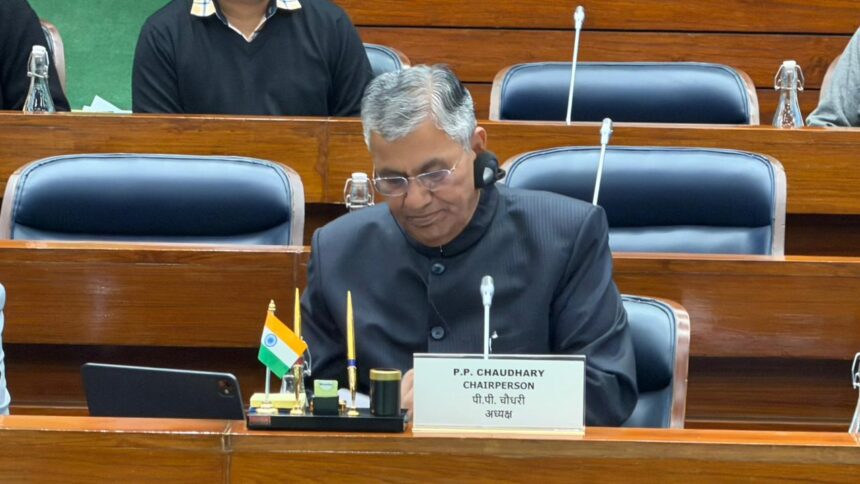
The Joint Parliamentary Committee examining the proposed “One Nation, One Election” framework is set to begin another major phase of consultations with stakeholders in Bengaluru and Gandhinagar between May 16 and May 21. The meetings are expected to play an important role in shaping the national debate around simultaneous elections, one of the most politically significant governance reforms currently under discussion in India.
The committee’s upcoming consultations come at a time when the proposal has generated intense political attention across the country. Supporters argue that synchronising Lok Sabha and State Assembly elections could reduce governance disruptions, cut election-related expenditure, and improve administrative efficiency. Critics, however, continue to raise concerns regarding federalism, constitutional complexities, and the practical challenges of implementing such a large-scale electoral reform.
The latest round of consultations signals that the committee is moving steadily toward broader engagement with experts, constitutional scholars, political representatives, academic institutions, and other stakeholders before finalising its recommendations. The meetings in Bengaluru and Gandhinagar are expected to include discussions with legal experts, former election officials, policy analysts, and representatives from various sectors connected to governance and public administration.
The proposal for simultaneous elections has remained one of the most debated institutional reforms in recent Indian political history. While the concept has been discussed for decades, the current push has gained renewed momentum under the central government’s broader agenda of electoral and administrative reforms.
Why the One Nation One Election Proposal Matters
The idea behind “One Nation, One Election” is to conduct elections for the Lok Sabha and all State Legislative Assemblies at the same time instead of holding them separately across different years. Advocates of the proposal believe this could significantly reduce the frequency of election cycles that often keep governments and political parties in continuous campaign mode.
Supporters argue that repeated elections lead to substantial financial costs for governments, political parties, and administrative institutions. Large-scale election management also requires extensive deployment of security personnel, government officials, and public resources. Conducting simultaneous elections, according to proponents, could minimise these recurring expenditures.
Another major argument in favour of the proposal is governance continuity. Frequent elections often trigger the enforcement of the Model Code of Conduct, which can temporarily slow policy announcements and developmental decision-making. Advocates believe a synchronised election schedule would allow governments to focus more consistently on long-term policy implementation instead of recurring electoral preparations.
Prime Minister Narendra Modi has repeatedly spoken in favour of the concept, describing simultaneous elections as a reform that could improve administrative efficiency and strengthen governance systems. Several policy institutions and committees have also examined the idea over the years, though implementation has remained politically and constitutionally challenging.
The Joint Parliamentary Committee’s ongoing consultations are therefore being viewed as a critical step in evaluating whether the proposal can realistically move forward within India’s democratic framework.
Bengaluru and Gandhinagar Meetings Expected to Draw Wide Participation
The committee’s consultations in Bengaluru and Gandhinagar are likely to attract significant attention because of the growing national interest surrounding electoral reform debates.
Bengaluru, known as one of India’s leading academic and policy discussion hubs, is expected to host interactions involving constitutional experts, legal scholars, technology specialists, and governance professionals. Discussions may focus on the administrative feasibility of synchronised elections, the role of technology in election management, and the constitutional amendments that could be required to implement the system.
Gandhinagar is also expected to witness detailed deliberations involving policymakers, state representatives, and governance experts. Gujarat has often been associated with governance and administrative reform discussions, making the city an important venue for such consultations.
According to political observers, the committee’s decision to engage stakeholders outside Delhi reflects an attempt to broaden participation and gather diverse regional perspectives before drafting recommendations. The issue affects both national and state-level political structures, making wide consultation politically important.
The committee has already conducted discussions with several stakeholders in earlier phases, and the upcoming meetings are expected to build upon those conversations. Legal experts are likely to discuss questions related to constitutional amendments, tenure stability of legislative assemblies, and mechanisms for handling situations where governments collapse before completing full terms.
One of the biggest challenges associated with simultaneous elections is ensuring continuity in cases where assemblies are dissolved early due to political instability or no-confidence motions. Constitutional experts have argued that resolving such situations would require detailed legal safeguards and political consensus.
Political Reactions Continue to Remain Divided
The “One Nation, One Election” proposal continues to divide political opinion across party lines. The ruling establishment has strongly supported the idea, presenting it as a reform aimed at improving governance efficiency and reducing election-related disruptions.
Many opposition parties, however, remain sceptical. Critics argue that India’s federal structure gives states an independent political identity that should not be overshadowed by a single national electoral cycle. Some opposition leaders believe simultaneous elections could shift political attention disproportionately toward national issues, potentially affecting regional political representation.
There are also concerns regarding the logistical complexity of conducting nationwide simultaneous elections in a country as large and diverse as India. Election management on such a scale would require massive coordination involving electronic voting machines, security deployment, polling personnel, and transportation infrastructure.
Some constitutional experts have additionally warned that implementing the proposal may require significant amendments to multiple constitutional provisions dealing with the tenure of legislatures and emergency electoral situations.
Despite these concerns, the government has continued to push for broader discussions around the proposal, arguing that the idea deserves serious consideration given the increasing financial and administrative burden associated with frequent elections.
Political analysts note that even if complete simultaneous elections are not implemented immediately, the discussions themselves could influence future electoral reforms and administrative restructuring.
Constitutional and Administrative Questions Remain Central
As the Joint Parliamentary Committee continues consultations, constitutional feasibility remains one of the most important aspects of the debate.
India originally conducted simultaneous elections for the Lok Sabha and State Assemblies during the early decades after independence. However, the cycle eventually broke due to premature dissolution of certain state governments and changes in political circumstances over time.
Restoring simultaneous elections today would require synchronising assembly terms across multiple states, something that presents major legal and political challenges. Experts believe this could involve extending or shortening the tenure of certain assemblies during the transition phase, a move that may face political resistance.
Questions also remain regarding how by-elections, coalition collapses, and emergency political situations would be handled under a synchronised election model. Some analysts have suggested alternative frameworks such as conducting elections in fixed cycles rather than complete nationwide synchronisation.
Election Commission infrastructure and technological readiness are also expected to feature prominently during stakeholder discussions. Managing simultaneous elections for both national and state legislatures would demand enormous logistical planning and resource mobilisation.
The consultations in Bengaluru and Gandhinagar are therefore expected to contribute valuable perspectives on these operational and constitutional dimensions.
National Debate Likely to Intensify Further
As the Joint Parliamentary Committee expands its consultations, the national debate around “One Nation, One Election” is expected to become even more intense in the coming months.
The proposal touches upon core aspects of India’s democratic structure, including governance efficiency, federal balance, electoral management, and constitutional stability. Supporters view it as a transformative reform capable of modernising election administration, while critics continue to warn against unintended political and constitutional consequences.
The committee’s ongoing outreach indicates that policymakers are seeking detailed input before moving toward any formal recommendations. Political experts believe the final outcome will depend not only on legal feasibility but also on the level of political consensus that can be achieved across parties and states.
For now, the Bengaluru and Gandhinagar meetings represent another important phase in one of India’s most consequential institutional reform discussions.
Whether the proposal eventually becomes reality or remains part of a larger constitutional debate, the consultations are likely to shape the future conversation around electoral reform and democratic governance in India for years to come.