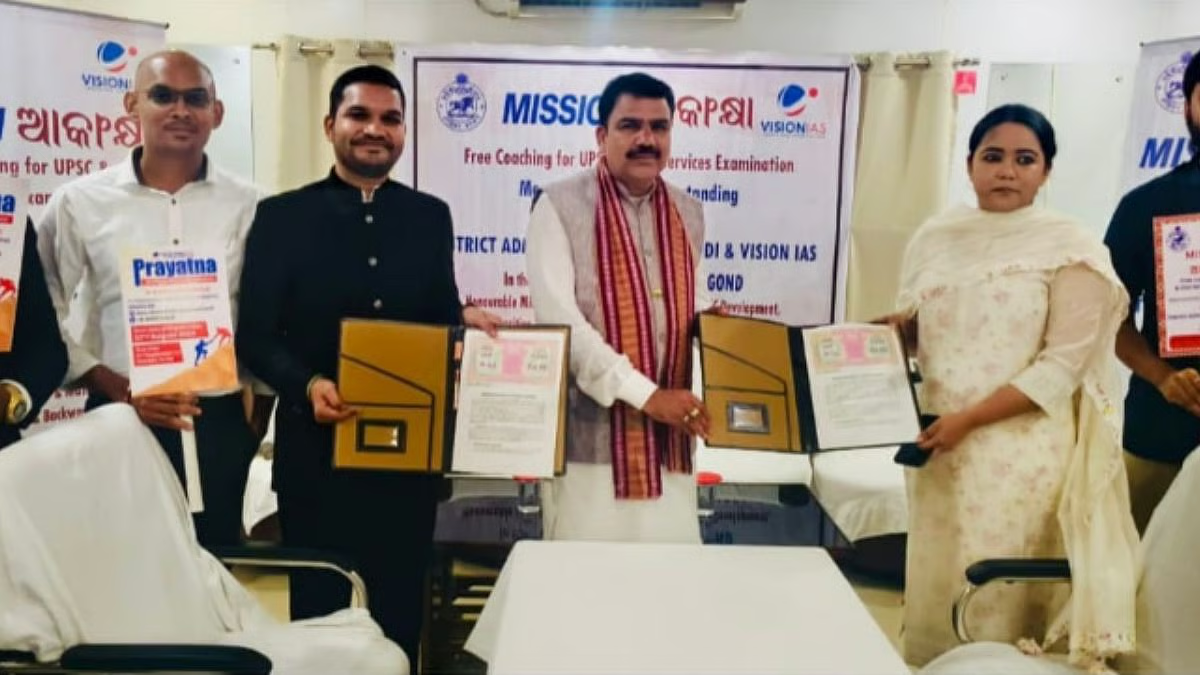
In a groundbreaking initiative aimed at boosting educational opportunities and supporting civil service aspirants, Odisha has launched Mission Akankhya in the Kalahandi district, offering free coaching in partnership with Vision IAS. This program marks a significant step toward making quality guidance accessible to talented students from one of the state’s aspirational regions, ensuring that economic and infrastructural limitations do not hinder ambitious individuals from preparing for India’s most competitive examinations. With structured classroom and online training, the initiative is expected to transform the local educational landscape, while also addressing the long-standing gap in access to professional coaching in remote districts.
Mission Akankhya—Transforming Aspirations into Opportunities
Mission Akankhya, launched in Kalahandi, represents a strategic effort by the district administration in collaboration with Vision IAS, New Delhi, to nurture civil service aspirants from the grassroots level. Under this program, 60 meritorious students will be selected annually through a rigorous written test and interview process. The initiative was officially announced following the signing of a memorandum of understanding on Independence Day, signaling the administration’s commitment to providing high-quality education infrastructure alongside expert guidance. Students who qualify will commence coaching from the first week of October in Bhawanipatna, with an integrated approach that combines classroom sessions with online modules to ensure inclusivity and equal access for candidates from across the district.
Officials highlighted that this program is particularly significant for Kalahandi, which has been classified as an aspirational district under NITI Aayog’s Aspirational Districts Programme. Historically, students in the district have faced challenges in accessing quality coaching due to geographic and economic constraints, which often limited their ability to compete on a national level. By offering expert-led training at zero cost, Mission Akankhya aims to bridge this gap and empower local talent to achieve their ambitions in civil services. The coaching will cover the entire spectrum of civil services preparation, including general studies, current affairs, essay writing, and interview guidance, ensuring that students are comprehensively prepared for the examinations.
Vision IAS, known for its structured pedagogy and proven results, will provide experienced faculty members and a carefully curated curriculum tailored to the needs of students in an aspirational district. The program also includes mentoring and study support, ensuring that each student receives individualized attention alongside group training. The dual mode of learning, combining classroom interaction with online access, is expected to democratize educational opportunities, making it possible for students from remote parts of the district to benefit from the initiative without having to relocate. Officials emphasized that such a structured and accessible program could play a transformative role in enhancing the aspirations and confidence of students who may otherwise have been deprived of quality preparation resources.
Implications for Education Culture and Broader Concerns
While Mission Akankhya aims to provide structured support for civil service aspirants, the initiative comes at a time when concerns about the increasing dependence on coaching centers across India have been widely debated. Former Vice President Jagdeep Dhankhar, speaking at the fourth convocation of the Indian Institute of Information Technology in Kota’s Ranpur area, highlighted the potential downsides of the proliferation of coaching centers. He described the widespread coaching culture as a “disease” and warned against the mechanical learning it fosters, which may stifle critical thinking and creativity among students. According to him, coaching hubs often operate as “poaching centers” or “black holes for talent,” where students’ intellectual curiosity is restricted, and performance is driven primarily by rote learning and test-oriented strategies.
Despite these concerns, officials argue that targeted, government-backed initiatives such as Mission Akankhya can mitigate the negative aspects of the coaching ecosystem by providing structured, transparent, and quality-driven guidance. Unlike private coaching centers, which often charge exorbitant fees and limit access to privileged students, the Odisha government’s program is designed to ensure inclusivity and equity, offering equal opportunities to all eligible aspirants regardless of socio-economic background. By integrating online sessions with traditional classroom learning, the program not only provides flexibility but also encourages a holistic understanding of the subjects, critical analysis, and problem-solving skills, which are essential for success in civil services.
The Kalahandi initiative is expected to serve as a model for other aspirational districts across the country, where students face similar challenges in accessing quality educational resources. By combining expert mentorship with accessible infrastructure, Mission Akankhya seeks to reduce the dependency on commercial coaching centers, while also fostering a culture of learning that emphasizes knowledge, reasoning, and conceptual clarity. Students selected for the program will benefit from a structured timetable, exposure to examination strategies, and continuous evaluation, enabling them to monitor their progress and refine their preparation.
Furthermore, the initiative underscores the role of public-private partnerships in enhancing educational outcomes, as Vision IAS brings in subject-matter expertise, pedagogical support, and innovative teaching methodologies. The collaboration highlights a strategic approach to addressing educational inequities in aspirational districts, focusing on capacity building, skill development, and motivation. In doing so, Mission Akankhya not only equips students with the necessary tools for civil services preparation but also aims to foster confidence, resilience, and independent thinking, qualities that are crucial for future leaders.
By providing free, high-quality coaching, the program also addresses the socio-economic barriers that often prevent talented students from pursuing competitive exams. Access to professional guidance, combined with mentorship and structured support, is expected to elevate academic performance and expand career opportunities for aspirants. Additionally, the initiative reinforces the importance of nurturing local talent and investing in human capital, contributing to the broader goals of educational development, social empowerment, and regional growth. The state administration’s proactive involvement ensures accountability, transparent selection processes, and continued monitoring of student progress, reflecting a model approach to educational reform in underprivileged areas.
The launch of Mission Akankhya represents a pivotal moment for Kalahandi, where educational disparities have historically limited opportunities for competitive exam aspirants. By prioritizing merit, structured training, and accessibility, the program signals a new era in the district’s educational landscape. Students, parents, and educators alike have welcomed the initiative, recognizing its potential to create a level playing field and inspire a generation of young leaders equipped to excel in civil services. As registrations open and the selection process commences, anticipation is high among students eager to participate in a program that promises guidance, mentorship, and structured preparation without the financial burden of private coaching.
Through Mission Akankhya, Odisha aims to demonstrate that aspirational districts can overcome structural disadvantages when supported by visionary governance, strategic partnerships, and innovative educational programs. By combining government resources, expert guidance, and inclusive access, the initiative lays the groundwork for a sustainable model of competitive exam preparation, one that could potentially be replicated in other regions facing similar educational challenges. In this context, the program embodies both the aspirations of students and the government’s commitment to fostering equitable educational opportunities, bridging the gap between talent and opportunity, and creating a pathway for future civil servants to emerge from historically underserved districts.