A Maoist zonal committee has expressed readiness to lay down arms and rejoin mainstream society in Maharashtra, Chhattisgarh, and Madhya Pradesh by January 1, provided state governments ensure security guarantees and a transparent rehabilitation process. The offer comes amid intensified anti-Maoist operations and a nationwide push to end Left-Wing extremism.
Anant, spokesperson for the Maharashtra–Madhya Pradesh–Chhattisgarh (MMC) Special Zonal Committee, conveyed the proposal in a letter to the chief ministers of the three states on Thursday. He emphasised that earlier rehabilitation initiatives “remained on paper” and failed to protect surrendered Maoists and their families. The committee’s statement underlines a desire for a peaceful, dignified transition while highlighting the necessity of trust-building measures.
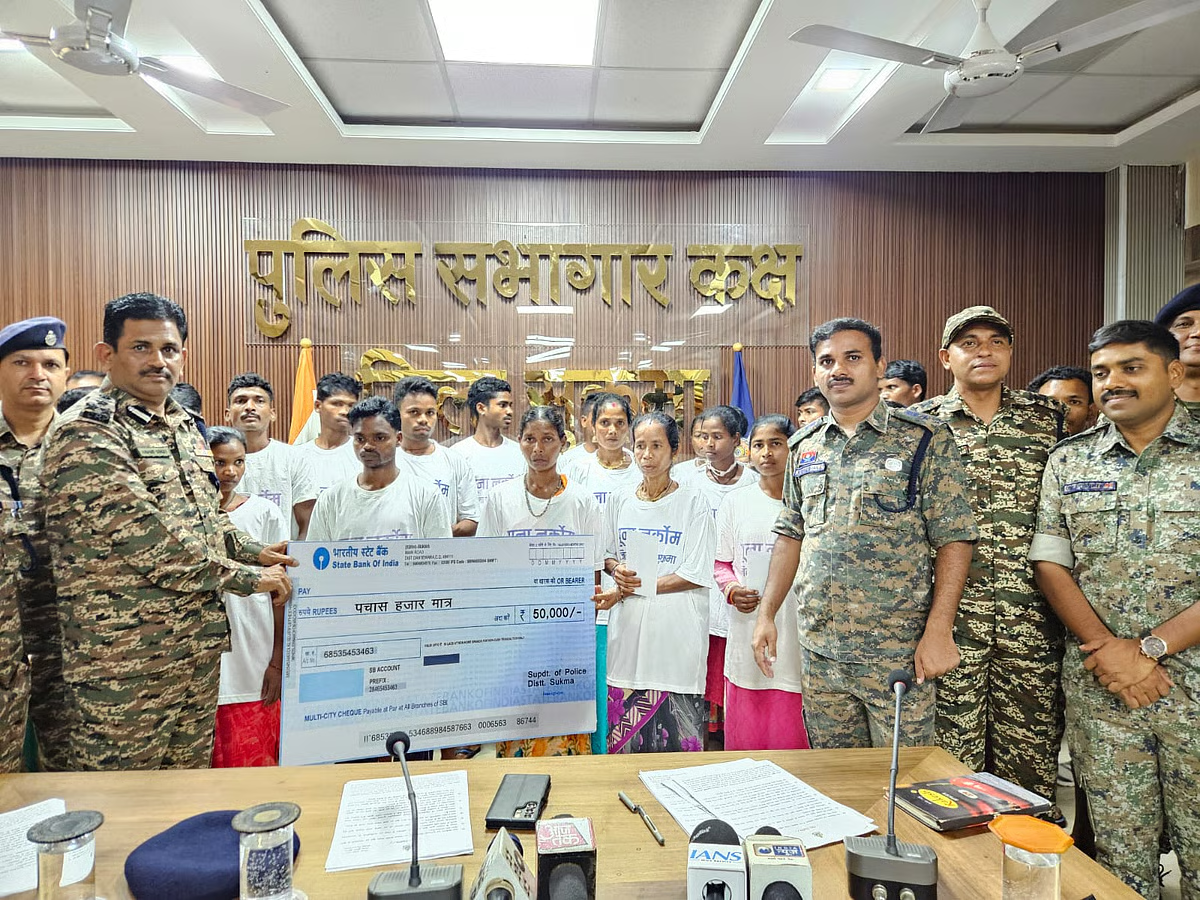
The offer follows a series of government successes against the Maoist insurgency. Over the past year, security forces have killed more than 270 Maoists across Chhattisgarh, Maharashtra, Bihar, Jharkhand, Andhra Pradesh, and Telangana. At least 1,225 cadres have surrendered voluntarily, while 680, including senior leaders, have been arrested. The killing of Maoist chief Nambala Kesava Rao, alias Basavaraju, on May 20 marked one of the most significant setbacks for the Left-Wing extremists in recent years. Consequently, the number of Left-Wing extremism-affected districts in India has decreased from 18 in April to 11, according to the Union government.
Peaceful Transition Hinges on Security and Coordination
In his letter, Anant urged the state governments to create an environment conducive to a peaceful transition. He requested a temporary halt to security operations in Maoist-affected areas until the surrender process is completed and pledged that cadres would suspend all violent or organizational activity during the same period.
Referring to comments by Chhattisgarh Chief Minister Vishnu Deo Sai, who indicated that the surrender process could be completed in 10 to 15 days, the committee agreed to the timeline. Both sides have been urged not to undertake offensive operations until January 1, reinforcing the focus on dialogue and trust-building.
Anant also requested a meeting between government representatives and Maoist interlocutors in Madhya Pradesh to discuss key proposals, strengthen confidence, and formalize coordination mechanisms. For the next month, cadres will be reachable daily via radio frequency 435.715 between 11:00 am and 11:15 am to facilitate communication and ensure smooth implementation of the surrender plan. The committee also appealed to journalists and opinion makers to support the process by maintaining public trust in the negotiations.
The MMC committee operates primarily in the dense tri-junction forests of Gadchiroli (Maharashtra), Balaghat (Madhya Pradesh), and Rajnandgaon and Kabirdham (Chhattisgarh), considered a crucial corridor for Maoist operations. The region’s dense forests and inter-state boundaries have historically complicated coordinated anti-Maoist operations, serving as a key logistics, recruitment, and movement hub for insurgents.
Focus on Rehabilitation and Mainstream Reintegration
Anant emphasised that surrendered cadres and their families seek not only peace but a dignified return to society. The committee highlighted that past rehabilitation schemes often failed to provide adequate support, leaving former militants vulnerable to social stigma and security risks. By ensuring transparency, accountability, and safety guarantees, the government could secure a successful reintegration process, significantly weakening Maoist influence in the tri-junction regions.
There has been no immediate response from the governments of Maharashtra, Chhattisgarh, or Madhya Pradesh regarding the proposal. Security analysts note that if implemented, the surrender plan could mark a major turning point in India’s decades-long fight against Left-Wing extremism.
The central government has set a March 31, 2026 deadline for eliminating Left-Wing extremism in India, reflecting the urgency of finalizing surrender and rehabilitation processes. A coordinated, peaceful surrender could prevent further loss of life, reduce operational challenges for security forces, and support long-term stability in regions historically affected by Maoist violence.
The MMC committee’s offer demonstrates the potential for dialogue and confidence-building between state authorities and insurgent groups. With proper security guarantees, transparent rehabilitation policies, and active coordination, authorities and Maoist cadres could work toward reducing armed conflict, fostering socio-economic development, and ending decades of insurgency-related disruption in central India.
As India intensifies anti-Maoist operations, the proposal from the MMC committee represents a critical opportunity for peaceful resolution. With ongoing talks, confidence-building measures, and strict adherence to timelines, the surrender plan could serve as a model for integrating former insurgents into mainstream society, ensuring long-term security and stability across Maharashtra, Chhattisgarh, and Madhya Pradesh.