India is witnessing an intensifying political clash between the northern and southern states, driven by two major issues—delimitation of Lok Sabha seats and the debate over Hindi imposition. These issues have reignited old tensions, raising concerns about fair representation and linguistic autonomy in the country’s governance structure.
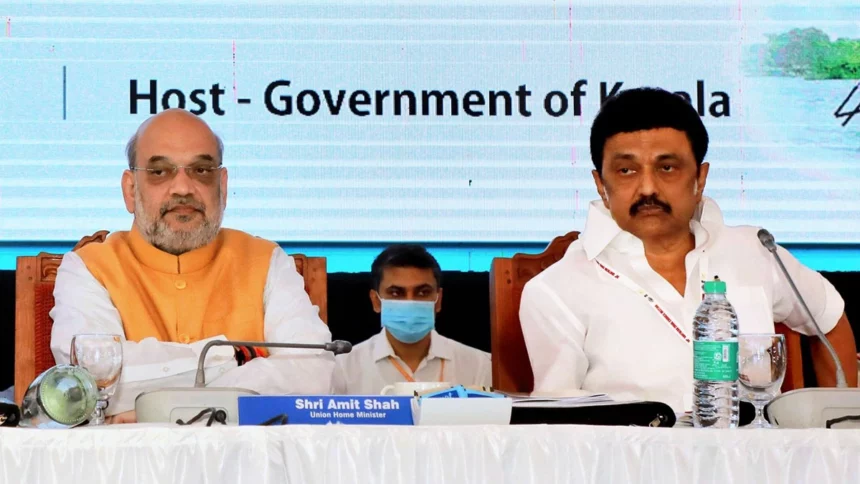
The delimitation debate stems from the fact that Lok Sabha seats have remained frozen at 543 since 1976, despite significant demographic changes. Northern states like Uttar Pradesh, Bihar, and Madhya Pradesh have experienced rapid population growth, while southern states such as Tamil Nadu, Kerala, Karnataka, Andhra Pradesh, and Telangana have successfully slowed their population increase through family planning and better healthcare policies. With the possibility of a new delimitation exercise after 2026, southern leaders argue that rewarding states with high population growth by increasing their parliamentary representation would be unfair. Tamil Nadu Chief Minister MK Stalin has strongly opposed this potential shift, calling it a betrayal of states that have implemented effective population control measures. Telangana’s Chief Minister A Revanth Reddy and leaders from Karnataka and Kerala have also joined the protest, fearing a reduction in their political influence.
The argument is not just about numbers but also economic contribution. Southern states contribute significantly to India’s GDP and tax revenues but feel underrepresented in financial allocations and political decision-making. Telangana’s KT Rama Rao has emphasized that states driving India’s economic growth should not be politically sidelined. Union Home Minister Amit Shah has assured that no state will lose representation and that all states will see an increase in seats, but opposition leaders remain skeptical, demanding more clarity on the criteria for seat distribution.
Parallel to the delimitation debate, Tamil Nadu is at the forefront of a renewed resistance against Hindi imposition. The National Education Policy (NEP) 2020 promotes a three-language formula, which many in Tamil Nadu fear is a veiled attempt to introduce Hindi into their education system. The DMK-led government, under Stalin, has warned of a potential “language war” if the Centre forces the policy on the state. The BJP’s Tamil Nadu chief, K Annamalai, supports the NEP, calling the state’s two-language policy outdated, while Union Education Minister Dharmendra Pradhan has dismissed the concerns as politically motivated. The Centre has also linked education funding to compliance with the NEP, intensifying the standoff.
As both issues evolve, the north-south divide in Indian politics appears to be widening. The coming years will determine whether these differences can be reconciled or if they will deepen existing regional and political fault lines.