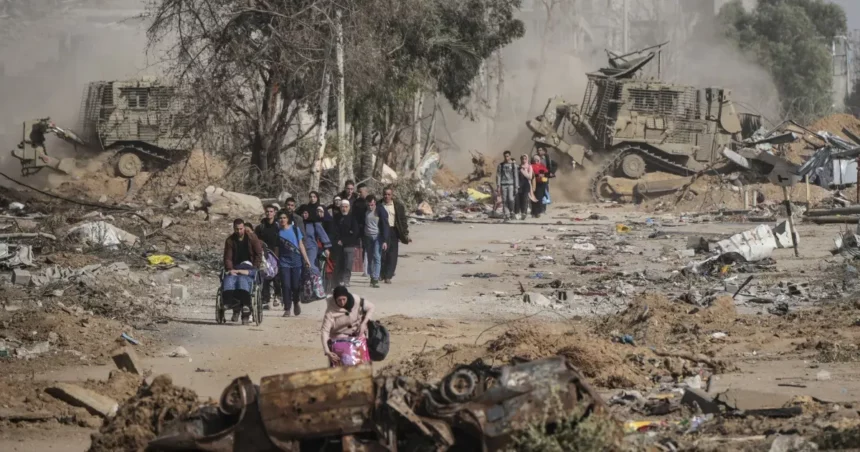
Several Arab nations and the United Nations have condemned Israel for blocking the entry of humanitarian aid into the Gaza Strip, calling the move a violation of international law and the ceasefire agreement. Egypt and Qatar, which helped mediate the truce, strongly criticized Israel’s decision, while UN humanitarian chief Tom Fletcher described the blockade as “alarming” and a serious humanitarian concern.
Israeli Prime Minister Benjamin Netanyahu defended the blockade, stating that Hamas was diverting aid supplies for its own use instead of distributing them to civilians. He also accused the Palestinian group of rejecting a US-backed proposal to extend the ceasefire, which Israel claims to have approved. Hamas, however, dismissed these claims, calling the blockade an act of “cheap blackmail” and a breach of the ceasefire terms.
The truce, which had paused 15 months of hostilities between Hamas and Israeli forces, had facilitated the exchange of 33 Israeli hostages for approximately 1,900 Palestinian prisoners. However, as the initial phase of the ceasefire expired, uncertainty loomed over the next steps. The negotiations for the second phase, meant to lead to a permanent ceasefire, the release of all remaining hostages, and an Israeli withdrawal from Gaza, have stalled. Hamas has insisted that it will not agree to any further extension unless guarantees are provided for implementing the next phase of the deal.
Qatar’s foreign ministry released a statement condemning Israel’s decision, calling it a “clear violation” of both the ceasefire agreement and international humanitarian law. Egypt also criticized Israel, accusing it of using starvation as a weapon against Palestinians. Meanwhile, Saudi Arabia joined in denouncing the blockade, reinforcing regional opposition to Israel’s actions.
The UN reiterated its stance that humanitarian aid must not be obstructed. Tom Fletcher emphasized that international humanitarian law guarantees access to lifesaving assistance and urged all parties to resolve the situation to prevent further civilian suffering.
Despite the blockade, aid agencies confirmed they had managed to store supplies within Gaza, preventing an immediate crisis. However, the halt in new deliveries raises concerns about long-term humanitarian consequences. On Sunday, Israeli airstrikes killed four people in Gaza, further escalating tensions.
The ongoing conflict traces back to October 7, 2023, when Hamas launched a deadly attack on Israel, killing 1,200 people and taking 251 hostages. Israel’s military response has since resulted in the deaths of over 48,365 people in Gaza, according to the Hamas-run health ministry.
As diplomatic efforts struggle to sustain the ceasefire, the blockade on aid remains a point of contention, with global leaders calling for urgent intervention to prevent a worsening humanitarian crisis.