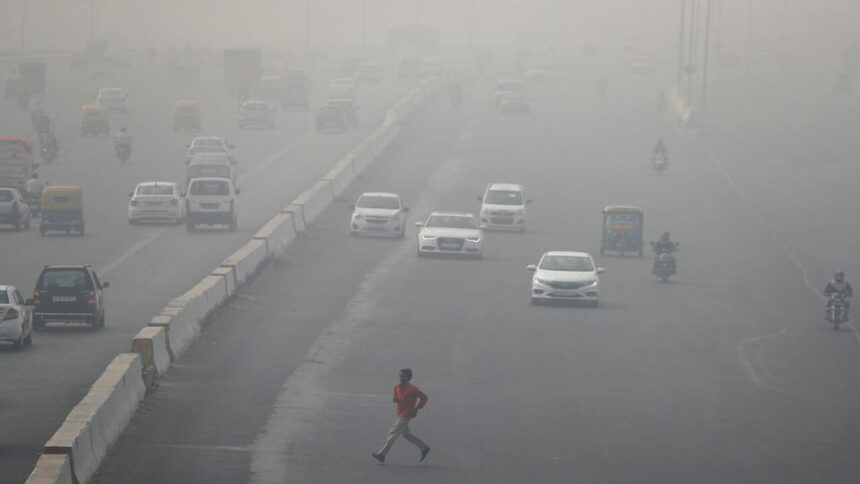
Amid deteriorating air quality in Delhi-NCR, the Noida Authority has intensified its efforts to curb pollution in the region. Under the Graded Response Action Plan (GRAP), the Authority has deployed 14 special teams tasked with monitoring and penalizing violations of pollution control norms. Authorities have also ramped up measures to control dust, including regular water sprinkling on roads and the use of anti-smog guns at construction sites. The initiative reflects the Authority’s zero-tolerance approach toward pollution and its commitment to ensuring cleaner air for residents.
The GRAP framework empowers local authorities to take swift action during periods of high pollution, and the Noida Authority is utilizing it to the fullest. Violators of environmental rules, including construction companies and industrial units, are being fined up to ₹15 lakh depending on the severity of the offense. Officials have stated that these strict measures aim to reinforce accountability and send a clear message that pollution control will be enforced rigorously.
Major Dust Control Measures on Roads and Construction Sites
To control dust on public roads, the Noida Authority has launched large-scale operations. Each day, treated water is sprayed on major city roads using an average of 60 water tankers, covering distances of 260 to 280 kilometers. This water sprinkling helps reduce airborne dust particles, improving air quality along key traffic corridors. Additionally, 14 mechanical sweeping machines are being used daily to clean approximately 340 kilometers of road, ensuring that accumulated dust does not contribute to air pollution.
The Horticulture Department is actively participating in pollution control measures by washing plants and trees along central verges using 25 water tankers daily. Officials stated that this effort not only helps in dust suppression but also enhances the urban greenery, which contributes to improving air quality in the long term.
Construction sites, which are significant contributors to dust and particulate matter in the air, are being closely monitored. Anti-smog guns have been deployed at active sites to prevent dust from spreading into surrounding areas. Contractors are being instructed to follow strict dust suppression guidelines, and failure to comply can lead to substantial fines. Authorities are conducting regular inspections to ensure adherence to the rules and prevent environmental violations.
The 14 special GRAP teams have been strategically stationed across the city to monitor pollution hotspots. These teams are empowered to issue immediate penalties and are equipped to handle violations efficiently. Officials emphasized that the Authority’s approach combines enforcement with preventive measures to ensure that air pollution is minimized during the winter months, when particulate matter levels typically rise.
Zero-Tolerance Approach and Public Awareness Initiatives
The Noida Authority’s zero-tolerance policy reflects a strong commitment to public health and environmental safety. By imposing fines of up to ₹15 lakh, authorities aim to deter negligent practices that contribute to air pollution. Officials highlighted that compliance is mandatory for all construction and industrial activities, and no exceptions will be tolerated.
In addition to enforcement, the Authority is promoting public awareness about pollution control. Citizens are being urged to avoid activities that generate dust and smoke, such as burning waste or construction debris. Awareness campaigns are being conducted through local media and social platforms to ensure community participation in improving air quality.
Authorities noted that the combined efforts of road sprinkling, mechanical sweeping, horticultural interventions, and strict enforcement of penalties are expected to reduce particulate matter levels significantly in the coming weeks. By taking a proactive approach and maintaining rigorous monitoring, the Noida Authority hopes to set an example for pollution management in other NCR cities.
Officials concluded by reiterating that maintaining clean air requires both regulatory enforcement and public cooperation. The GRAP-driven measures, along with the deployment of 14 special teams and a comprehensive dust control strategy, are part of a holistic approach to address air pollution in Noida and safeguard the health of residents.
The Noida Authority’s zero-tolerance initiative demonstrates a strong commitment to environmental governance, ensuring that both industrial and civic practices align with the city’s clean air objectives. Through strict enforcement, innovative dust control methods, and active community engagement, the Authority is aiming for measurable improvements in air quality during the critical winter season.