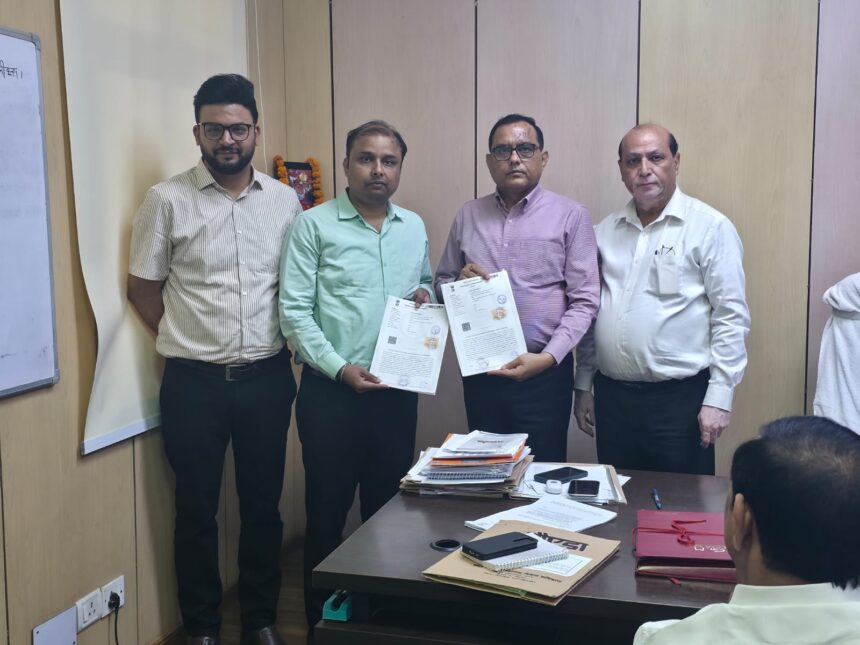
The Noida Authority has taken a major step toward strengthening electric vehicle infrastructure by signing a Memorandum of Understanding (MoU) with Hindustan Petroleum Corporation Limited on April 27, 2026. The agreement aims to install 13 electric vehicle (EV) battery swapping stations at key locations across Noida, facilitating faster adoption of clean mobility solutions.
The initiative is aligned with ongoing efforts to control pollution levels in the city and encourage the use of electric vehicles, particularly among daily commuters and commercial vehicle operators. With increasing environmental concerns and rising vehicular emissions in the National Capital Region, the project is expected to contribute significantly toward improving air quality and promoting sustainable urban transport.
Strategic Locations Identified Across Noida
As part of the project, 13 battery swapping stations will be developed at prominent and accessible locations across the city. These include areas opposite the office entry gate of Noida Authority in Sector 6 and Ganga Shopping Complex in Sector 29. Additional stations are planned in front of ESIC Hospital in Sector 24 and near Electronic City Metro Station, Gate No. 2, in Sector 63.
Other locations include near Haldiram H-Block Market in Sector 63, opposite Sasta Sundar Hospital in Sector 58, and near Modi Mall (Spice) plot area in Sector 25A. Battery swapping stations will also be installed near Shopprix Mall in Sector 61 and near FC-05 opposite Laxmi Video Studio in Sector 16A. Further installations are planned near A-12 in Sector 16, near Sector 18 Metro Station, near Amity University, and near Sector 15 Metro Station.
These locations have been selected to ensure maximum accessibility for commuters, especially those using two-wheelers and three-wheelers, who are expected to be the primary beneficiaries of the battery swapping infrastructure.
Zero Investment Model for Noida Authority
A key feature of the project is its cost structure. The entire cost of establishing and operating the battery swapping stations will be borne by HPCL. This means that Noida Authority will not incur any financial expenditure for the implementation of the project.
Despite the zero-investment model, the Authority will benefit from revenue sharing. Under the agreement, it will receive ₹1.00 per kilowatt-hour (kWh) of electricity consumption generated through the operation of these stations. This ensures a steady revenue stream while simultaneously promoting environmentally sustainable infrastructure.
Faster Adoption of Electric Vehicles
Battery swapping technology offers a practical and time-efficient solution to one of the major challenges associated with electric vehicles—charging time. Instead of waiting for a battery to charge, users can replace their discharged battery with a fully charged one within minutes.
This system is particularly beneficial for commercial users such as e-rickshaw drivers and delivery service operators, whose daily income depends on minimizing downtime. The availability of multiple swapping stations across the city is expected to significantly improve operational efficiency and encourage more users to shift from conventional fuel-powered vehicles to electric alternatives.
Boost to Environmental Sustainability
The initiative is expected to play a crucial role in reducing vehicular emissions and improving air quality in Noida. With the transport sector being a major contributor to urban pollution, the promotion of electric mobility is seen as a critical step toward achieving environmental sustainability.
The project supports broader goals of reducing dependence on fossil fuels and lowering greenhouse gas emissions. By enabling easier access to EV infrastructure, the initiative aligns with national and regional efforts to promote clean energy and sustainable development.
Step Toward Smart City Development
The collaboration between Noida Authority and HPCL reflects a forward-looking approach to urban planning and infrastructure development. By leveraging a public-private partnership model, the Authority is able to expand critical infrastructure without direct financial burden.
The rollout of EV battery swapping stations is expected to enhance the city’s readiness for future mobility solutions and strengthen its position as a smart and sustainable urban center. As electric vehicles continue to gain traction across India, such initiatives are likely to serve as a model for other cities.
With the implementation of this project, Noida moves closer to its goal of becoming a cleaner, greener, and more efficient city, offering modern mobility solutions to its residents while addressing pressing environmental challenges.