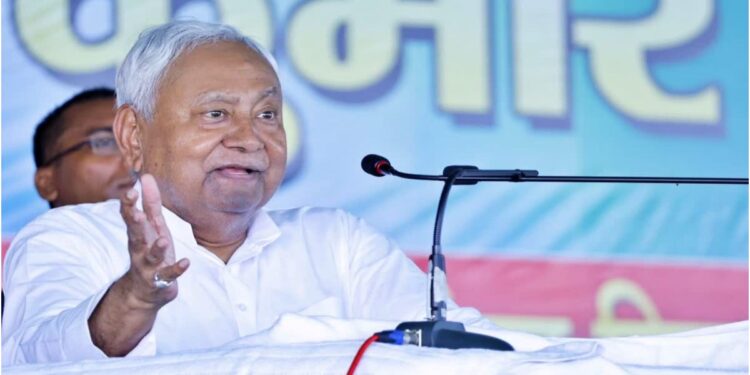
Bihar Chief Minister Nitish Kumar is set to launch the third phase of his statewide development outreach program, known as the “Samriddhi Yatra,” beginning March 10. The tour will cover several districts in the Seemanchal and Kosi regions and will continue until March 14. During the visit, the chief minister is expected to review ongoing development schemes, lay foundation stones for new projects, and interact with local residents to assess the effectiveness of government initiatives. The yatra comes at a politically significant moment as Kumar recently filed his nomination for the Rajya Sabha and is expected to step down from the chief minister’s position in the coming weeks as part of the formation of a new government under the National Democratic Alliance.
According to an official communication issued by the General Administration Department of the Bihar government, the chief minister will travel through multiple districts in the eastern and northern parts of the state. The tour will focus primarily on evaluating development projects and administrative progress in areas that are often considered economically and socially sensitive.
Officials indicated that the chief minister will also conduct detailed review meetings with district administrators and senior government officers during the tour. These meetings are intended to assess the implementation of government schemes and identify areas where further improvement is required.
The Samriddhi Yatra has been designed as a platform through which the chief minister directly interacts with both administrative officials and local citizens. By visiting districts personally, the government aims to monitor development works more closely and gather direct feedback from the public regarding service delivery and governance.
The third phase of the yatra will begin shortly after Nitish Kumar submitted his nomination papers for the Rajya Sabha elections. The move has intensified political discussions in Bihar because it indicates that Kumar may soon transition to national politics after leading the state for nearly two decades.
Extensive district tour to review development projects and governance
The schedule for the third phase of the Samriddhi Yatra includes visits to several districts across Seemanchal and the Kosi region, both of which have historically faced developmental challenges due to economic constraints and recurring floods.
The chief minister will begin his tour on March 10 from Supaul district, where he will review development works and administrative progress. Later on the same day, he is scheduled to travel to Madhepura to conduct similar assessments and meetings with local officials.
On March 11, the tour will continue with visits to Araria and Kishanganj. During these visits, Nitish Kumar is expected to examine the implementation of government welfare programs and infrastructure projects. Officials from various departments will present detailed reports on progress achieved in their respective sectors.
The following day, on March 12, the chief minister will travel to Purnea and Katihar districts. These areas play an important role in regional economic activities, particularly agriculture and trade. The review meetings will therefore focus on agricultural development, rural infrastructure, and employment programs.
On March 13, Nitish Kumar will visit Saharsa and Khagaria, where additional development initiatives will be evaluated. The government plans to assess ongoing projects related to roads, public services, and welfare schemes aimed at improving living standards for residents.
The final day of the tour, March 14, will include visits to Begusarai and Sheikhpura districts. These visits will conclude the third phase of the Samriddhi Yatra, during which the chief minister is expected to review progress in multiple sectors and interact with local communities.
Senior government officials have been instructed to prepare detailed reports and presentations for the review meetings. Additional Chief Secretary Arvind Kumar Chaudhary from the General Administration Department has directed administrative departments to ensure that senior officers remain present during the chief minister’s meetings in each district.
Top officials including divisional commissioners, district magistrates, and senior police officers have also been asked to participate in the review sessions. Their presence is intended to ensure that the chief minister receives comprehensive updates on development initiatives and administrative performance.
Political significance grows as Nitish Kumar prepares transition to national role
The third phase of the Samriddhi Yatra comes amid increasing political activity within the Janata Dal (United) as Nitish Kumar prepares to move toward national politics. His nomination for the Rajya Sabha has led to widespread speculation that he may soon step down as chief minister to allow the formation of a new government under the National Democratic Alliance in Bihar.
The political developments have attracted attention because Nitish Kumar has been one of the most prominent leaders in Bihar politics for more than two decades. Throughout his tenure, he has frequently undertaken statewide tours to review government work and maintain direct contact with citizens.
These tours have often served both administrative and political purposes. By visiting districts and interacting with residents, the chief minister has sought to assess public perception of government policies and identify areas where improvements are needed.
During the Samriddhi Yatra, Nitish Kumar is expected to hold meetings with local residents to gather feedback on development projects and public services. Such interactions provide an opportunity for citizens to directly communicate their concerns and suggestions to the state leadership.
The yatra is also taking place at a time when internal developments within the party are attracting attention. On Sunday, Nitish Kumar’s son Nishant Kumar formally joined the Janata Dal (United) in the presence of senior party leaders at the chief minister’s residence in Patna.
His entry into active politics has led to speculation about the possibility of a broader political role in the future. Some observers believe that Nishant Kumar may undertake a statewide tour to familiarize himself with party structures and grassroots political activities.
It remains uncertain whether he will accompany his father during any part of the Samriddhi Yatra. However, the possibility has generated interest within political circles because it could signal the beginning of a new phase in the party’s leadership dynamics.
The Samriddhi Yatra itself was launched earlier this year on January 16 from West Champaran district. The initiative was designed to strengthen the government’s monitoring of development programs while maintaining direct communication with citizens across Bihar.
The second phase of the tour began on January 27 but was temporarily halted due to the budget session of the Bihar legislature. The upcoming third phase will therefore resume the outreach effort and continue the chief minister’s engagement with districts across the state.
Over the years, Nitish Kumar has undertaken several similar journeys across Bihar to review development works and gather feedback from citizens. One of the most notable among these was the statewide “Pragati Yatra,” which he launched in December 2024 and continued until February 2025.
These tours have become a characteristic feature of his governance style, reflecting his emphasis on direct monitoring of government programs and continuous engagement with local communities.