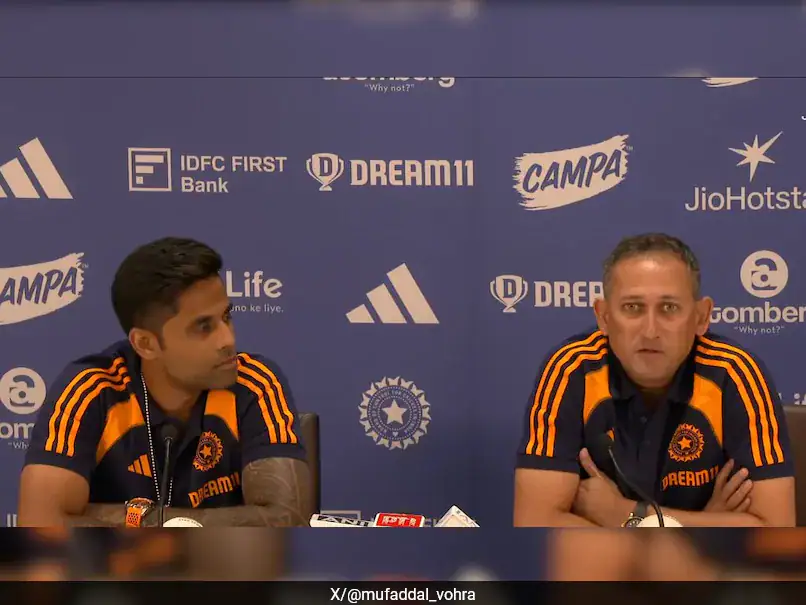
India are preparing to reveal their squad for the ICC Men’s T20 World Cup 2026, a decision that carries major implications for leadership, team balance, and the future direction of Indian white-ball cricket. The announcement, scheduled for Saturday afternoon, will also cover selections for the upcoming five-match T20I series against New Zealand, which will serve as India’s final competitive assignment before the global tournament beginning on February 7. With expectations high and scrutiny intense, the selection meeting at the BCCI headquarters in Mumbai has become a focal point for fans and analysts alike, particularly around the captaincy of Suryakumar Yadav and the evolving roles of senior and emerging players.
The T20 World Cup will be co-hosted by India and Sri Lanka, adding further pressure on the home side to strike the right balance between experience and form. While several core players appear assured of their places, the selectors face difficult calls on leadership continuity, vice-captaincy, and a few contested slots that could shape India’s campaign. The forthcoming New Zealand series, to be played in late January, is expected to function as a dress rehearsal, offering the management a final opportunity to fine-tune combinations and assess readiness under match conditions.
Leadership under the scanner as Suryakumar’s form and captaincy spark questions
One of the most debated aspects of the squad announcement is the future of Suryakumar Yadav as India’s T20 captain. Although no official statement has been made by the Board of Control for Cricket in India, there is growing speculation within cricketing circles that the 2026 World Cup could represent his final assignment as India’s T20 skipper. At 35, Suryakumar has endured a prolonged lean patch, going without a significant run of scores for nearly 14 months across 24 matches. Despite his reputation as one of the most innovative and destructive batters in the format, his recent numbers have failed to reflect his impact.
Observers suggest that his leadership role has been a key factor in his continued presence in the side during this phase. The selectors appear reluctant to disrupt captaincy stability on the eve of a major tournament, particularly given Suryakumar’s standing within the dressing room and his past contributions in high-pressure situations. However, the World Cup on home soil amplifies expectations, and questions remain over whether leadership continuity can outweigh concerns over form at the top level.
Closely linked to this debate is the role of vice-captain Shubman Gill, whose struggles in T20 internationals have become a recurring talking point. Gill’s technical excellence and long-term value to Indian cricket are widely acknowledged, but his returns in the shortest format have not matched expectations. Reports suggest that while Gill is likely to retain his place in the 15-member squad, the selectors are considering whether to persist with him as vice-captain or leave the position vacant to keep options open.
Former India batter Aakash Chopra has publicly noted that teams are generally hesitant to reverse leadership decisions quickly once a vice-captain is appointed. At the same time, he has hinted that the management may look towards Hardik Pandya as an alternative leadership option, given his experience, tactical awareness, and proven impact in T20 cricket. Hardik’s recent performances, including a blistering 63 off 25 balls against South Africa, have strengthened his case as both a match-winner and a senior figure capable of assuming greater responsibility if required.
Squad composition debates as selectors weigh form, flexibility and final slots
Beyond leadership, the overall composition of India’s T20 World Cup squad appears largely settled, particularly in the pace and all-rounder departments. According to reports, the selectors have already locked in pacers Jasprit Bumrah, Arshdeep Singh, and Harshit Rana, forming a balanced attack that combines experience, left-arm variation, and emerging pace. All-rounders Hardik Pandya and Shivam Dube are also expected to be automatic selections, providing depth in both batting and bowling.
India are likely to continue with the two-wicketkeeper strategy, with Sanju Samson and Jitesh Sharma offering contrasting skill sets. While Samson brings experience and classical stroke play, Jitesh’s power-hitting in the middle and lower order adds flexibility to the batting lineup, especially on high-scoring surfaces expected during the tournament.
The most intense debate surrounds a handful of batting and all-rounder positions. Reports indicate that the selectors have been deliberating between Shubman Gill, Washington Sundar, and Rinku Singh for specific roles within the squad balance. Rinku’s finishing ability and calm temperament under pressure have earned him strong backing, while Washington’s utility as a spin-bowling all-rounder provides tactical flexibility, particularly on slower pitches.
Another name frequently mentioned is Yashasvi Jaiswal, whose explosive form in domestic and franchise cricket has kept him firmly in contention. While there may be no immediate opening in the starting combination, selectors are reportedly considering including Jaiswal in the New Zealand T20I squad as an additional option, allowing them to assess his readiness in international conditions ahead of the World Cup.
The selectors also retain the freedom to make changes to the final 15 up until the tournament begins on February 7, a flexibility that has precedent. Earlier in the year, India made a late adjustment during the Champions Trophy, when Varun Chakravarthy was brought into the squad after conditions in Dubai demanded additional spin options. Such adaptability may again prove crucial, especially given the varied conditions expected across venues in India and Sri Lanka.
As the announcement time approaches, the overarching theme remains balance rather than experimentation. Despite concerns over individual form, the selection committee appears inclined to avoid dramatic changes, prioritising cohesion, role clarity, and experience. The upcoming New Zealand series will then serve as the final testing ground, offering insights into combinations and confidence levels before India embark on their quest for T20 World Cup glory at home.