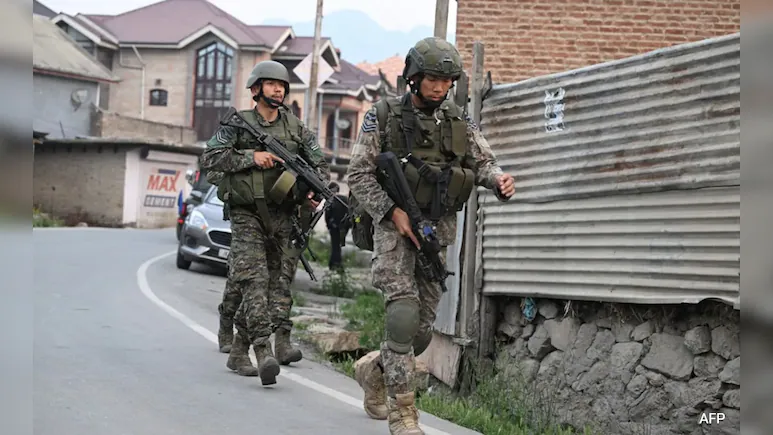
A new assessment by a prominent United States think tank has warned that the possibility of an armed conflict between India and Pakistan in 2026 cannot be ruled out, citing heightened terrorist activity and fragile regional stability despite diplomatic efforts to prevent escalation.
think tank assessment and recent india pakistan military tensions
According to a report released by the Council on Foreign Relations, there is a credible risk that renewed terrorist activity could trigger an armed confrontation between India and Pakistan in 2026. The assessment is based on a survey of American foreign policy experts who evaluated potential global conflict flashpoints in the coming year. While the report does not predict an inevitable war, it categorises the likelihood of conflict as significant enough to merit close international attention.
The report places the India Pakistan relationship within a broader global context, noting that the Donald Trump administration has sought to de-escalate several ongoing conflicts worldwide. These include tensions in regions such as the gaza strip, ukraine, and parts of africa, as well as disputes involving south asian neighbours. Despite these efforts, the report suggests that deep-rooted security challenges, particularly terrorism linked to cross-border networks, continue to pose a serious threat to peace between New Delhi and Islamabad.
The warning comes in the backdrop of a brief but intense military face-off between India and Pakistan earlier this year. In May, the two nuclear-armed neighbours were involved in a three-day confrontation that followed a deadly terrorist attack in Jammu and Kashmir’s pahalgam area. The attack, which claimed the lives of twenty six civilians, sharply escalated tensions and prompted a swift military response from India.
In the early hours of May 6, the Indian Army launched Operation Sindoor, targeting multiple terrorist camps across the border in Pakistan. Indian officials stated that more than one hundred terrorists were eliminated and nine camps were destroyed during the operation. The strikes marked a significant escalation and were framed by New Delhi as a direct response to terrorism emanating from across the line of control.
In the days that followed, Pakistan attempted to retaliate by targeting Indian military and civilian assets using armed drones. These incursions, which occurred between May 7 and May 10, were intercepted and neutralised by Indian defence systems, with authorities reporting no casualties or material damage. The cumulative pressure of India’s response, combined with the risk of further escalation, eventually led to diplomatic and military channels being activated to prevent a wider conflict.
On May 10, communication between the director general of military operations of the Indian Army and his Pakistani counterpart resulted in an understanding to cease firing and military action along the line of control. While the immediate crisis was defused, analysts noted that the underlying causes of tension remained unresolved, leaving the relationship vulnerable to future shocks.
regional instability, terrorism, and wider south asian implications
The council on foreign relations report underscores that terrorism remains the most unpredictable and destabilising factor in the India Pakistan equation. Experts surveyed for the assessment pointed out that even limited attacks can rapidly spiral into military confrontations due to domestic political pressure, public sentiment, and the legacy of mistrust between the two countries. In such an environment, crisis management becomes increasingly difficult, especially when communication channels are strained or delayed.
The report also situates India Pakistan tensions within a broader pattern of regional instability in south asia. It highlights that Pakistan faces simultaneous security challenges on multiple fronts, including its western border. Earlier this year, a separate conflict involving Pakistan and Afghanistan escalated following a Pakistani airstrike in Kabul aimed at eliminating Noor Wali Mehsud, the leader of the tehrik-e-taliban pakistan. Afghanistan responded strongly to the strike, leading to heightened hostilities and raising fears of a prolonged confrontation.
According to the think tank, there is a moderate likelihood of an armed conflict between Afghanistan and Pakistan in 2026 as well, driven by resurgent cross-border militant attacks. This dual pressure, experts warn, could further complicate Pakistan’s internal and external security calculus, increasing the risk of miscalculation along the eastern border with India.
For India, the report suggests that sustained vigilance against terrorism will remain a central security priority. Any major attack on civilians or security forces could prompt a forceful response, similar to the actions taken earlier this year. While India has consistently emphasised that its operations are aimed at terrorist infrastructure rather than the Pakistani state, the thin line between counter-terror strikes and interstate conflict remains a concern for international observers.
The think tank’s findings also reflect a broader anxiety among global policymakers about the potential consequences of renewed India Pakistan hostilities. As both countries possess nuclear weapons, even a limited conventional conflict carries risks far beyond the immediate battlefield. This reality has historically prompted international actors, including the United States, to intervene diplomatically during crises to encourage restraint and dialogue.
Despite these risks, the report notes that there are also incentives for de-escalation. Economic pressures, international scrutiny, and the desire to avoid diplomatic isolation act as constraints on both sides. However, these factors can be quickly overshadowed by the political fallout of terrorist attacks, particularly when civilian casualties are involved.
The council on foreign relations assessment does not claim that conflict in 2026 is inevitable, but it serves as a warning that the structural drivers of tension remain firmly in place. Without meaningful progress on counter-terror cooperation, confidence-building measures, and sustained dialogue, experts believe that the India Pakistan relationship will continue to oscillate between uneasy calm and sudden escalation.
As global attention shifts toward emerging conflicts elsewhere, the report cautions against complacency regarding south asia. The combination of unresolved disputes, militant activity, and regional instability means that even a single incident could reignite hostilities. For policymakers, the message is clear: preventing another India Pakistan crisis will require sustained diplomatic engagement, effective counter-terror strategies, and mechanisms to manage escalation before it spirals into open conflict.