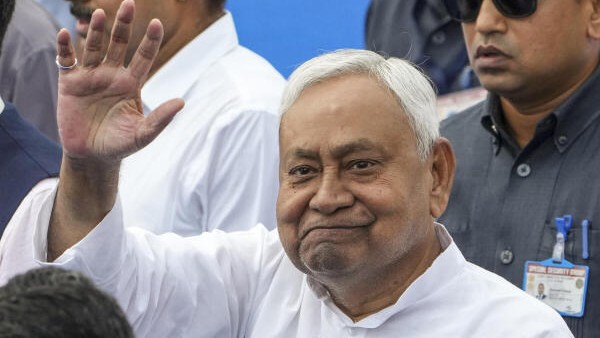
Bihar is witnessing a pivotal political transition as Nitish Kumar prepares to take oath as a Rajya Sabha member on April 10, a move that is expected to trigger leadership changes within the state and reshape the power dynamics of the ruling National Democratic Alliance.
The development marks a significant shift in Bihar’s political landscape, where Nitish Kumar has remained a dominant figure for nearly two decades. His transition to the Rajya Sabha not only signifies a move toward national politics but also sets the stage for the selection of a new chief minister in the state. According to political sources, the process of forming a new government will begin after his resignation, with the NDA expected to play a decisive role in choosing his successor.
Nitish Kumar’s Shift To Rajya Sabha And Its Political Implications
Nitish Kumar’s decision to move to the Rajya Sabha represents more than just a routine political transition; it reflects a strategic recalibration within both his party and the broader NDA alliance. Having served multiple terms as Bihar’s chief minister, his elevation to the Upper House signals a shift from state-centric leadership to a more national role in policymaking and political negotiations.
Reports indicate that Nitish Kumar traveled to New Delhi ahead of the oath-taking ceremony and is expected to hold meetings with senior leaders of his party to chart out future strategies. These discussions are crucial, as they will determine how his party positions itself in the evolving political scenario following the formation of a new government in Bihar.
At the same time, the Bharatiya Janata Party, a key constituent of the NDA, has initiated internal consultations to identify the next chief minister. The selection process is expected to involve the party’s state core committee, underscoring the importance of consensus within the alliance.
The transition is being closely watched not only within Bihar but across the national political spectrum. Nitish Kumar’s move to the Rajya Sabha adds to his already extensive political journey, which includes roles in both state and central governments. His experience is expected to play a significant role in shaping legislative debates and alliance strategies at the national level.
At the same time, this shift also raises questions about the future direction of governance in Bihar. Nitish Kumar has been widely regarded for his administrative style and political adaptability, often navigating complex coalition dynamics. His departure from the chief minister’s post will inevitably create a leadership vacuum that the NDA must address carefully to maintain stability.
Recent developments suggest that the transition could mark the end of an era in Bihar politics. Analysts believe that the choice of the next chief minister will have long-term implications for both governance and electoral outcomes in the state.
NDA’s Search For New Bihar Chief Minister Gains Momentum
As Nitish Kumar prepares to assume his role in the Rajya Sabha, the focus has shifted to the NDA’s efforts to select a new chief minister for Bihar. The alliance is expected to deliberate extensively before finalizing a candidate, given the political significance of the decision.
Senior leaders from the BJP and its allies are likely to participate in key meetings to discuss potential contenders. Among those expected to be involved in the discussions are prominent figures within the state and central leadership, highlighting the high stakes associated with the leadership transition.
The process is not merely about choosing a successor but also about ensuring continuity in governance while addressing emerging political challenges. The NDA will need to strike a balance between experience, public appeal, and internal party dynamics while selecting the next chief minister.
Political observers note that the decision could influence Bihar’s political trajectory for years to come. The new chief minister will inherit not only the responsibilities of governance but also the expectations associated with Nitish Kumar’s long tenure. This includes maintaining development initiatives, managing coalition relationships, and preparing for future electoral contests.
At the same time, there are indications that Nitish Kumar may continue to play an influential role in Bihar politics even after moving to the Rajya Sabha. His stature within the NDA and his party ensures that he remains a key figure in strategic decision-making, potentially guiding the new leadership from a national platform.
The unfolding developments also highlight the evolving nature of coalition politics in India. The NDA’s approach to selecting the next chief minister will serve as a test of its internal cohesion and ability to manage transitions effectively.