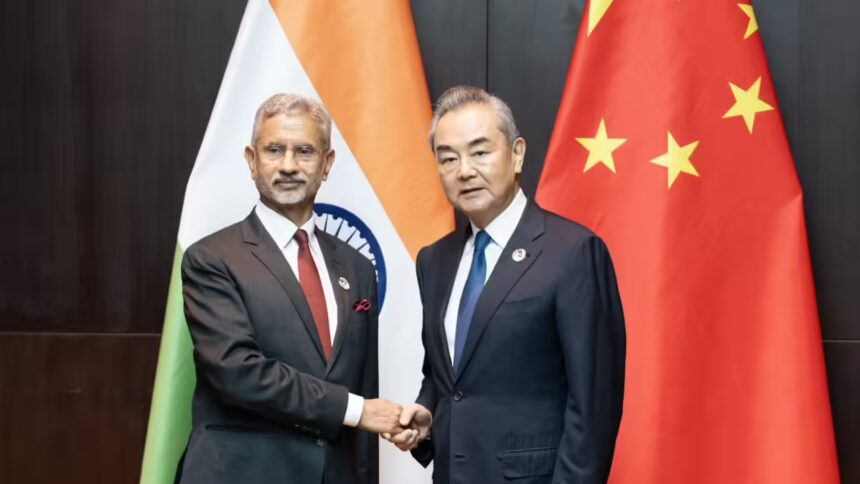
In a candid reminder of India’s position on its ties with China, External Affairs Minister S Jaishankar conveyed to Chinese counterpart Wang Yi that there is no space for any third party, including Pakistan, to influence India-China bilateral relations. The message, delivered during their July 14 meeting, emphasized India’s commitment to stability along the border as the foundation for improved ties, while also stressing that China must ensure predictable trade practices to rebuild trust between Asia’s two largest nations.
The meeting came amid the complex backdrop of the 2020 PLA transgression across the Line of Actual Control (LAC) in East Ladakh, which has left both countries with around 50,000 troops, tanks, and heavy weapons deployed on either side of the 1,597 km LAC despite partial disengagement agreements. As both nations seek a cautious thaw in relations, India made it clear that bilateral progress cannot be hijacked by third-country interests or agendas.
Focus on Border Stability
During their discussion, S Jaishankar expressed satisfaction over the resumption of Indian Army patrols in the Depsang Plains and Demchok region following the October 2024 agreement between the two nations. Highlighting that a “stable border” is the lynchpin for any forward movement in India-China relations, he underscored that it has been five years since the East Ladakh transgression and the Galwan Valley clash, which claimed the lives of soldiers on both sides.
S Jaishankar stressed that it is time for both militaries to focus on de-escalation and normalization along the LAC to reduce friction and potential flashpoints. While tensions have eased in certain friction points, the heavy military presence along the LAC remains a reminder of the fragility of peace in the region. India’s insistence on de-escalation comes from the need to create a conducive environment for trade, regional stability, and broader cooperation between the two countries.
Trade Predictability and Strategic Clarity
S Jaishankar also highlighted the need for China to maintain predictable supply chains with India, emphasizing that trade restrictions and export constraints undermine trust. The conversation followed China’s recent export curbs on critical minerals used in the auto industry and potassium-nitrogen fertilizers, which are vital for India’s manufacturing and agricultural sectors.
The Indian side made it clear that these trade barriers are viewed seriously and that both nations must focus on fostering predictable and stable economic exchanges. S Jaishankar’s remarks also addressed concerns over China’s support to Pakistan, noting that third countries should not be allowed to define or derail the bilateral relationship between India and China. This holds significance as China continues to be a key supplier of advanced military hardware to Pakistan, including aircraft and missiles, which were prominently displayed during India’s Operation Sindoor.
Terrorism and India’s Regional Stand at SCO
While the focus of the S Jaishankar-Wang Yi meeting was on bilateral stability and trade, terrorism remained central to India’s agenda during the Shanghai Cooperation Organisation (SCO) Foreign Ministers’ meeting on July 13. S Jaishankar reminded the SCO members that the organization was created to counter terrorism, separatism, and extremism and highlighted India’s commitment to these objectives through its recent counter-terror operations.
Referring to India’s action against terrorist camps in Pakistan following the Pahalgam attack, S Jaishankar emphasized that these measures were in line with the United Nations Security Council Resolution 16050, passed unanimously on April 25 after the Pahalgam terror attack. The resolution, which saw support from Pakistan, China, and Russia, empowers nations to hold perpetrators, organizers, financiers, and sponsors of terror accountable and to bring them to justice.
By aligning India’s counter-terror operations with international frameworks, S Jaishankar underlined India’s commitment to combating terrorism while reinforcing the need for regional cooperation in addressing security challenges. The UN resolution also condemned the Pahalgam attack and underscored terrorism as a major threat to international peace and security, providing diplomatic backing for India’s assertive actions against terror infrastructure in the region.
S Jaishankar’s meetings with Wang Yi and SCO counterparts have reaffirmed India’s stance on maintaining clarity in its bilateral relationships, ensuring regional security, and opposing the interference of third parties in its sovereign engagements with China. The conversations also underscored India’s growing insistence on aligning global cooperation with its regional security interests, balancing the need for stability with the imperative of countering terrorism in South Asia.