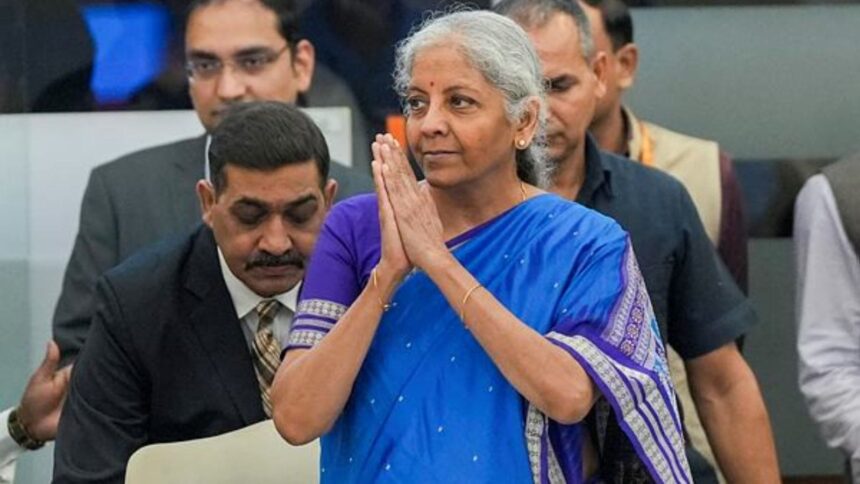
Union Finance Minister Nirmala Sitharaman has indicated that after the sweeping reforms in the Goods and Services Tax (GST) regime, the Finance Ministry will shift its focus to regulatory reforms outside the financial sector. In an interview, Nirmala Sitharaman highlighted that changes concerning non-financial regulators such as the Competition Commission of India (CCI) and the Food Safety and Standards Authority of India (FSSAI) were the next critical area awaiting transformation. She said these measures were already outlined in her budget speech and would be pursued with the objective of simplifying compliance, strengthening economic governance, and furthering ease of doing business in the country. While GST 2.0 has been described as an intense yet rewarding reform, she added that the ministry was now committed to ensuring that regulatory structures beyond the financial domain also evolve in line with India’s growth trajectory.
The Next Phase of Reform Beyond GST 2.0
Nirmala Sitharaman elaborated that the government is now preparing to overhaul the regulatory framework governing non-financial sectors, something she considers critical for the next stage of India’s economic journey. In her budget speech earlier this year, she had already announced the formation of a high-level committee to review all non-financial sector regulations, certifications, licenses, and permissions. The intent, she stressed, is to create a governance ecosystem that rests on trust rather than excessive scrutiny and compliance burdens. The reforms would also encourage states to participate actively in this process, broadening its impact across multiple sectors.
According to the government’s earlier announcement, the committee will have one year to submit its recommendations, with the goal of proposing transformative measures. This is expected to reduce unnecessary bureaucratic hurdles and ensure that businesses, especially small and medium enterprises, can operate in a more streamlined environment. Nirmala Sitharaman highlighted that bodies like the Competition Commission of India and FSSAI have a significant role in regulating market practices and consumer safety, but reforms are necessary to ensure these institutions support, rather than obstruct, economic growth. The larger ambition is to build a more efficient regulatory ecosystem where rules serve as facilitators of business confidence and innovation, rather than barriers.
Nirmala Sitharaman also reflected on the GST Council’s recent approval of a simplified two-rate structure of 5 and 18 percent, which takes effect from September 22. Describing this process as a rigorous and challenging journey, she compared it to sitting for a tough exam and successfully passing it with her entire team. She acknowledged that the true test of GST 2.0 would lie in how effectively it boosts consumption and benefits the people in practice, but she expressed optimism that the new system will rejuvenate economic activity and consumer sentiment.
Balancing Revenue Concerns and Consumer Sentiment
Addressing concerns raised by some states regarding the possible dip in revenues due to the restructured GST rates, the Finance Minister explained that all stakeholders were ultimately drawing from the same pool of resources. She emphasized that the reform was designed with a long-term vision of stimulating demand, which would eventually stabilize and boost revenues. Nirmala Sitharaman assured that the Centre and states would stand together in this transition, sharing both the risks and rewards of the new framework.
The timing of GST 2.0 is also viewed as significant, given signs of weakened demand in sectors such as automobiles and consumer durables. Nirmala Sitharaman noted that industries had reported a slowdown in bookings, with consumers deferring purchases. However, she expressed confidence that once the new rate structure comes into force, there will be a revival in buying activity. Drawing parallels with the post-pandemic recovery, she said she expects a wave of “revenge buying,” where pent-up consumer demand will translate into a surge of purchases, particularly in cars, white goods, and other high-value products.
For Nirmala Sitharaman, GST 2.0 represents not just a fiscal reform but a psychological reset for the economy. She said the phase had been both intense and rewarding, as the process of steering such a complex change required immense coordination and resilience from the government and bureaucracy alike. She described the reform as a rejuvenating moment, one that validated the hard work put in by her team, while reminding that the ultimate verdict would rest with the people and their response to the new system.
Her comments also underscored the government’s larger strategy of pursuing parallel reforms—on one hand simplifying the taxation system through GST 2.0, and on the other, addressing the longstanding challenge of regulatory bottlenecks outside the financial sector. The dual approach is aimed at making India’s economy not only more competitive but also more accessible for businesses and investors. Nirmala Sitharaman’s emphasis on trust-based governance reflects the administration’s recognition that a growing economy requires institutions that inspire confidence rather than instill fear of overregulation.
As India moves forward, the combination of a simplified GST framework and upcoming regulatory reforms could mark a turning point in the ease of doing business. The Finance Ministry’s agenda appears to be geared toward building a system where both taxation and regulatory frameworks complement economic expansion, drive consumption, and strengthen India’s global economic standing.