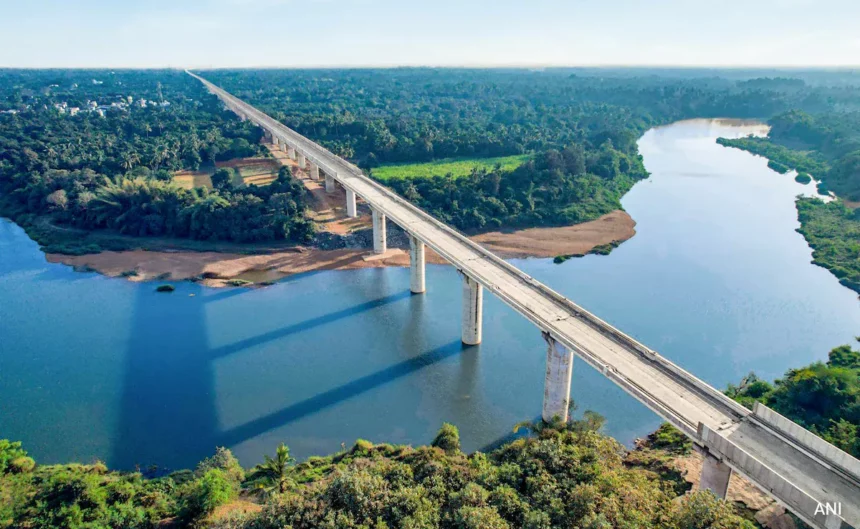
The Mumbai-Ahmedabad High-Speed Rail corridor, widely recognized as India’s ambitious Bullet Train project, is rapidly progressing toward operational readiness as key station infrastructures and river bridges approach completion. In a statement released by the Ministry of Railways on Thursday, the Indian Railways emphasized that the stations along this corridor in Gujarat are nearing their final stages of construction. These stations, designed to integrate modern architectural aesthetics with the region’s cultural identity, aim to redefine passenger comfort and convenience while setting new benchmarks for travel experiences in India. This milestone follows the earlier announcement on August 6 regarding the completion of the Vishwamitri River bridge in Vadodara, marking the seventeenth river bridge finished out of the 21 planned across Gujarat. The entire corridor, spanning Maharashtra and Gujarat, represents a transformative development in India’s rail infrastructure, blending cutting-edge technology, sustainable design, and urban connectivity in a high-speed travel ecosystem.
Bullet Train Stations to Redefine Passenger Comfort and Travel Experience
The stations being constructed along the Mumbai-Ahmedabad corridor are designed not merely as functional transit hubs but as architectural landmarks that blend modernity, sustainability, and cultural expression. According to Indian Railways, these stations will embody seamless connectivity, eco-friendly features, and thoughtful design elements that reflect the heritage and identity of the regions they serve. The use of energy-efficient technologies, rainwater harvesting systems, natural lighting, and green landscaping is being incorporated to ensure environmental sustainability. Modern amenities such as digital ticketing, passenger lounges, shopping facilities, and real-time information systems are expected to enhance travel convenience and reduce transit stress, positioning the stations as benchmarks for future infrastructure projects across the country.
The Bullet Train stations will also cater to high passenger throughput with efficient crowd management and safety protocols in place. Special emphasis has been laid on accessibility for differently-abled passengers, incorporating ramps, lifts, tactile flooring, and intuitive signage. By fusing traditional cultural motifs with contemporary architectural language, each station aims to provide travelers with a sense of place while maintaining the operational efficiency required for high-speed rail operations. With the final stages of construction now underway, Indian Railways anticipates that these stations will not only elevate the travel experience but also contribute to the urban landscape, providing economic and social benefits to the surrounding areas.
Vishwamitri River Bridge and River Crossings Enhance Corridor Connectivity
A critical component of the Mumbai-Ahmedabad Bullet Train project is the extensive network of river bridges, which enable uninterrupted high-speed rail travel across the complex urban and geographical landscape of Gujarat. The recently completed Vishwamitri River bridge in Vadodara, spanning 80 meters and comprising three piers, represents a significant engineering achievement. One pier is positioned in the river stream, while the remaining two are located on the riverbanks, demonstrating meticulous planning and coordination with the Vadodara Municipal Corporation and other local authorities. Given Vadodara’s status as one of Gujarat’s busiest urban centers, constructing a bridge through its dense urban environment required strategic logistical planning and engineering precision, ensuring minimal disruption to existing infrastructure while maintaining safety and durability standards.
The Mumbai-Ahmedabad corridor features 25 river bridges, 21 of which are located in Gujarat and four in Maharashtra. Within Vadodara itself, the alignment crosses the Vishwamitri River at nine distinct points. While the main river bridge has been completed, three additional crossings among the remaining eight have also been finished, with construction ongoing at the rest. These bridges are essential not only for the structural continuity of the high-speed rail network but also for ensuring the stability and resilience of the line against environmental and hydrological challenges. By combining advanced engineering techniques with strategic urban planning, the project exemplifies India’s capacity to integrate modern infrastructure development with complex natural and urban landscapes.
The river bridges and station infrastructures together form the backbone of the high-speed rail corridor, facilitating efficient connectivity between two of India’s largest urban clusters, Mumbai and Ahmedabad. The project’s focus on sustainability, passenger convenience, and cultural integration underscores the transformative potential of high-speed rail as a mode of travel that combines efficiency, speed, and environmental consciousness. As the stations and bridges near completion, the corridor is set to redefine travel expectations, stimulate regional development, and establish India as a leader in high-speed rail infrastructure globally.
By merging advanced civil engineering, state-of-the-art station facilities, and environmentally conscious design, the Mumbai-Ahmedabad Bullet Train project highlights the strategic vision of modern Indian infrastructure. With the completion of key river bridges like Vishwamitri and the nearly finished stations across Gujarat, the project demonstrates how high-speed rail can function as both a technological marvel and a driver of socio-economic growth. Once operational, the corridor is expected to significantly reduce travel time between Mumbai and Ahmedabad, promote regional connectivity, and serve as a model for integrating modern transportation systems with urban and cultural landscapes.
The initiative reflects the commitment of Indian Railways and the Ministry of Railways to develop infrastructure that not only meets contemporary travel needs but also enhances regional identity and sustainability. By prioritizing modern passenger amenities, efficient engineering solutions, and eco-friendly construction practices, the Mumbai-Ahmedabad corridor exemplifies the potential for transformative infrastructure projects to shape the future of mobility in India. As the corridor progresses toward full operational readiness, the near-completion of stations and river bridges marks a decisive step in delivering a world-class travel experience that aligns with global best practices in high-speed rail development.