The Meghalaya government is actively promoting the development of a transnational economic corridor that would enhance connectivity between West Bengal and the Northeast via Bangladesh. The proposed Hili-Mahendraganj corridor aims to significantly reduce travel time and costs, boosting trade and economic integration in the region.
The corridor would link Hili, a border town in West Bengal, with Hili-Mahendraganj, a border town in Meghalaya’s Garo Hills region. Both locations share an international boundary with Bangladesh, making the project strategically important for regional connectivity. If realized, the 100-km corridor could cut travel distances and costs by 25-60%, providing a more direct link from Kolkata to key economic hubs in Meghalaya, including Tura, Baghmara, Dalu, and Dawki.
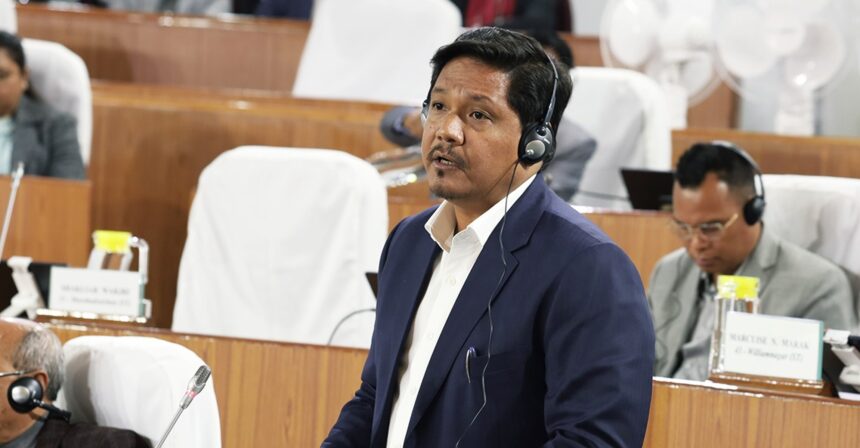
Meghalaya Chief Minister Conrad Sangma emphasized the economic and logistical benefits of the proposed route, stating that the corridor could transform regional trade dynamics. “If the connection between Hili in West Bengal and Hili-Mahendraganj in Meghalaya through Bangladesh is established, it will provide the shortest route for Meghalaya, Barak Valley, and Tripura to Kolkata. This would reduce travel distance by approximately 600-700 km,” Conrad Sangma explained.
Currently, the National Highways and Infrastructure Development Corporation Limited (NHIDCL) has conducted initial road alignment analytics and shared them with Bangladesh to assess the feasibility of the project. The success of the corridor, however, depends on cooperation from the Bangladesh government.
Conrad Sangma acknowledged the diplomatic challenges involved in executing such a project. “The proposal was discussed at the prime ministerial level between New Delhi and Dhaka before the regime change in Bangladesh. While it remains an important initiative, its progress depends on further discussions with the new government in Dhaka,” he said.
The corridor is expected to function as a parallel economic route, complementing existing infrastructure projects in the region. If implemented, it could revolutionize trade and movement between India’s eastern states and West Bengal, offering a faster and more efficient transportation network.
The Meghalaya government remains committed to pursuing the project, recognizing its potential to enhance economic growth, cross-border trade, and connectivity in the region. Officials are optimistic that renewed discussions with the Bangladesh government will help bring the corridor to fruition, benefiting both India and Bangladesh through improved regional cooperation and infrastructure development.