


We are surrounded by stories. The man who fetches your milk packets every morning, the little girl who screeches every evening from across your house, the tiny village your train passes- they each have lived an adventure of their own. When you discover your story, I implore you to share it. Somebody is bound to stop, listen, and get something out of it. The tale I’m about to narrate isn’t mine, but I’ve inherited a responsibility towards it, and now that I have the opportunity, I’m going to attempt to do justice to it.
A Tale of Love for Dimili and a Lifelong Quest for Knowledge

My grandfather used to walk me to school for a while. In my favourite picture of us, his pancha is in the air, his khadi-clothed arm reached out to grasp mine. The tiny thing next to him was transfixed by the glimmering lake ahead of them. He, on the other hand, must have been taking mental notes of what rural Vizag could learn from it in preserving its water bodies.
Ninety years ago, Bhagavatula Venkata Parameswara Rao was merely the 4th of 8 children in a not-so-well-to-do family. His father held a simple job, and his mother was ‘marvellous’. Though raising them was a tribulation worth its own story, the kids’ atta-mavayya stepped in to fund all their studies, supporting them in every way possible. If not for them, their lives would have been much, much different.
The seeds of who Parameswara blossomed into showed their hand when he was aged around 8. World War 2 had plagued the globe, and Vizag had been evacuated for fear of Japan’s intentions. The boy found himself at his ammamma’s village, Dimili.
If this were a movie, we’d have arrived at the stage where the heroine is introduced. The hero finds a new sort of feeling growing within him, enveloping him, turning her into the centre of his universe. She is like nobody he has or ever will meet. She is unforgettable. The great love of Tata’s life was Dimili. His soul latched itself onto it, and thus it would remain forever.
The war was one of history’s darkest periods, but it ended up changing Parameswara’s life. In his autobiography, he recollected the enthusiastic schoolboy who’d gather the younger kids in the pashushaala, the barn, and how he’d teach them till sunset. He moved back to the city by the 7th standard, but Dimili wasn’t done with him yet. Doted upon by his ammamma, he kept returning to take care of her. It was during times like these that he’d find himself in the company of two old, illiterate men.
Pappala Pedda Appalaswami and Kaatreddy Narayana were farmers who were unbothered by the fact that they were conversing with a 12-year-old. Day after day, they would break the most complex Bhagavad Gita shlokas into words that this adolescent could comprehend. Wide-eyed, he’d drink in the pictures they painted for him of all the stories they’d hoarded in their combined 120 years. The duo was as illiterate as a newborn, yet it would have taken multiple lives to gather their amount of wisdom. Amidst all the marvelling at the lessons and lore, a single thought took root- imagine, just imagine if they’d gone to school.
A Journey from Village Dreams to Doctorate Abroad and Back Home
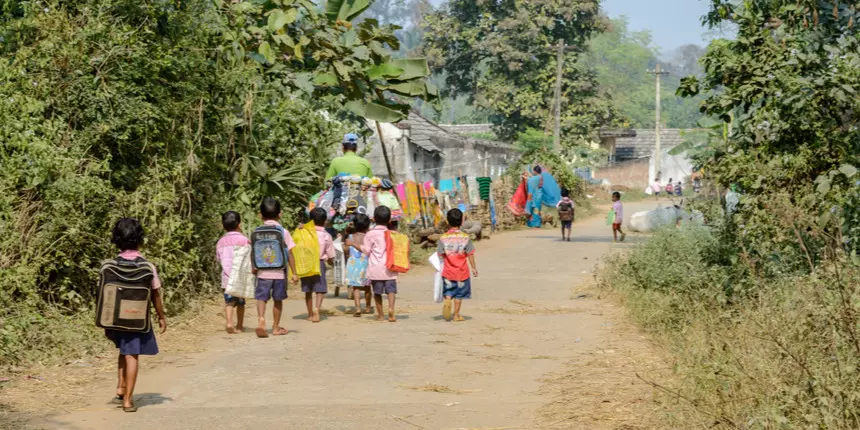
This troubled Parameswara. He couldn’t wrap his mind around the fact that so much knowledge was left unnoticed in villages, and this single thought resulted in a single resolution: to educate his one.
The moment he passed his 10th, he marched up to his father to inform him that he’d be leaving for Dimili to get started on his teaching programme. The senior Bhagavatula, much to his son’s horror, simply replied, “No.” His follow-up has been one of my family’s most-quoted pieces of advice. “Son, it doesn’t matter how pure your intentions are. When people look at you, they will merely see a fellow high-school graduate who wound up at their village because his academics were taking him nowhere. You’d be giving them no incentive to grant you either their respect or their attention.
“Study. Show them who you are, what you are capable of, and what you’ve given up solely to help them. Set out to prove your worth to them and yourself, and one day, you’ll be glad that you did.” The disgruntled Parameswara was far too obedient to let any other emotion triumph. He, granted unhappily, completed his inter, did his B.Sc. in Physics and M.Sc. in Metallurgy, and submitted a job application at the Baba Atomic Research Centre, hoping against hope that it wouldn’t go through so he could return home.
Six years later, Dr Brahm Prakash, the renowned then-Director of BARC summoned Sri Rao, a 27-year-old Assistant Senior Scientist. The latter’s remarkable dedication had begotten him a job as the department’s head. There was the hitch of his under qualification, though- only with a doctorate could one help lead India’s foremost nuclear research bureau.
That night, Parameswara leafed out a clean-slated paper from amidst the skyscrapers of files upon his desk. He transcribed every word of what had been said in that room and not one of his heart’s decade-old nag. His father’s scheduled letter in response sheathed another paper, and what could have been another clean slate: a plane ticket.
Thus, off he went to the States, on a journey that was a one-way for most aboard, the persistent nag’s murmurs resounding against the boarding calls.
However, dear reader, let me not allow you to make the mistake of picturing him forlorn. Our budding doctorate’s American anecdotes chronicle some of his most delightful years. He lost himself in books, found himself in dramatic and vocal displays, and realised that despite the years and miles away from rural India, the love he felt for it remained as alive as ever.
When you love something, you battle every one of your instincts to stay apart from it. So, the second you’re allowed to lay your arms down, you return. One sunrise, our protagonist awoke as a student of Penn State University for the final time. By the next one, Dr B.V. Parameswara Rao had dimmed out the memory of a professor whose expression had morphed from impressed to dumbstruck. He tuned out the voice reminding him that he’d always have a job awaiting him at the university, just in case he had a change of heart. He shook off the scene flashing before him, for he had eyes only for the clouds leading him home.
Parameswara’s Hopeful Quest to Build a School in Dimili Village
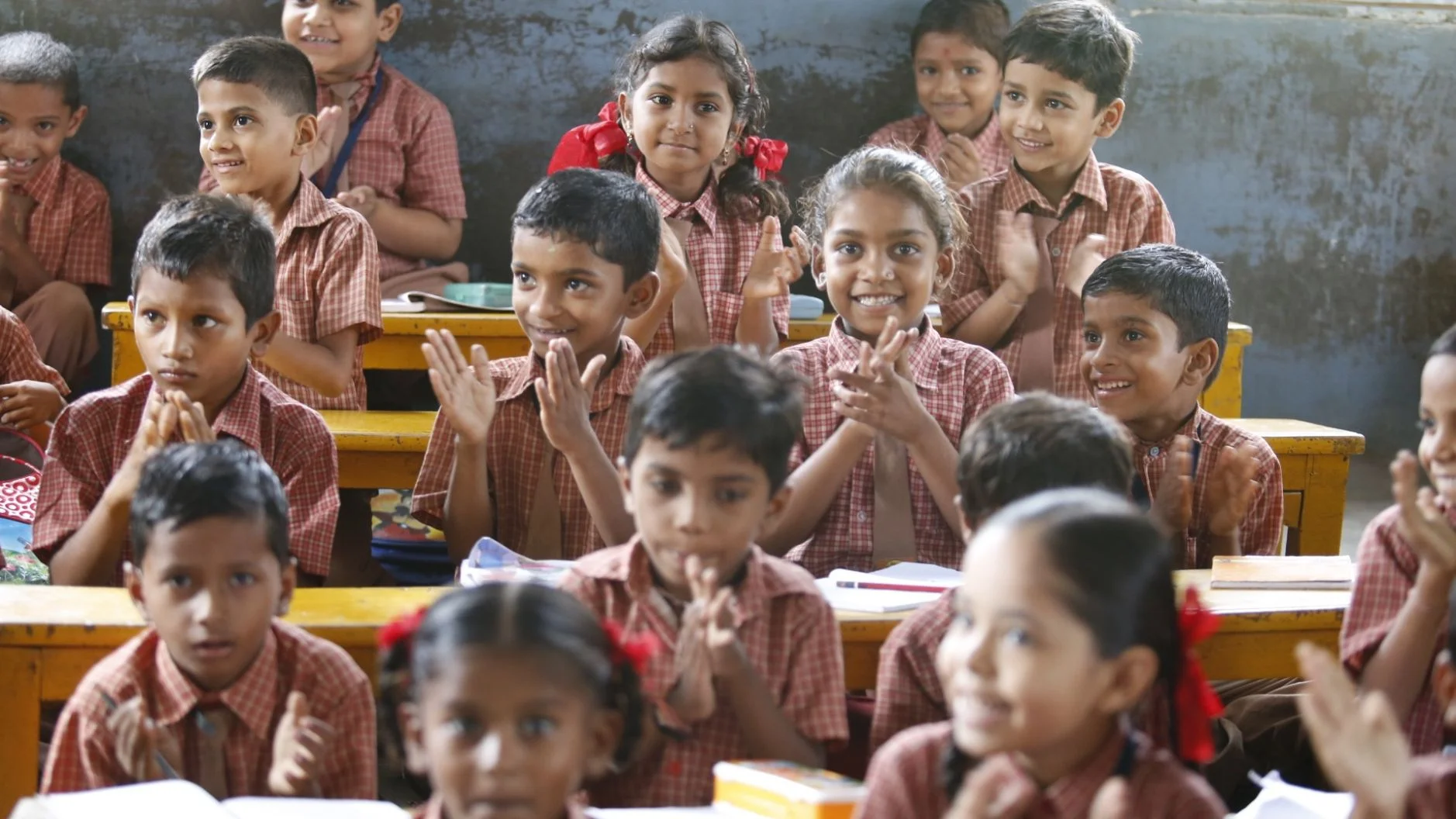
Dr Rao would’ve liked to have gone straight from touchdown to dusting out his ammamma’s den- but he had a quick stop to make. When he stepped into his father’s room, the weight of what he was about to reveal weighing on him, it dawned upon him how long it had taken him to get there. As he explained what he intended to accomplish, Bhagavatula Somanna listened without a protest. When his son finished, he said gently, “All your ideas are lost on me. Up till this point, you have done everything I asked of you. I thank you for the unwavering respect you have held for me and bless you with success, my child.”
As Parameswara sauntered through Dimili a day later, he spotted a massive group of children chortling under a tree, some of them bending over to flick the goleelu stacked in front. He studied the lot for a few minutes before approaching them with a “What are you all doing here?”. A hesitation, before one of them piped, “We’re waiting for our friends so we can go to school.” On seeing their listener’s perplexed face, he continued, “Our closest high school is 8 kilometres away, so we all travel together.”
The older man then asked why, instead of going through so much, they couldn’t just set up a school right there- the kids sat straighter at this. “We wouldn’t have to tie books to our heads when everything floods up”, one of them volunteered. “Girls will be allowed to go then, too!”, articulated another. As the voices filled the air, something else seemed to, too: hope.
On the walk back, he found himself exhaling in relief. When he reached Dimili, it hit him that all his dreams lead him until there and there alone. He hadn’t the faintest idea what to do after. He had set out the hour before to clear his mind and had now returned a man with a narrowed-down objective. Purpose coursing through his veins, Parameswara sat down to figure out how to build a school.
The lads led him to the MLA’s threshold, who was busy chuckling away in the middle of a crowd. All the laughter died at the sight of the stranger. Unbothered, Parameswara courteously raised the matter of the high school, only to be shot down. “My father and I went to the same school”, the seated man snapped, echoing the protests of his wounded ego. “Nobody has ever been able to do anything for this stingy village; you don’t know a thing about living here.” His speech about how nobody relented to his many initiatives’ proposals was cut short by calls for the school. “The village will care if it’s about this, andi” came a chorus, and Dr Rao, in an attempt to pacify the reddening MLA, spoke up. “Our history doesn’t have to be our children’s destiny. Why don’t we try again, for the good of our Dimili?”
Parameswara’s Village Empowerment: A School and Self-Help Success Stories

The villagers had been waiting with bated breaths for a chance to give their children good lives, so when the opportunity came up, they must’ve tickled the MLA pink with their enthusiasm. A land was scouted, support was mobilised, and every household pitched in to help, bar one.
Missula Chiranjeevi was revered for being a pioneer of our strife for colonial liberation, but his reputation as an insufferable miser had begun to precede all else. It took a hunger strike, a niraahaara deeksha, to coax out his contribution.
For it wasn’t just about the money. It was about making understood how crucial everyone’s cooperation was for the success of any endeavour. Only when you choose to feel accountable for what develops in your abode will you learn to care about what happens to it.
The high school was built brick by brick by the villagers, literally and figuratively. They single-handedly kept the idea alive, financed it, and, together, made it real. Ten months after the kick-off, Dr Rao took a few steps back from the finished building to marvel at what it represented: a manifested dream of the village’s future and the start of the next chapter of rural development.
Parameswara dedicated five of his decades to the villages of Vizag, and whilst doing so, India’s too. Every single one of those days, he got up to work and slept itching to work some more. Bhagavatula Charitable Trust, the fruit of his ideas, watched its office become a haven for the troubled and a compass for the lost. Its career as a life-changer took off in its fledgling years when a group of women walked in one day asking for a loan.
Five hundred rupees each – that was their request. “For investing”, they said. “We want to start working.” A series of thorough calculations later, however, they found that they each needed just 50. The cheques were signed, the conversation concluded, and everyone moved on with their schedules.
Two months later, there was another rapture, followed by the same request. It dawned upon Tata that without intervention, the 50-rupee-cycle was in danger of turning eternal. They all sat down for the second, and hopefully final, time. He grabbed a paper and sketched out a plan right in front of them. “Every week”, he instructed, “You will set aside 6 rupees, come what may- 3 for repaying us and 3 to save.” The last word lingered in the air, wrapped in a quiet sense of empowerment.
“Adhering to this would imply that you won’t have to approach us for help again. By the time you repay your loan in its entirety, you’ll have another 50 awaiting you.” His ulterior motive? For them to discover how liberating financial independence and self-worth could feel.
The third rendezvous wasn’t for a few years, but it proved to be one of Tata’s most memorable encounters. He ran into one of the ladies who’d set up a snack stand outside the local cinema and was now revelling in its flourishment. “When you told us your agenda, we laughed at how ridiculous it sounded”, she started saying. “Do you know, though, that now, people love hanging out at my corner of the road? I’ve become everybody’s go-to grandma for all sorts of advice. I have gone from being a nobody to becoming the soul of the village, and it’s all because of you. You haven’t just given me money- you’ve granted me with respect, too, and for that, I shall be eternally indebted.”
Parameswara’s Holistic Approach: Empowering Villages through Education and Culture

Modernisation isn’t defined as just growth in technology usage; it also reflects a change in social outlook. A desolate village could never truly become a developed one, but a self-reliant one would have already gone half the way. Tata integrated Self-Help Groups into women’s lifestyles long before they were recognized by the government*. When low-income families couldn’t afford to have their kids not work, he arranged for them to get a few hours of night school so they wouldn’t miss out. He also encouraged the wives of Marripalem. This, in turn, helped form the atmosphere for Andhra’s groundbreaking Anti-Arrack Movement of the 1990s. He was in correspondence with many of our leaders and influential figures – he was even once airlifted to lunch with the World Bank’s president and Prime Minister Indira Gandhi!
Haripuram, the trust’s current headquarters, and Panchadarla, the site of BCT’s residential (and Tata’s second) high school, boasted of brown grounds and azure skies- but this was all forgotten at the sight of the rock heaps that were supposed to be hills. When brought to light, he made it a high-priority issue and got to work on it immediately. He consulted experts, figured out a step-by-step process, and with his bare hands, painted the mounds green. “There is no wasteland”, he would chant, “Only wasted land”. Today, as you can finally appreciate BCT’s homely touch in its entirety, it would be an ode to these efforts to remember that it hasn’t always been this way.
Parameswara added colour, not just around the school, but to its students’ holistic growth too. He had fought tooth-and-nail to let them study – he wasn’t about to allow their schooling to be mundane. They may have learnt science and maths, but they were also taught folk dances and songs with just as much vigour.
Their school premises were not the limits of their cultural output, for, on weekends, Tata rounded them up to be the bards of his padayatra- his walk across villages. He wrote plays, choreographed dances and composed songs for their shows. Etched into these were messages he wished would resound amongst the people. “True education is about finding beauty in every part of our lives”, some posters would read. “There are seven types of poverty”, the lyrics of one song declared, “We need to vanquish them all to progress”.
The reason for this was that the children weren’t the only ones needing to be educated. The villagers needed to open their eyes and look around to change what they saw. Dr Rao figured that the best way to break past the adult ego was to have their children drop the truth bombs. He identified rustic India as becoming poor monetarily, physically, mentally, communally, culturally, politically, and spiritually. Through the performances, he sent across incorporable tips to the audience to richen their lives. It would take a genius to keep India poor”, he often would announce, and with everything he’d propound, it was easy to see why.
Parameswara Rao: A Hunger for Change

Though Tata may not have textbook lessons dedicated to him, he was the newspapers’ headlines on quite a few occasions. One of these instances in particular, however, has become symbolic of the utter will that has most made him into someone to marvel- and perhaps even envy.
When the Bhagavatula Somanna High School commenced, the village thought it would solve half of their problems. What they didn’t see coming was that in their stead, fresh ones would crop up. Tata had to make long, draining journeys to get the state to source its funding and curriculum. He had been led to the Governor and the then-Chief Minister of AP, P. V. Narasimha Rao, whose jaws dropped at this account of a village concocting a school out of their own resources and grit. He then returned, plucked out some Dimilians to transform into instructors, and finally set the school in motion.
BSHS’s fairytale had a plot twist in store, though. The government funding slowly dwindled, and the schoolteachers were on the verge of becoming penniless. The children were on the receiving end of a below-par education; the vision of a brighter reality was dimming by the day.
Again, rode our Parameswara to Hyderabad, desperate to ensure that the school was everything Dimili had desired. No number of discussions and persuasion could, unfortunately, produce anything helpful. And as everyone succumbed to helplessness, Dr Rao made a decision then and there- to do whatever it took to make things better for his people.
When Dimili awoke the next day, time paused for a moment as, with horror, it dawned upon them all what was happening. Parameswara was sitting in the village centre, back straight, chin up, and the steely look in his eyes sloshing around with something else- hunger.
One week. Seven days. That was a hundred and sixty-eight hours of voluntary starvation, and yet Tata didn’t relent. My mother recounts how she grabbed the first ride she could to Dimili to plead with him to stop. Panic rippled across Andhra, reaching the CM’s office. A handwritten letter was placed in Parameswara’s hands, filled with the words he had been torturing himself and the crowd around him to hear. It was an entire state that exhaled when the first drop of lemon juice landed on his pallet.
I wouldn’t be sampling hyperbole to declare that Tata redefined what it meant to work for villages. He came with a goal, saw through it for the entirety of his living years and yet never felt like the job was done. Even when forced home by geriatric unreliability, he remained a significant contributor to BCT’s initiatives. He tried several times to get his hands dirty again, but to what he considered his misfortune, my family was unbudging in its reproval. Ammamma says his last three years were the only ones he spent at home. (She might’ve said this with a hint of ecstasy, but he described them as ‘the most useless period of my existence’)
The reason you probably haven’t heard of him isn’t that his efforts were under-appreciated. On the contrary, it was he who turned away awards, including a Padma Shri! “The work isn’t for fame”, he’d grumble, and declined numerous biopic proposals from yearning directors. Post-retirement, he resigned to sparking inspiration by conversing with whoever he could about India, her villages and their potential.
It has been two Junes since his heart’s last beat, but he has left his vision embedded in his corner of the world. His work hasn’t just helped rural Vizag grow- it has challenged the idea that an unconventional dream is a fickle one. Today, if you were to drop by BCT, you will find a myriad of jobs professed, coupled with the quiet dignity that self-reliance brings. The people of these villages can now do something they couldn’t have three generations ago- build their own futures.
“How did this change?” you may ask any of them. “What happened here?”
Their answer will be one.
Translations:
Pancha: The Telugu word for dhoti
Ammamma: Maternal grandmother
Tata: Grandfather






