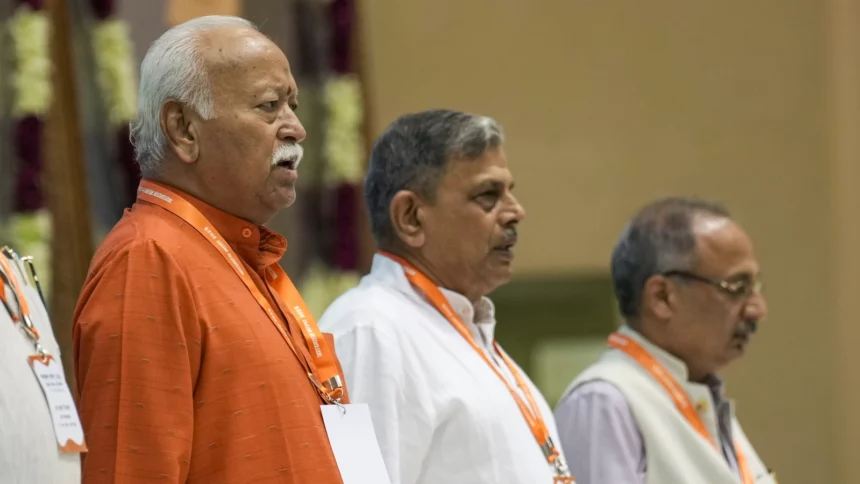
Rashtriya Swayamsewak Sangh (RSS) chief Mohan Bhagwat celebrated his 75th birthday on Thursday, marking a remarkable journey of five decades dedicated to social transformation, nation-building, and fostering a spirit of unity and fraternity across India. Prime Minister Narendra Modi, in his tribute, lauded Mohan Bhagwat’s unwavering commitment to the organization and the nation, emphasizing that his tenure represents one of the most transformative periods in the 100-year history of the RSS. The celebration not only commemorates Mohan Bhagwat’s personal milestones but also underscores his vision for India, one rooted in cultural preservation, ethical leadership, and societal progress. Leaders across the political spectrum, including Defence Minister Rajnath Singh, extended their felicitations, highlighting Mohan Bhagwat’s profound impact on India’s socio-cultural fabric and his role in inspiring countless swayamsevaks nationwide.
Mohan Bhagwat’s Leadership Journey and Transformative Contributions
Born on September 11, 1950, in Chandrapur district of Maharashtra, Mohan Bhagwat embarked on his lifelong journey of social service as an RSS pracharak nearly 50 years ago. Over decades, he has emerged as a transformative leader, blending intellectual depth with empathetic leadership. Mohan Bhagwat assumed the role of Sarsanghchalak in March 2009, becoming the third longest-serving chief of the RSS after Madhukar Dattatreya Deoras, popularly known as Balasaheb, and MS Golwalkar. His leadership is characterized not only by the continuity of organizational traditions but also by a forward-looking vision that emphasizes inclusivity, national integration, and cultural preservation.
Prime Minister Modi highlighted Mohan Bhagwat’s unique ability to combine organizational responsibility with personal dedication. Being the chief of a century-old organization like the RSS requires exceptional clarity of purpose, unwavering commitment, and personal sacrifice. Under Mohan Bhagwat’s stewardship, the RSS has witnessed initiatives that promote social harmony, character-building, and community service, reflecting the chief’s emphasis on holistic societal development. The PM described his tenure as transformative, reflecting on how Mohan Bhagwat’s vision and execution have left an indelible mark on the organization and the nation.
Defence Minister Rajnath Singh also praised Mohan Bhagwat’s lifelong dedication, noting that his contributions extend beyond organizational leadership to preserving India’s cultural ethos. Singh highlighted Mohan Bhagwat’s efforts in nation-building and character development, describing him as a true seeker whose guidance has inspired millions of swayamsevaks. Such recognition from senior political leaders reinforces the central role Mohan Bhagwat has played in shaping the contemporary vision of the RSS and influencing broader national discourse on cultural and societal values.
Impact on Indian Society and Cultural Preservation
Mohan Bhagwat’s leadership transcends mere organizational duties; it embodies a vision of India that blends cultural heritage with modern social aspirations. Throughout his tenure, he has consistently emphasized the importance of strengthening societal bonds, promoting unity, and fostering a sense of shared responsibility among citizens. His work underscores the principles of ‘Nation First’ and service to society, which have been guiding pillars of the RSS since its inception. By prioritizing community engagement, moral education, and cultural initiatives, Mohan Bhagwat has worked toward creating a society rooted in ethical values and collective responsibility.
Over the decades, Mohan Bhagwat has overseen programs that engage communities across rural and urban India, addressing social inequalities, promoting education, and encouraging civic participation. His emphasis on character-building initiatives has particularly focused on youth, inspiring new generations to engage in nation-building activities while respecting India’s diverse cultural traditions. His tenure has also seen a concerted effort to preserve India’s cultural values through educational programs, community events, and public awareness campaigns that highlight the country’s rich heritage.
Mohan Bhagwat’s vision of societal transformation is deeply intertwined with his approach to leadership. He combines intellectual rigor with empathetic understanding, ensuring that initiatives are inclusive and relevant to contemporary social challenges. By addressing issues ranging from rural development and education to communal harmony and national integration, Mohan Bhagwat has sought to create a more cohesive society that respects tradition while embracing progress. His emphasis on empathy, ethics, and social responsibility has made his leadership style both effective and inspirational for millions of swayamsevaks and citizens alike.
The prime minister’s tribute also highlighted Mohan Bhagwat’s dedication to nurturing leadership qualities among followers, encouraging them to contribute positively to society. Through his guidance, the RSS has developed a robust framework for social engagement, ensuring that its initiatives reach marginalized communities, address pressing social issues, and foster a sense of solidarity and responsibility among participants. This comprehensive approach to leadership, blending organizational management with social reform, reflects Mohan Bhagwat’s commitment to long-term societal transformation.
Mohan Bhagwat’s contribution to India’s cultural preservation has been significant. Through speeches, outreach programs, and community initiatives, he has continuously underscored the importance of retaining India’s historical and cultural identity while embracing modernization and global development. His leadership encourages citizens to appreciate their heritage, celebrate diversity, and engage in constructive dialogue about the nation’s values and future. By fostering awareness of India’s cultural richness and promoting social cohesion, Mohan Bhagwat has strengthened the moral and cultural foundations that support India’s democratic and social frameworks.
In addition to cultural preservation, Mohan Bhagwat has emphasized practical measures for community welfare. From promoting education to health initiatives and rural development projects, his leadership has sought to empower communities while instilling a sense of moral responsibility. Through structured programs and outreach efforts, Mohan Bhagwat has enabled the RSS to play a proactive role in addressing societal challenges, reinforcing its relevance in contemporary India.
Another critical aspect of Mohan Bhagwat’s tenure has been his focus on ethical leadership. By setting an example of integrity, personal sacrifice, and principled decision-making, he has inspired leaders within the organization and beyond. This approach ensures that initiatives are guided not merely by policy or political objectives but by a commitment to serve society and uphold values that foster trust, respect, and collective well-being. Mohan Bhagwat’s emphasis on ethical governance extends to nurturing future leaders, preparing them to take on responsibilities that prioritize societal welfare alongside national interests.
Mohan Bhagwat’s personal journey also serves as an inspiring narrative of dedication and resilience. Starting as a young pracharak, he devoted his entire life to the RSS’s vision, gradually taking on greater responsibilities and influencing organizational direction. His long tenure as chief reflects both continuity and innovation, allowing the organization to adapt to modern challenges while retaining its core values. The recognition he receives today, from Prime Minister Modi, Defence Minister Rajnath Singh, and countless swayamsevaks, underscores the significance of his leadership in shaping both the RSS and Indian society.
His birthday celebrations are not merely ceremonial; they represent an acknowledgment of five decades of steadfast commitment to societal transformation. The recognition from political leaders and the wider public emphasizes the impact of his work in promoting cultural awareness, ethical governance, and social responsibility. Mohan Bhagwat’s tenure as Sarsanghchalak exemplifies how leadership, when combined with moral purpose and practical engagement, can create meaningful societal change.
Under Mohan Bhagwat’s guidance, the RSS continues to function as a platform for ethical and socially responsible leadership, nurturing generations of citizens committed to service, cultural preservation, and national integrity. His emphasis on balancing tradition with contemporary needs, while encouraging youth involvement in nation-building, has helped shape a more engaged and conscientious society.
The leadership journey of Mohan Bhagwat, now celebrated on his 75th birthday, reflects a lifetime of dedication, vision, and transformative impact. Through a combination of personal sacrifice, intellectual depth, and empathetic leadership, he has redefined the role of Sarsanghchalak, leaving a lasting legacy for both the RSS and the nation. His life’s work serves as an example of how sustained commitment, strategic vision, and ethical engagement can collectively contribute to societal progress, cultural preservation, and national unity.
As India continues to evolve socially, politically, and culturally, Mohan Bhagwat’s enduring influence offers a model of leadership rooted in values, service, and transformative action. His commitment to societal betterment, ethical governance, and the empowerment of youth and communities ensures that the RSS remains a significant contributor to India’s ongoing development and cultural enrichment.