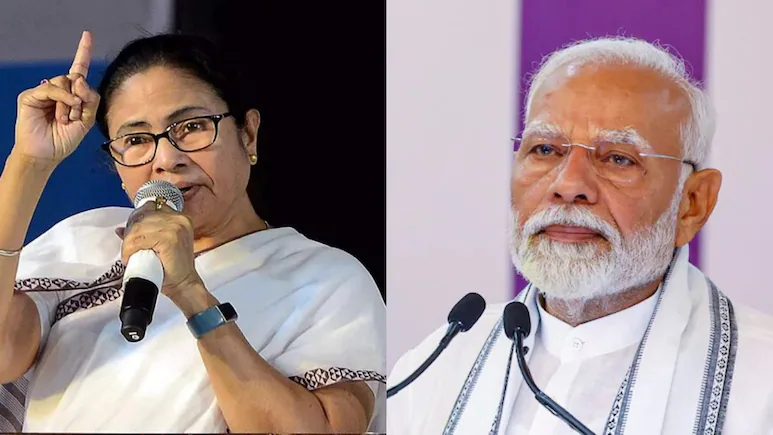
In a landmark political moment, Narendra Modi addressed party workers after the Bharatiya Janata Party surged past the majority mark in West Bengal, leading in over 200 seats according to early trends. Calling the victory historic, the Prime Minister used a symbolic phrase that quickly became the highlight of his speech: “The lotus is blooming from Gangotri to Ganga Sagar.”
The remark signified not just a political win but a broader ideological and geographical expansion of the party’s influence across India’s key regions.
A Historic Political Shift in West Bengal
The election results marked a dramatic shift in West Bengal politics, with the Bharatiya Janata Party crossing the halfway mark and establishing a dominant lead. This outcome is being viewed as one of the most significant political developments in recent years.
During his address, Narendra Modi emphasized that the victory was the result of tireless efforts by party workers at every level. He credited grassroots workers for transforming the political landscape and achieving what many had once considered improbable.
Praise for Party Workers
One of the central themes of the Prime Minister’s speech was appreciation for party workers. He acknowledged their dedication and commitment, stating that their efforts had created history.
According to him, the victory was not just electoral success but a reflection of organizational strength and unity within the party.
Record Voter Turnout and Women Participation
The Prime Minister also highlighted the record voter turnout, noting that participation in West Bengal reached approximately 93 percent. He described this as a powerful testament to the strength of Indian democracy.
He placed special emphasis on the increasing participation of women voters, calling it one of the most encouraging aspects of the election. According to him, higher female participation reflects a positive shift in democratic engagement and empowerment.
The Ganga Belt Narrative
A key symbolic element of the speech was the reference to the Ganga belt. Narendra Modi pointed out that states along the Ganga river, including Uttarakhand, Uttar Pradesh, Bihar, and now West Bengal, are governed by the BJP.
This narrative was used to underline the party’s growing influence across northern and eastern India, linking geography with political expansion.
Tribute to Syama Prasad Mookerjee
The Prime Minister paid tribute to Syama Prasad Mookerjee, one of the founding figures of the party’s ideological roots. He suggested that the victory in Bengal would have brought a sense of fulfilment to Mookerjee’s vision for the state.
This reference added a historical dimension to the speech, connecting the present political moment with past aspirations.
Message on Political Violence
Addressing concerns about political tensions in West Bengal, the Prime Minister called for restraint and unity. He urged party workers to focus on development rather than revenge.
He emphasized that the new phase should be about building the future and creating a safe and inclusive environment for all citizens.
Promises for Governance in Bengal
Looking ahead, Narendra Modi outlined key priorities for governance in West Bengal. These included:
- Ensuring safety and empowerment for women
- Creating employment opportunities for youth
- Reducing migration by generating local opportunities
- Implementing healthcare initiatives such as Ayushman Bharat
- Taking strict action against illegal infiltration
These promises reflect the party’s focus on development and governance as it prepares to take charge in the state.
Assam and Regional Success
The Prime Minister also celebrated the party’s performance in Assam, where the BJP is leading in a majority of seats. He described it as a historic third consecutive mandate, highlighting the party’s growing acceptance in the northeastern region.
He attributed this success to public trust and the government’s development initiatives.
NDA’s Position in Puducherry
In Puducherry, the National Democratic Alliance is set to retain power. The Prime Minister recalled the vision presented to the people in 2021 and stated that the government’s performance had earned continued public support.
By-Election Wins Across States
The Prime Minister also mentioned victories in by-elections across multiple states, including Maharashtra, Gujarat, Nagaland, and Tripura. These wins, he said, further demonstrate the party’s nationwide appeal.
End of Communist Rule Narrative
One of the most striking statements in the speech was the claim that no state in India is currently governed by a Communist party. Narendra Modi described this as a shift not just in politics but in mindset.
He argued that the country is now focused on development, opportunity, and stability, reflecting changing aspirations among citizens.
Broader Political Implications
The results in West Bengal and other regions signal a broader transformation in India’s political landscape. The BJP’s expanding footprint suggests a consolidation of its position as a dominant national force.
Analysts believe that this outcome could influence future elections and policy directions, both at the state and national levels.
Conclusion
The speech by Narendra Modi following the BJP’s performance in West Bengal encapsulated a moment of significant political change. From celebrating grassroots efforts to outlining governance priorities, the address highlighted both achievement and ambition.
The phrase “Lotus blooms from Gangotri to Ganga Sagar” has emerged as a defining symbol of this victory, representing not just electoral success but a broader narrative of expansion and transformation.
As the political landscape continues to evolve, this moment is likely to remain a key reference point in India’s contemporary political history.