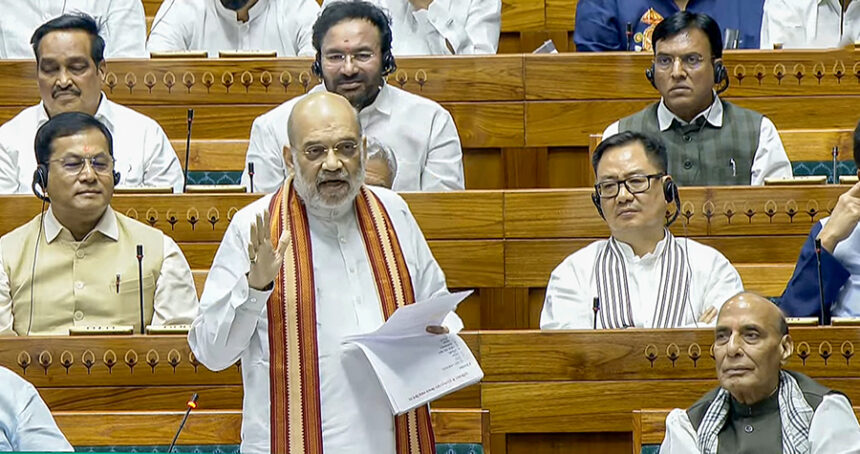
The Lok Sabha is set to take up an important discussion on March 30 focusing on the government’s ongoing efforts to eliminate Naxalism and establish long-term peace in affected regions. The debate is expected to cover security operations, development initiatives and policy measures aimed at achieving a Naxal-free India.
This discussion comes at a crucial time when the government has intensified its approach to tackle Left-Wing Extremism through a combination of security action and socio-economic development.
Focus On Eliminating Left-Wing Extremism
The issue of Naxalism, often referred to as Left-Wing Extremism, has been a major internal security challenge for India for decades. The government has consistently maintained that eliminating this threat is essential for ensuring national stability and development.
The upcoming discussion in Lok Sabha will examine the progress made so far in addressing the issue. It will also provide an opportunity for lawmakers to assess the effectiveness of current policies and suggest improvements where necessary.
The debate is expected to include detailed insights into how the government has strengthened its security apparatus in Naxal-affected regions. Increased deployment of forces, better intelligence coordination and modernisation of equipment have been key aspects of this strategy.
Government’s Multi-Pronged Approach
The government’s strategy to tackle Naxalism is based on a multi-pronged approach that combines security measures with development initiatives. This dual approach recognises that while force may be necessary to control violence, long-term solutions require addressing the root causes of extremism.
Security operations have been intensified in several affected states, leading to a reduction in incidents in recent years. At the same time, efforts have been made to improve infrastructure, provide employment opportunities and enhance access to education and healthcare.
The focus on development is aimed at winning the trust of local communities and reducing the influence of extremist groups. By addressing issues such as poverty, lack of connectivity and limited access to basic services, the government hopes to create conditions that discourage support for Naxal activities.
Role Of Parliament In Policy Review
The discussion in Lok Sabha highlights the role of Parliament in reviewing and shaping national policies. Such debates allow elected representatives to voice concerns, share ground-level insights and contribute to decision-making processes.
Members of Parliament are expected to raise various issues related to the implementation of government schemes in affected areas. They may also highlight challenges faced by security forces and local administrations.
The debate will provide a platform for constructive dialogue, enabling the government to refine its strategies and ensure better outcomes.
Security Operations And Achievements
Over the years, the government has achieved significant success in reducing Naxal-related violence. Coordinated operations by security forces have led to the neutralisation of several key leaders and dismantling of networks.
The use of technology has also played a crucial role in improving surveillance and intelligence gathering. Advanced communication systems, drones and data analytics have enhanced the effectiveness of operations.
The reduction in incidents has been cited as evidence of the success of the government’s approach. However, challenges remain in certain pockets where Naxal groups continue to operate.
Development Initiatives In Affected Areas
In addition to security measures, the government has launched various development programmes aimed at improving the quality of life in Naxal-affected regions.
Infrastructure projects, including roads, bridges and communication networks, have been prioritised to improve connectivity. Better connectivity not only facilitates economic growth but also enhances the reach of governance.
Education and healthcare initiatives have also been expanded, ensuring that basic services are accessible to remote communities. Skill development programmes and employment schemes aim to provide alternatives to youth who might otherwise be drawn towards extremist activities.
Challenges And Ground Realities
Despite progress, the path to a Naxal-free India is not without challenges. Difficult terrain, lack of infrastructure and socio-economic disparities continue to pose obstacles.
In some regions, the influence of Naxal groups persists due to deep-rooted issues such as land disputes, displacement and lack of trust in authorities. Addressing these concerns requires sustained efforts and inclusive policies.
The discussion in Lok Sabha is expected to bring these challenges to the forefront, encouraging a comprehensive approach to problem-solving.
Importance Of Coordination Between Centre And States
Effective coordination between the central and state governments is crucial in tackling Naxalism. Since law and order is primarily a state subject, cooperation between different levels of government is essential.
Joint operations, information sharing and coordinated planning have been key to achieving success in recent years. The upcoming debate will likely emphasise the need for continued collaboration.
State governments play a vital role in implementing development programmes and ensuring that benefits reach the intended beneficiaries.
Long-Term Vision For A Naxal-Free India
The government’s vision of a Naxal-free India goes beyond immediate security concerns. It aims to create a stable and inclusive society where all citizens have access to opportunities and resources.
This vision includes strengthening governance, promoting economic growth and ensuring social justice. By addressing the root causes of extremism, the government hopes to prevent its resurgence in the future.
The discussion in Lok Sabha will provide an opportunity to align policies with this long-term vision and ensure that efforts are sustained.
Political And Public Significance
The debate is also significant from a political perspective, as it reflects the government’s commitment to addressing one of the country’s most pressing internal security issues.
Public interest in the issue remains high, particularly in regions directly affected by Naxalism. The outcome of the discussion will be closely watched by stakeholders, including policymakers, security experts and citizens.
Transparency and accountability in addressing such issues are essential for building public trust and confidence.
The scheduled discussion in Lok Sabha on March 30 marks an important step in reviewing India’s progress towards becoming a Naxal-free nation.
By focusing on both security and development, the government aims to create a comprehensive strategy that addresses immediate challenges while laying the foundation for long-term stability.
As lawmakers deliberate on this critical issue, the emphasis will remain on finding effective solutions that ensure peace, development and prosperity for all regions of the country.