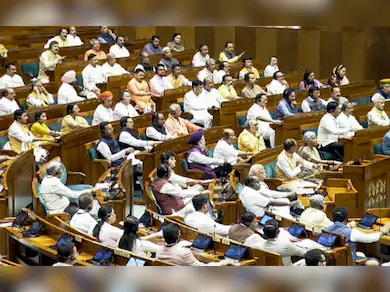
The upcoming vote in the Lok Sabha marks a pivotal step in India’s democratic evolution, focusing on enhancing women’s participation in politics and redefining electoral boundaries. These legislative measures have generated widespread political debate and public interest, as they are expected to influence representation, governance, and electoral fairness across the country. With multiple parties expressing varied perspectives, the outcome of this vote could have long-term implications for India’s political landscape.
Political Consensus and Divergence on Women’s Reservation
The Women’s Reservation Bill aims to allocate a fixed percentage of seats in the Lok Sabha and state legislative assemblies for women, a long-debated reform intended to improve gender representation in Indian politics. Advocates argue that increasing women’s participation will lead to more inclusive policymaking, better governance outcomes, and stronger democratic institutions.
Several political parties have expressed support for the bill, highlighting the need to correct historical gender imbalances in legislative bodies. However, disagreements persist regarding the implementation timeline and the linkage of reservation with delimitation. Some parties have raised concerns about whether the reservation should be immediately implemented or contingent upon future delimitation exercises.
The debate has also touched upon the intersection of gender and social justice. Certain groups have demanded sub-quotas within the women’s reservation framework to ensure representation for marginalized communities, including Scheduled Castes and Scheduled Tribes. This has added another layer of complexity to the legislative process, as policymakers attempt to balance inclusivity with practicality.
Despite differences, there is a broad acknowledgment across the political spectrum that women’s participation in governance remains disproportionately low. The current legislative push is seen as an opportunity to address this gap and align India with global standards of gender representation in politics.
Delimitation Bill and Its Implications
Alongside the Women’s Reservation Bill, the Delimitation Bill is also set for discussion and voting. Delimitation refers to the process of redrawing the boundaries of electoral constituencies based on population changes, ensuring equal representation for citizens.
The proposed delimitation exercise is expected to be conducted after the next census, making it a critical factor in determining the implementation of women’s reservation. The linkage between the two bills has sparked debate, with some arguing that delaying reservation until delimitation could postpone meaningful reforms.
Proponents of delimitation emphasize its importance in maintaining electoral fairness. As population dynamics shift over time, constituency boundaries must be adjusted to reflect demographic realities. Without periodic delimitation, disparities in representation can emerge, undermining the principle of “one person, one vote.”
However, critics have pointed out potential political ramifications. Changes in constituency boundaries can alter electoral dynamics, affecting the prospects of political parties and candidates. This has led to concerns about whether delimitation could inadvertently create advantages or disadvantages for certain regions or groups.
The government has maintained that both bills are essential for strengthening democratic processes and ensuring equitable representation. By aligning reservation with delimitation, policymakers aim to create a more balanced and sustainable framework for political participation.
Broader Impact on Indian Democracy
The combined impact of the Women’s Reservation and Delimitation Bills is expected to extend beyond immediate political outcomes. These measures have the potential to reshape the composition of legislative bodies, influence policy priorities, and redefine the nature of political competition in India.
Increased representation of women could lead to greater focus on issues such as healthcare, education, gender equality, and social welfare. Studies from other countries have shown that higher participation of women in politics often results in more inclusive and community-oriented governance.
At the same time, delimitation could address long-standing disparities in representation, particularly in rapidly growing urban areas. By ensuring that constituencies reflect current population patterns, the electoral system can become more responsive to the needs of citizens.
The upcoming vote is also significant in terms of political messaging. It reflects the government’s commitment to institutional reforms and signals a willingness to engage with complex issues of representation and equity. For opposition parties, the debate provides an opportunity to articulate alternative visions and highlight concerns related to implementation.
Public engagement with these issues has been notable, with civil society organizations, activists, and experts contributing to the discourse. The outcome of the vote will likely influence future debates on electoral reforms and gender equality in India.
As the Lok Sabha prepares for the vote, attention remains focused on the positions of various political parties and the potential for consensus. While challenges remain, the legislative process represents a step forward in addressing critical issues of representation and governance.