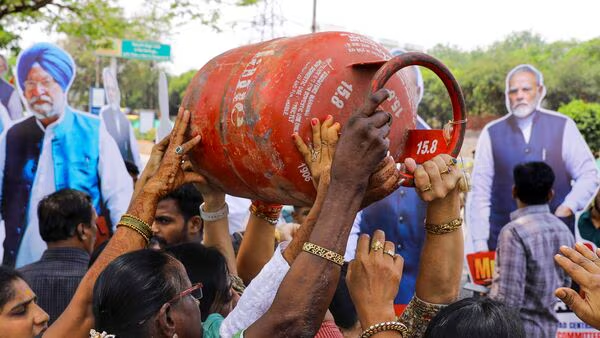
The Central Consumer Protection Authority has issued a strict directive prohibiting hotels and restaurants from levying additional charges such as ‘LPG charge’ or ‘fuel cost recovery’ on customer bills. The move comes amid rising complaints during the ongoing LPG supply concerns, where several establishments attempted to pass on operational costs directly to consumers.
According to the government, restaurants are only permitted to charge the price listed on the menu along with applicable taxes. Any additional fee imposed under separate headings will be considered a violation of consumer protection norms.
LPG and Fuel Charges Declared Illegal
The CCPA has clearly stated that all operational costs, including fuel and LPG expenses, must be included within the menu pricing itself. Restaurants cannot add these costs separately in the final bill under any circumstances.
The authority emphasised that such practices mislead consumers and violate transparency norms. Customers should only pay the amount mentioned in the menu and the legally applicable taxes, without any hidden or additional charges.
This clarification comes at a time when some eateries have introduced new types of charges, citing increased costs due to fluctuations in LPG supply and fuel prices. The government has termed such practices unfair and unlawful.
Cafes and Restaurants Under Scrutiny
The issue gained attention after a café in Bengaluru reportedly added a 5% ‘gas crisis charge’ to a customer’s bill. The receipt showed that after applying a discount, the establishment included an additional charge under the pretext of rising gas costs, along with GST.
Authorities noted that such charges are often introduced under different names to bypass earlier restrictions on service charges. The CCPA has warned that attempts to disguise extra fees under alternative labels will not be tolerated.
Officials have called for strict monitoring of restaurants and hotels to ensure compliance with the rules. Any violation may lead to penalties and further legal action.
Consumer Rights and Complaint Process
The government has also outlined clear steps for consumers who encounter such charges. Customers are advised to first request the restaurant management to remove the illegal fee from the bill.
If the establishment refuses, consumers can file a complaint through multiple channels. These include calling the National Consumer Helpline at 1915, using the mobile application, or submitting complaints through online portals such as e-Jagriti.
Additionally, complaints can be filed with local authorities, including district officials or directly with the consumer protection authority. The aim is to empower consumers and ensure that their rights are protected.
Wider Impact on Hospitality Industry
The directive is expected to have a significant impact on the hospitality sector, where rising input costs have been a concern for businesses. While restaurants may face challenges in managing expenses, they are required to adopt transparent pricing practices.
Industry experts suggest that businesses may adjust menu prices to account for increased costs rather than adding separate charges. This approach ensures compliance with regulations while maintaining clarity for customers.
The move also reinforces the government’s focus on consumer protection and fair pricing practices, particularly during periods of economic uncertainty.
The government’s decision to ban LPG and fuel charges on restaurant bills highlights its commitment to protecting consumer rights. By enforcing strict rules on pricing transparency, authorities aim to prevent unfair practices and ensure that customers are not burdened with hidden costs.
As enforcement measures tighten, restaurants will need to align with the guidelines, while consumers are encouraged to remain vigilant and report any violations.