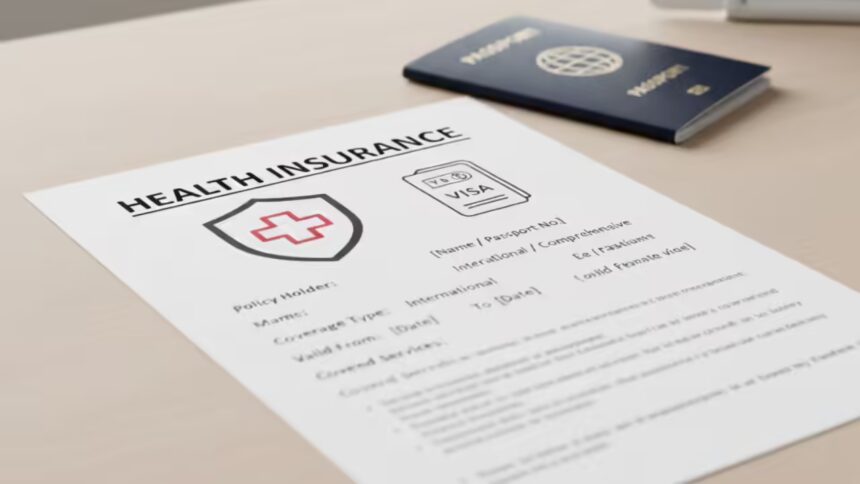
Kuwait has announced a major overhaul of its health insurance framework for foreigners, making health insurance mandatory for all expatriate residents and visitors while significantly revising the fee structure from December 23, 2025, in a move aimed at standardising coverage and strengthening the country’s healthcare financing system.
The decision, taken by Kuwait’s Health Ministry, amends the executive regulations of Law No. 1 of 1999 governing health insurance for foreigners. It marks one of the most comprehensive changes to expat-related health insurance rules in recent years and will directly affect residency permits, visa renewals, and entry procedures for a wide range of foreign nationals. Authorities have positioned the reform as part of a broader effort to ensure that all non-citizens have adequate medical coverage while easing pressure on public healthcare resources.
Mandatory health insurance framework and revised fee structure
Under the revised regulations, health insurance will now be compulsory for most categories of foreign residents and visitors entering or staying in Kuwait. One of the most notable changes is the increase in the annual health insurance fee required for obtaining or renewing residency permits. For most categories, the fee has been raised to 100 Kuwaiti dinars, doubling from the previous rate of 50 dinars. This revised amount will apply to a wide cross-section of expatriates and is intended to standardise insurance contributions across residency categories.
Foreigners applying for residency permits will also be required to pay a separate health insurance fee of five Kuwaiti dinars for specific visa types. These include employment visas for both government and private sector jobs, family reunification visas, study visas, visas for foreign investment, commercial or industrial activity visas, temporary government contract visas, and temporary work visas across various sectors. The introduction of this uniform fee aims to simplify procedures while ensuring that every applicant contributes to the healthcare system from the outset.
For residency permits, the 100-dinar health insurance fee applies to ten distinct categories. These include government employees, private sector workers, self-sponsored foreigners, foreign investors and partners, property owners, religious figures such as imams, farmers, stateless residents who now hold foreign passports, and individuals covered under newly established residency categories. By clearly defining these groups, the authorities seek to remove ambiguity and create a predictable system for both applicants and employers.
Visit visas fall under a slightly different framework. Health insurance fees for visitors will follow the private sector health insurance system, covering nine types of visit permits. These include government visits, family visits, private visits, business visits, medical treatment visits, tourist visits, multiple-entry visit visas, social or cultural visits, and sports-related visits. This approach aligns short-term visitors with private insurance mechanisms while still ensuring that they are covered during their stay in Kuwait.
Certain entry categories are subject to a lower, standardised fee. A five-dinar health insurance charge applies to transit visas, entry permits for transport drivers, emergency visas, and a newly introduced visa category. These provisions acknowledge the temporary nature of such entries while maintaining the principle that all foreigners must have some level of health coverage.
Special provisions, exemptions, and impact on expatriate communities
While the revised rules introduce higher fees for most categories, the regulations also include targeted concessions for specific groups, particularly within the private sector. Agricultural workers, sheep and camel herders, employees of dairy companies, and fishermen will benefit from significantly reduced insurance fees. Under Article 18 of the law, these workers will pay only 10 Kuwaiti dinars, reflecting the government’s intent to support sectors considered essential or economically sensitive.
Domestic workers sponsored by Kuwaiti families are also covered by special provisions. The first three domestic workers under a single sponsor are exempt from paying the health insurance fee altogether. However, from the fourth domestic worker onward, a fee of 10 Kuwaiti dinars will apply. This exemption structure appears designed to balance household needs with regulatory oversight, while discouraging excessive sponsorship without adequate planning.
The Health Ministry has emphasised that the new rules apply universally to all foreigners entering or residing in Kuwait from December 23 onward. This includes both new applicants and existing residents renewing their permits. Authorities have advised expatriates, employers, and sponsors to familiarise themselves with the revised categories and fees to avoid delays or complications in visa and residency processes.
The changes are expected to have a broad impact on Kuwait’s expatriate population, which constitutes a significant portion of the country’s workforce. For many expats, the increased insurance fees represent a higher cost of living, particularly for families and long-term residents. However, officials argue that the revised system will lead to more comprehensive healthcare coverage, reduce reliance on emergency services, and create a more sustainable funding model for public health facilities.
From a policy perspective, the reform reflects Kuwait’s broader efforts to modernise administrative systems and align them with international practices. Mandatory health insurance for foreigners is already common in several countries, and Kuwait’s updated framework brings greater clarity to coverage requirements while closing gaps that previously existed under the older regulations.
Authorities have encouraged all affected individuals to consult official government channels for detailed guidance on eligibility, payment procedures, and documentation requirements. With the rules taking effect immediately, timely compliance will be crucial for those seeking to enter, remain in, or regularise their status in Kuwait under the new health insurance regime.