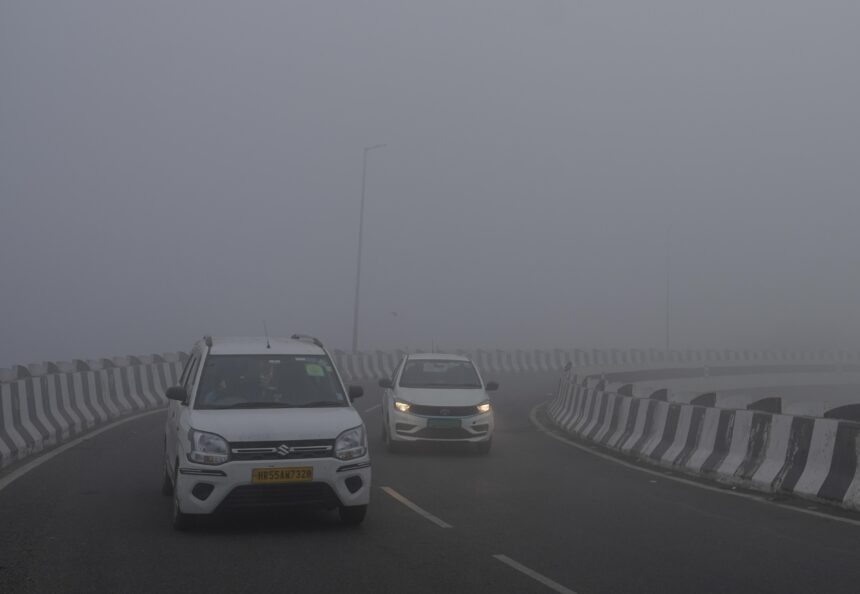
Large swathes of north, east, and central India are bracing for prolonged spells of dense to very dense fog and cold day conditions, as the India Meteorological Department has forecast a challenging end to December marked by reduced visibility, falling temperatures, and disruptions to transport and daily life across several states.
The weather pattern, driven by an active western disturbance and strong upper-atmospheric winds, is expected to affect millions of people, particularly in northern plains and eastern regions. Authorities have cautioned that the combination of fog and cold could impact travel schedules, aviation operations, public health, and essential services, while urging residents to take precautions during early morning and night hours when conditions are expected to be most severe.
Widespread fog conditions across northern, eastern, and central India
According to the latest bulletin issued by the India Meteorological Department, dense to very dense fog is likely to persist across multiple regions over the coming days, especially during night and morning hours. Punjab is expected to remain under dense fog conditions until December 27, while Uttar Pradesh may experience similar visibility issues on December 23 and again between December 25 and 28.
Haryana, Chandigarh, and the Delhi–NCR region are forecast to witness dense fog between December 24 and 27, with isolated pockets continuing to see fog-related problems up to December 29. These conditions are likely to coincide with peak travel hours, raising concerns for road safety, rail operations, and flight schedules in some of the busiest transport corridors of the country.
Eastern and central India are also set to experience foggy conditions. Bihar and Odisha are expected to remain affected until December 27, while parts of Rajasthan, north Chhattisgarh, Jharkhand, and north Madhya Pradesh may see fog till December 23. In addition, several areas across northeast India are forecast to experience fog until December 25, while isolated pockets in the western Himalayan region are likely to remain fog-prone through December 27.
Meteorologists have attributed the persistence of fog to a combination of meteorological factors. An active western disturbance moving across northwest India has interacted with moisture-laden air near the surface, while a strong subtropical westerly jet stream continues to dominate higher altitudes. Core wind speeds in this jet stream have reportedly reached around 140 knots, creating atmospheric conditions conducive to fog formation and its prolonged persistence.
These factors have also limited daytime heating in many regions, preventing fog from dispersing quickly after sunrise. As a result, several areas may continue to see low visibility well into the late morning hours, affecting routine activities and economic operations.
Cold day warnings, temperature trends, and likely impacts on daily life
Alongside fog, cold day conditions are expected to prevail in isolated pockets of Uttar Pradesh, Madhya Pradesh, and Jharkhand on December 23, with Bihar likely to experience similar conditions between December 23 and 26. Minimum temperatures have already dipped below normal in many regions, intensifying the chill across the plains.
The lowest minimum temperature recorded over the plains recently was 4.5 degrees Celsius in Barabanki, in eastern Uttar Pradesh, highlighting the severity of the cold spell. The weather department has forecast a further drop of 3 to 5 degrees Celsius in minimum temperatures over northwest India during the three days starting December 23, after which temperatures are expected to stabilise without major changes.
In the Delhi–NCR region, skies are expected to remain mostly clear, but shallow to moderate fog is likely during morning hours between December 23 and 25. Maximum temperatures in the region are forecast to range between 18 and 23 degrees Celsius, while minimum temperatures could fall to between 6 and 11 degrees Celsius by December 25. Winds are expected to remain north-westerly, strengthening during the day and easing at night, which may add to the perception of cold, particularly in the early hours.
The IMD has cautioned that dense fog can significantly disrupt transportation networks. Airports may face delays and diversions due to poor visibility, while highways and railway routes could see slower movement and increased risk of accidents. In areas experiencing very dense fog, the power sector may also face challenges such as line tripping, potentially affecting electricity supply.
Health officials have echoed concerns raised by meteorologists, warning that prolonged exposure to cold and foggy conditions could aggravate respiratory ailments, eye irritation, and asthma-related problems. Vulnerable groups, including the elderly, children, and those with pre-existing health conditions, are particularly at risk. Cold weather also increases susceptibility to seasonal illnesses such as flu, and in extreme cases, may raise the risk of hypothermia and frostbite.
The ongoing weather conditions underline the need for heightened vigilance and preparedness as the year draws to a close. With dense fog and cold days expected to continue across large parts of the country, residents are likely to face challenging mornings and nights, while authorities and service providers remain on alert to manage disruptions and ensure public safety during this extended winter spell.