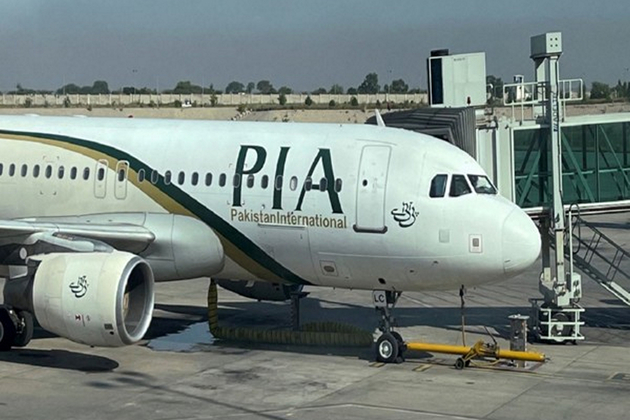
Pakistan is set to take a decisive step toward restructuring its struggling aviation sector as the government moves ahead with the auction of a 75 percent stake in its state-owned flag carrier, Pakistan International Airlines, amid deepening economic stress and strict conditions tied to international financial assistance.
The auction, scheduled for today, marks a pivotal moment for Pakistan’s economy as well as for its national airline, which has long been weighed down by debt, operational inefficiencies, and reputational damage. The process has drawn intense attention not only because of the airline’s symbolic value but also because it reflects the broader push by the government to privatise loss-making state enterprises under pressure from global lenders. The last-minute withdrawal of an army-linked company has added further intrigue to a process already fraught with political, financial, and strategic implications.
Economic crisis, IMF pressure, and the decision to sell Pakistan International Airlines
The decision to sell a controlling stake in Pakistan International Airlines is rooted in Pakistan’s prolonged economic crisis and its dependence on external financial support. Facing dwindling foreign exchange reserves, rising inflation, and mounting public debt, the government led by Shehbaz Sharif has been negotiating a crucial bailout package with the International Monetary Fund. As part of the agreement for a loan of around seven billion dollars, Pakistan committed to a wide-ranging privatisation programme targeting inefficient and loss-making public sector entities.
PIA has emerged as one of the most prominent and politically sensitive assets in this programme. The airline has accumulated liabilities estimated at around 25,000 crore rupees, a burden that the government says it can no longer afford to shoulder. Years of poor management, operational disruptions, and declining service standards have eroded public confidence in the carrier, leaving passengers frustrated and the airline unable to compete effectively with regional and international rivals.
The crisis deepened after a tragic plane crash in Karachi in 2020 that claimed 96 lives. Subsequent investigations revealed that a significant number of pilots employed by the airline held dubious or fake licences, triggering international alarm. Several countries imposed bans on PIA flights, severely restricting its global operations and compounding its financial losses. The episode dealt a lasting blow to the airline’s reputation and accelerated calls for structural reform.
Beyond immediate financial considerations, the government also sees privatisation as a pathway to revitalising Pakistan’s aviation sector, which currently contributes only about 1.3 percent to the country’s gross domestic product. By comparison, aviation accounts for a far larger share of GDP in regional hubs such as the United Arab Emirates and Saudi Arabia. Policymakers argue that private ownership, professional management, and fresh capital could unlock growth potential and restore competitiveness to the sector.
The move to privatise PIA is not an isolated step. Pakistan has turned to the IMF for assistance around 20 times since 1958, and each programme has come with difficult structural reforms. In recent years, the country has already taken controversial decisions to sell or lease strategic assets, including ports and airports. The leasing of Islamabad Airport last year underscored the government’s willingness to divest even high-profile infrastructure to stabilise public finances.
Bidding process, withdrawn military-linked bidder, and contenders in the race
The auction of PIA is being conducted through a closed or sealed-bid process, overseen by the country’s Privatisation Commission. According to its chairman, Mohammad Ali, the three remaining bidders will submit their offers in sealed envelopes within a short time window, placing them in a transparent box without knowing the amounts quoted by competitors. Unlike high-profile auctions such as those seen in sports leagues, there will be no live bidding or incremental price escalation. Only the opening of the envelopes will be broadcast.
Once bids are received, the Privatisation Commission’s board will meet to determine a reference price. This benchmark will then require approval from the Cabinet Committee on Privatisation before being publicly disclosed. If any bid exceeds the reference price, a limited open auction could follow. If all bids fall below it, priority will be given to the highest bidder. Of the proceeds from the sale of the 75 percent stake, 92.5 percent will go directly to PIA to help stabilise its finances, while only 7.5 percent will be transferred to the national treasury.
The auction process took a dramatic turn just days before the deadline when Fauji Fertilizer Private Limited, a company linked to the Pakistan Army through the Fauji Foundation, withdrew from the bidding. The withdrawal reduced the field to three contenders and sparked speculation about the reasons behind the decision.
Officially, sources associated with the bidding process have suggested that the withdrawal was intended to preserve flexibility. By not participating directly, Fauji Fertilizer retains the option of joining a winning consortium at a later stage, an opportunity that would have been closed had it submitted a formal bid. This explanation, however, has done little to quell broader debate.
Strategic considerations appear to have played a role as well. Fauji Fertilizer is part of a foundation associated with the military, and its board includes senior army-appointed officials. Observers note that if a company with visible military links were to win the bid, it could send an unfavourable signal to the IMF, potentially raising concerns about the spirit of privatisation rules that require PIA to be sold to a private entity free from state or military control.
There is also speculation that uncertainty inherent in the sealed-bid process influenced the withdrawal. With no visibility into rival bids, the risk of losing could have meant forfeiting influence over the airline altogether. By stepping back, the military-linked company keeps open the possibility of aligning itself with the eventual winner, thereby retaining a degree of strategic leverage without direct exposure to the bidding outcome.
The remaining contenders represent some of Pakistan’s most prominent private business groups. One consortium is led by Lucky Cement, joined by Hub Power Holdings, Kohat Cement Company, and Metro Ventures. Another is anchored by Arif Habib Corporation, alongside Fatima Fertilizer, City Schools, and Lake City Holdings. The third bidder, Airblue Private Limited, is competing on its own, though analysts suggest its financial strength may be more limited compared to the large conglomerate-backed groups.
Pakistani media reports indicate that the Lucky Cement and Arif Habib consortia are viewed as the strongest contenders, both in terms of financial capacity and strategic intent. Both groups are also believed to be open to accommodating Fauji Fertilizer at a later stage, should such an arrangement prove acceptable to regulators and international lenders.
As Pakistan proceeds with the auction, the outcome will carry implications far beyond the future of a single airline. It will test the government’s ability to execute politically sensitive reforms, satisfy IMF conditions, and balance civilian authority with entrenched institutional interests. The sale of PIA stands as a symbol of the country’s broader struggle to stabilise its economy while redefining the role of the state in key sectors.