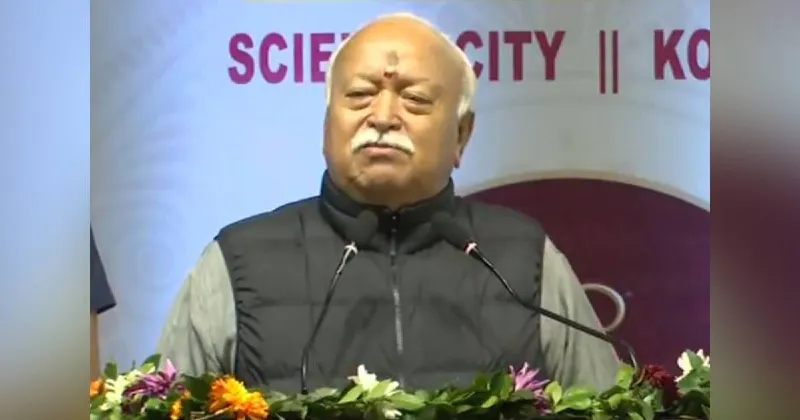
Kolkata, 21 December 2025:
In the second session of the Kolkata Lecture Series marking the centenary of the Rashtriya Swayamsevak Sangh (RSS), held at 11:45 AM, RSS Chief Dr. Mohan Bhagwat outlined the organisation’s philosophy, operational principles, and societal goals. His address emphasized the importance of unity, personal conduct, and value-based action as the foundation of social transformation.
Dr. Bhagwat highlighted that while differences of opinion are natural, it is essential for people to remain united. He cited Abraham Lincoln’s practice in the United States of appointing opponents to key positions as an example of fostering unity. He explained that RSS functions on the principle of friendship and pure, selfless action, and that its work is best understood through direct participation in Shakhas, rather than external observation.
He stressed that RSS volunteers operate across all sectors of society while the organisation itself remains independent and non-controlling, both internally and externally. Dr. Bhagwat noted that the character of Dr. K. B. Hedgewar, the founder of RSS, is central to understanding the Sangh, as it was his vision and dedication that established the organisation. Despite severe economic constraints and challenging circumstances, Hedgewar initiated the RSS’s work with integrity, selflessness, and unwavering commitment to the nation.
Dr. Bhagwat reflected on the historical opposition faced by RSS, including attacks and threats to its volunteers, noting that no volunteer harbored bitterness. He added that the organisation is financially self-reliant, maintaining strict accountability and regular audits. RSS currently has a presence in over 1.25 lakh locations across India’s roughly 7 lakh villages and around 45,000 urban centres, with further expansion planned. He emphasized that strengthening volunteer quality is a key agenda for the centenary year.
The Chief outlined five key areas of personal and societal transformation that volunteers are expected to implement in their own lives, which will then extend to the broader society:
Social Harmony: Equality in places of worship, water sources, and cremation grounds for all Hindus.
Family Engagement: Regular family gatherings for dialogue, shared meals, devotional activities, and discussions on tradition and heritage.
Environment: Practical measures for environmental protection, including cleanliness at home, water conservation, reduction of single-use plastics, and planting greenery.
Swadeshi Practices: Promoting self-reliance through prioritising indigenous products, adopting native language, attire, food, and lifestyle practices.
Constitutional Awareness: Educating children on the Preamble, civic duties, guiding principles, and fundamental rights, reflecting the Hindu ethos of the Constitution’s framers.
Dr. Bhagwat stated that RSS aims to strengthen Hindu society without seeking personal recognition or political gain. He emphasized that the organisation embraces all members of society, encouraging collective unity while fostering selfless service and ethical conduct. He concluded by affirming that no other organisation combines dedication, authenticity, and value-based training on the scale of RSS, and its mission remains focused on comprehensive societal upliftment.
This session reinforced RSS’s commitment to nation-building, moral development, and cultivating a self-aware, responsible, and united society rooted in India’s civilisational values.