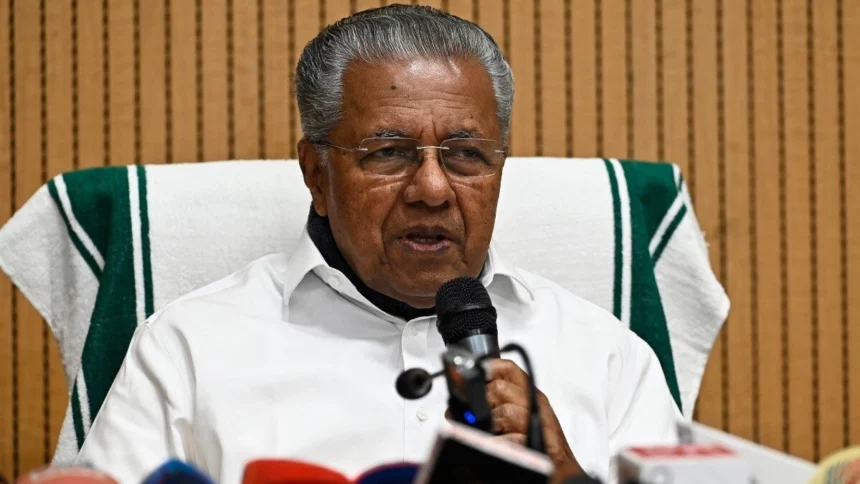
In a historic declaration that has drawn both praise and controversy, Kerala Chief Minister Pinarayi Vijayan announced that the state has successfully eradicated extreme poverty—making it the first state in India to achieve this milestone. The announcement, made in a special session of the Kerala Legislative Assembly on November 1, coinciding with the state’s formation day, marks what the government describes as a landmark social achievement and a testament to the Left Democratic Front’s welfare-oriented governance model. However, the opposition has dismissed the claim as a “fraudulent declaration,” accusing the government of misleading the public with unverified data.
A Landmark Achievement in Poverty Eradication
The declaration follows a four-year-long initiative under the state’s Extreme Poverty Alleviation Project, launched in 2021. The project was designed to identify and uplift families living under conditions of extreme deprivation, ensuring that no individual in Kerala is left without access to basic human needs such as food, housing, healthcare, and livelihood opportunities. According to official data, 64,006 families—comprising 1,03,099 individuals—were initially identified as “extremely poor” during an extensive ground-level survey carried out by local self-governing institutions.
Chief Minister Vijayan, while making the announcement in the assembly, emphasized that this accomplishment is not just a statistical victory but a reflection of the state’s commitment to inclusive development and social justice. “Kerala has now achieved what no other state in India has been able to. Through consistent efforts and focused interventions, we have ensured that extreme poverty is wiped out from our state,” he said.
The project took shape after a NITI Aayog study indicated that Kerala had the lowest multidimensional poverty rate in the country—just 0.7%. Building on this foundation, the government decided to take a micro-level approach to completely eradicate the most severe forms of poverty that persisted among a small section of households.
Minister for Local Self-Governments M.B. Rajesh, who played a central role in designing and implementing the project, explained that identifying and addressing the needs of this vulnerable population required meticulous planning and local-level coordination. “We understood that it was important to reach out to this population, however small it is, and meet their needs as part of a dedicated programme,” Rajesh said at a press conference held on October 22.
As part of the initial phase, officials conducted surveys across every local body in Kerala, assessing living conditions based on specific indicators—such as nutritional security, access to medical care, quality of housing, employment status, and educational opportunities. Once the families were identified, a customized intervention plan was designed for each household, ensuring that targeted assistance was provided rather than a one-size-fits-all approach.
The interventions included housing assistance for the homeless, food security through community kitchens and ration support, financial assistance for healthcare, educational support for children, and skill development programs aimed at improving employability. The project also leveraged the network of Kudumbashree—Kerala’s renowned women-led self-help movement—which played a crucial role in identifying families and ensuring last-mile delivery of welfare schemes.
Officials claim that over the past four years, every identified family has been connected to a range of social welfare schemes implemented by both the state and central governments. This integrated approach, the government says, has helped lift thousands of households out of extreme poverty, providing them with sustainable means of livelihood and social security.
CM Vijayan, during his speech in the assembly, credited the success to the synergy between local self-government institutions, social organizations, and state welfare departments. “This was not a top-down approach but a people’s movement. The tireless efforts of local bodies and community workers have made this achievement possible,” he noted.
Opposition Calls the Claim ‘Pure Fraud’
While the government has celebrated the declaration as a major milestone, the Opposition Congress-led United Democratic Front (UDF) has strongly rejected the claim, calling it a “deception” aimed at misleading the people of Kerala. The UDF staged a walkout from the special assembly session, labeling the chief minister’s statement as “pure fraud” and accusing the government of violating legislative norms.
Leader of Opposition V.D. Satheesan described the announcement as “in contempt of House rules” and argued that the declaration had no factual or empirical basis. “This statement made by the Chief Minister is pure fraud. The government has not produced any credible verification or independent audit to support its claim that extreme poverty has been eradicated,” Satheesan said, adding that the Opposition could not participate in a session “built on falsehoods.”
The UDF contended that the claim was politically motivated, timed to coincide with the state formation day to project the LDF government as a model of welfare governance. Opposition members alleged that the government had not conducted any third-party evaluation of the project’s outcomes and that many families continue to struggle without access to essential resources such as housing, healthcare, and stable income.
Following the Opposition’s protest and walkout, Chief Minister Vijayan responded sharply, asserting that the UDF’s allegations reflected their own political insecurities rather than any factual inconsistencies. “By ‘fraud’, the Opposition is referring to its own behavior. We only say what we can implement. We have implemented what we had said. That is our reply to the opposition leader,” he said in the assembly.
The chief minister reiterated that Kerala’s welfare framework—built over decades through initiatives in education, healthcare, and decentralization—had enabled the state to reach this stage of social development. “Kerala’s success is not accidental. It is the result of continuous investment in human development and a governance model that places people at the center,” Vijayan added.
Despite the political disagreement, several economists and social policy experts have acknowledged Kerala’s long-standing leadership in human development indicators. The state consistently ranks highest in literacy, healthcare access, and life expectancy, and lowest in poverty levels and income inequality. While some experts caution that “eradicating extreme poverty” in absolute terms may require continued vigilance, they also note that Kerala’s model of decentralization and participatory governance remains one of the most effective frameworks for inclusive growth in India.
A Model for Other States
Kerala’s announcement, if verified, could serve as a blueprint for other Indian states grappling with persistent poverty. The Extreme Poverty Alleviation Project was distinctive in its design—prioritizing hyper-local governance, inter-departmental coordination, and a holistic understanding of deprivation that goes beyond income metrics.
According to M.B. Rajesh, the project not only provided direct benefits but also aimed to ensure that beneficiaries became self-reliant through community-based support systems. “We didn’t want to merely provide relief; we wanted to enable resilience. Each family was assigned a mentor and social worker who tracked their progress over time,” he said.
The government claims that the project’s success rests on four key pillars: targeted identification, convergence of welfare schemes, participatory planning, and sustained monitoring. Each identified family was connected to at least five government schemes—ranging from housing and healthcare to education and employment support—depending on their individual needs.
Officials also emphasized that the project’s design was data-driven. Detailed digital records of the beneficiaries were maintained through the Information Kerala Mission, allowing for transparent tracking of interventions. Local self-government institutions were empowered to make decisions independently, ensuring flexibility and accountability in implementation.
Kudumbashree units, which have long been instrumental in Kerala’s poverty alleviation efforts, formed the backbone of the project’s grassroots mobilization. Women volunteers visited households, conducted assessments, and coordinated with government departments to deliver services efficiently.
Beyond the immediate objective of eradicating extreme poverty, the initiative also sought to promote social inclusion by addressing vulnerabilities related to age, disability, and gender. For instance, elderly beneficiaries without caregivers were connected to home-based care schemes, while women-led families were prioritized for housing and livelihood support.
As Kerala moves forward, the government has stated that it will continue to monitor families that were part of the project for at least two more years to ensure that they do not fall back into poverty. The state also plans to publish a comprehensive report documenting the methodology, outcomes, and lessons learned from the initiative—potentially serving as a reference model for other states and policymakers across India.
Kerala’s declaration has sparked nationwide discussion about the metrics and methods used to measure poverty eradication. While critics argue that “extreme poverty” is a relative term and that economic vulnerability persists even in states with high social development, supporters of the initiative view it as a progressive step that demonstrates the power of decentralized governance and targeted welfare planning.
Ultimately, Kerala’s claim—whether universally accepted or contested—marks a significant moment in India’s journey toward equitable development. It reflects both the strengths and complexities of measuring social progress in a diverse nation where poverty is not merely an economic condition but a multidimensional reality shaped by access, opportunity, and governance.
If verified through independent evaluation, Kerala’s success would not only affirm the potential of localized, data-driven policy implementation but also serve as an inspiring example of what sustained political commitment and community participation can achieve in the fight against poverty.