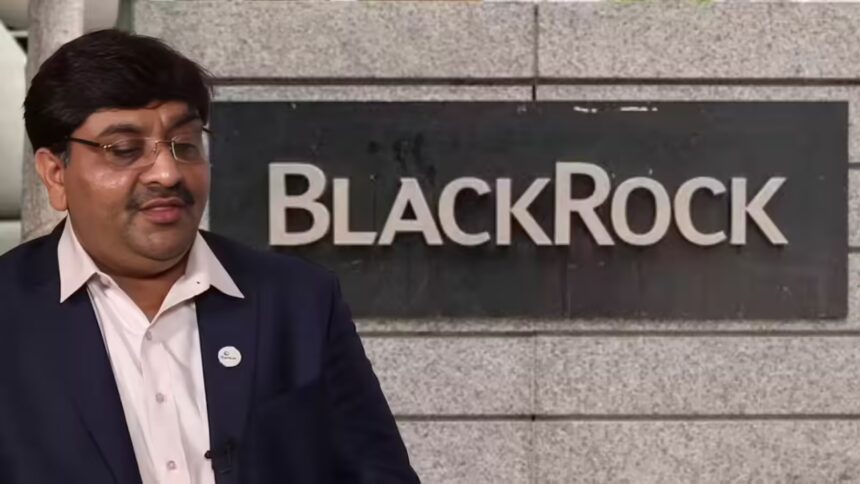
An Indian-origin businessman, Bankim Brahmbhatt, has found himself at the center of one of the most stunning financial scandals to shake Wall Street this year. Accused of orchestrating a “breathtaking” fraud estimated at more than $500 million, Brahmbhatt is alleged to have deceived BlackRock’s private-credit division and several global lenders through a complex web of fake invoices and fabricated financial statements. As the details unfold, lenders and investigators are scrambling to trace funds allegedly moved across borders to India and Mauritius, while the accused maintains his innocence, calling the claims baseless.
The rise of Bankim Brahmbhatt and his telecom ventures
Bankim Brahmbhatt is the founder and chief executive officer of the Bankai Group, a telecom conglomerate that operates through subsidiaries such as Broadband Telecom and Bridgevoice. The group describes itself as a globally recognized leader in telecommunications infrastructure and connectivity solutions, serving carriers and operators around the world. Until recently, Brahmbhatt’s operations were headquartered in Garden City, New York, but the offices are now reportedly shuttered.
Though little-known in mainstream business circles, Bankai Group maintained a presence on professional networking platforms and social media, positioning itself as a serious player in the global telecom ecosystem. Its online bio described the company as one that “cherishes telecom technology and carrier business fraternity with Telcos, Operators & more.” However, soon after the fraud allegations surfaced, Brahmbhatt’s LinkedIn profile disappeared, and the digital traces of his leadership became harder to verify.
According to reports, Brahmbhatt built an intricate network of companies and financing vehicles, including Carriox Capital and BB Capital SPV. These entities are alleged to have borrowed hundreds of millions of dollars from private-credit investors led by HPS Investment Partners, a private-credit giant recently acquired by BlackRock. The funds were supposedly backed by customer invoices and accounts receivable, which served as collateral for the loans.
The alleged fraud and financial web unravel
The Wall Street Journal, which first reported on the matter, cited court filings and lender complaints that paint a picture of a sophisticated deception. Lenders allege that Brahmbhatt’s companies fabricated customer invoices and falsified financial records to secure loans. These receivables, purportedly owed by major telecom clients, were reportedly nonexistent. The fabricated documents were then used to obtain funding from prominent financial institutions.
According to attorneys representing the defrauded lenders, the fraud dates back several years, possibly as far as 2018. Investigators now believe that every customer email and contract provided to lenders in the last two years was fabricated. In essence, they claim, Brahmbhatt created an entire balance sheet built on assets that existed only on paper.
As the fraud began to unravel, Brahmbhatt’s network of companies — including Broadband Telecom, Bridgevoice, Carriox Capital II, and BB Capital SPV — filed for bankruptcy protection. The filings took place in August 2025, followed by Brahmbhatt’s own personal bankruptcy filing on August 12, the same day his companies entered Chapter 11 proceedings.
Lenders further allege that Brahmbhatt transferred assets that had been pledged as collateral to offshore accounts in India and Mauritius. These actions, they claim, were an attempt to move funds beyond the reach of creditors and U.S. regulators. The report also notes that financial institutions such as BNP Paribas helped finance the loans issued by HPS Investment Partners, although the bank has not yet commented publicly on the case.
The fallout has been particularly damaging for BlackRock’s private-credit division, which has been aggressively expanding its footprint in alternative lending markets. HPS Investment Partners, one of its key acquisitions, was among the primary investors defrauded in the alleged scheme. The incident has raised serious concerns over due diligence and oversight mechanisms in the rapidly growing private-credit sector, where loans are often extended based on limited transparency and less stringent disclosure norms compared to traditional bank lending.
The missing businessman and the hunt for answers
As the financial and legal chaos deepens, questions are mounting about the whereabouts of Bankim Brahmbhatt. According to people familiar with the case, lenders believe that he is currently in India. The Wall Street Journal reported that when representatives from HPS Investment Partners visited Brahmbhatt’s Garden City office in July, the premises were found locked and deserted.
The office suite, which once housed the operations of Broadband Telecom and Bridgevoice, remains closed. Neighbors in the same building told reporters they had not seen anyone enter or exit the office in months. Investigators visiting a nearby property listed as Brahmbhatt’s residence discovered several high-end luxury cars — including two BMWs, a Porsche, a Tesla, and an Audi — parked in the driveway. A dust-covered package lay beside them, hinting that the property had been abandoned for weeks.
For now, Brahmbhatt’s lawyer continues to dispute all allegations of wrongdoing. In statements made to the press, the defense maintains that the bankruptcy filings were part of a corporate restructuring plan and that lenders have misunderstood the company’s financial practices. The defense insists that the businesses were legitimate telecom-service providers engaged in lawful global transactions and that the allegations are based on misinterpretations and unverified data.
However, lenders remain unconvinced. Their investigation has reportedly uncovered extensive digital evidence of falsified records, including fabricated customer emails and contracts. The scale of the alleged deception, they argue, required deliberate manipulation across multiple corporate layers — suggesting a premeditated and organized effort to defraud.
What makes the case particularly striking is its scope and the sophistication of the fraud. In private-credit markets, lenders often rely heavily on the borrower’s internal documentation, which can create opportunities for manipulation. Experts note that the Brahmbhatt case underscores a growing vulnerability in this fast-expanding corner of the financial world. With private-credit assets now surpassing $2 trillion globally, the incident could prompt regulators and investors alike to reexamine risk assessment frameworks.
Reports indicate that BlackRock and other affected lenders are working with international law enforcement agencies to track down assets and recover funds. Given that some money may have been moved offshore, cross-border legal cooperation will be essential. Authorities in India and Mauritius could play a critical role in determining whether any of the allegedly misappropriated funds can be retrieved.
Meanwhile, within financial circles, the case has sparked intense debate over the governance structures of alternative lending firms. Some analysts argue that the pursuit of high-yield opportunities in private credit has outpaced the development of proper compliance safeguards. Others suggest that the Brahmbhatt affair is not an isolated event but rather a symptom of systemic weaknesses in how due diligence is conducted.
While the investigation continues, the alleged fraud has already sent shockwaves through the investment world. For BlackRock, which manages trillions in assets globally, the scandal marks an embarrassing setback in its ambitions to expand deeper into private-credit markets. For investors, it serves as a cautionary tale about the risks of opaque lending practices and the dangers of unchecked trust in borrower-reported data.
At the center of it all remains Bankim Brahmbhatt — a man once hailed in niche telecom circles as a visionary entrepreneur, now accused of masterminding one of the most audacious financial deceptions of recent years. Whether he is in India or elsewhere, his name has now become synonymous with a half-billion-dollar scandal that has rocked the world’s largest asset manager and exposed cracks in the foundations of modern credit investing.