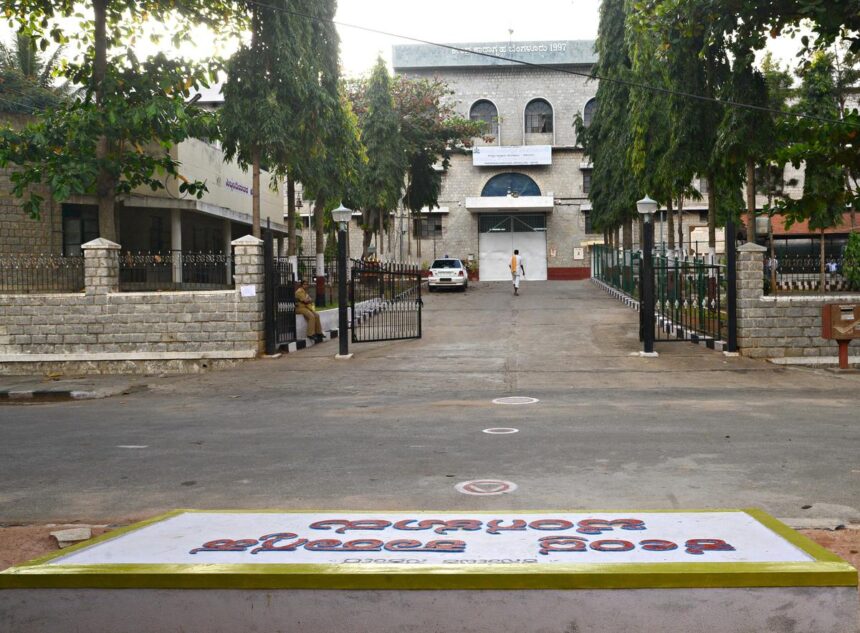
The Karnataka government has taken swift action after videos circulated on social media showing inmates at the Parappana Agrahara Central Prison allegedly enjoying special privileges, prompting outrage among citizens and opposition parties. The videos, which appeared online on Saturday, depicted prisoners using mobile phones, television sets, and other items not allowed under prison regulations, including one clip showing a known gangster celebrating his birthday inside a cell surrounded by fellow inmates. In response, the state suspended two senior prison officers and transferred the chief superintendent, signaling a commitment to strict accountability and internal reforms. Home Minister G. Parameshwara emphasized that the government was treating the matter with utmost seriousness, ordering a high-level investigation into the breach of discipline and the apparent lapses in oversight. The controversy has sparked widespread debate about the management of prisons in Karnataka, the role of senior officials, and the need for systemic reforms to prevent misuse of authority within correctional facilities.
Immediate Action and Formation of Investigative Committee
The two suspended officers are Iman Sab Myageri, the prison superintendent, and assistant superintendent Ashok Bhajantri, while the chief superintendent, K. Suresh, has been transferred to another posting. The state home department issued an official release confirming these decisions, noting that disciplinary measures would continue in line with investigative findings. Following the emergence of the videos, the Home Minister held a high-level administrative meeting to assess the situation and ensure that accountability measures were implemented swiftly. He emphasized that lapses in prison administration, particularly those permitting preferential treatment of inmates, would not be tolerated under any circumstances.
To conduct a comprehensive investigation, the government has established a high-level committee comprising senior officers, including ADGP (law and order) R. Hitendra and IPS officials Sandeep Patil, Amarnath Reddy, and Rishyanth. The committee has been instructed to submit a detailed report within a month, examining not only the circulation of mobile phones and televisions but also the broader management of prison facilities and the role of officers in permitting or overlooking rule violations. The decision underscores the government’s intent to enforce strict monitoring of prison activities and ensure transparency and discipline among officials.
The viral videos sparked intense public outrage, particularly one showing gangster Gubbachi Seena celebrating his birthday inside a prison cell, wearing a garland of apples while surrounded by other inmates. The clip, widely circulated on social media, prompted opposition leaders to raise questions about favoritism, corruption, and the overall management of correctional facilities. Parameshwara stressed that such activities violate prison regulations and undermine public trust in the penal system, making immediate action essential. The government also announced plans to strengthen internal oversight through reforms, including the establishment of a command center to monitor prison activities across the state within 15 days. This step is expected to ensure that such breaches do not recur and that prison officials remain accountable for their conduct.
Structural Reforms and National Attention
In response to concerns about entrenched influence networks and prolonged postings, the government has announced that prison officers will now be compulsorily transferred every five years. The rationale behind this policy is to prevent officials from developing local alliances that could compromise objectivity and facilitate favoritism or corruption. By rotating officers regularly, the administration hopes to maintain impartial enforcement of rules, safeguard inmates’ rights, and enhance overall prison discipline. Additionally, Karnataka plans to recruit 1,000 new personnel, including assistant superintendents, through the Karnataka Public Service Commission. This move is intended to address staff shortages, improve operational efficiency, and ensure that prison management standards meet national and international expectations.
The incident has drawn scrutiny from national investigative agencies, including the National Investigation Agency (NIA), particularly because one of the inmates allegedly involved is a terror suspect. The NIA reportedly sought clarification from the Home Department regarding how the inmate gained access to a mobile phone while in judicial custody, highlighting concerns about security lapses that could pose broader threats. The controversy has further attracted attention from opposition leaders, who sought to march to the Chief Minister’s residence in protest but were detained by police to prevent potential law and order disturbances.
The Parappana Agrahara Central Prison, which houses approximately 5,000 convicts and undertrials, has frequently been at the center of controversy over corruption, favoritism, and improper management. Previous incidents, including a video showing actor Darshan receiving special privileges while incarcerated, had already sparked public debate and criticism. In the current case, surprise inspections conducted across multiple barracks reportedly found no contraband or banned items, although a formal complaint has been lodged with the local police station. Investigators are examining whether social media leaks played a role in disseminating the videos, with actor Dhanveer, known to be close to Darshan, currently under police scrutiny. His mobile phone has been seized for forensic analysis as part of the ongoing investigation.
The controversy has prompted senior government officials to implement further oversight measures. The Home Minister announced that for the first time, the Bengaluru Central Prison will be placed under the direct supervision of an IPS officer, ensuring that daily operations and adherence to rules are monitored more rigorously. A centralized command center will coordinate activities across all state prisons, allowing real-time supervision and quicker response to any incidents. Parameshwara emphasized that strict enforcement of rules and proactive monitoring are necessary to maintain the integrity of the penal system and restore public confidence in the management of correctional facilities.
The government also emphasized that reform measures are not solely punitive but aim to improve the overall governance of prisons. Enhanced staff training, regular audits, technological monitoring, and procedural reforms are all part of a comprehensive plan to reduce opportunities for misuse of authority and ensure that all inmates are treated according to established regulations. The administration’s approach reflects a broader commitment to uphold law, order, and fairness while maintaining the security of prisoners and staff alike.
Public reaction has been intense, with widespread media coverage and social media discussions highlighting the perceived lapses in prison discipline. Opposition parties have leveraged the incident to question the government’s efficacy in managing key state institutions, raising concerns about systemic weaknesses in internal oversight and the accountability of senior officers. The viral videos have sparked debates about the balance between security, discipline, and humane treatment of inmates, as well as the need for transparency in prison administration.
Court proceedings have also reflected the growing awareness of inmate privileges and procedural irregularities. In one instance, lawyers representing actor Darshan argued for special privileges such as pillows and mattresses, pointing out inconsistencies in the treatment of other inmates within the same facility. Such cases have amplified public scrutiny and underscored the need for standardized policies to prevent preferential treatment and ensure equality under the law.
The government’s response, including suspensions, transfers, the formation of a high-level committee, and planned reforms, indicates a serious approach toward addressing both immediate disciplinary lapses and structural weaknesses within Karnataka’s prison system. By implementing these measures, the state seeks to establish a robust mechanism to prevent recurrence, ensure accountability, and maintain public trust in correctional institutions. The active involvement of senior IPS officers and the Home Department demonstrates a coordinated effort to enhance governance, monitor compliance, and enforce regulations uniformly across all facilities.
The Parappana Agrahara Central Prison case has broader implications for prison management nationwide. It underscores the importance of continuous monitoring, strict enforcement of regulations, and the role of technology in maintaining oversight. The integration of centralized command systems, periodic staff transfers, and enhanced recruitment reflects a model that other states may consider adopting to address similar challenges. Public expectations of transparency, fairness, and strict adherence to prison rules are now clearly shaping government policies and administrative priorities in Karnataka.
The ongoing investigation continues to focus on the chain of events leading to the incidents captured in the viral videos. Officials are analyzing surveillance footage, interviewing staff and inmates, and scrutinizing procedural compliance across all departments. Forensic examination of seized devices, including mobile phones and digital storage media, is expected to provide crucial insights into how inmates were able to bypass restrictions and access prohibited items. The combination of administrative action, investigative rigor, and structural reforms aims to restore order, prevent corruption, and enhance the credibility of the state’s prison management system.
With the suspension of two senior officers, the transfer of the chief superintendent, and the establishment of a high-level monitoring committee, the Karnataka government has signaled its commitment to stringent oversight, systemic reform, and transparent governance within the state’s correctional facilities. These measures, combined with technological monitoring and periodic audits, reflect an integrated approach to maintaining discipline, accountability, and public confidence. The incident has brought national attention to the issue of prison privileges, highlighting the need for sustained vigilance, comprehensive policies, and a clear framework for oversight to prevent misuse of authority and maintain security within correctional institutions.
The controversy continues to unfold as the investigation progresses, emphasizing the necessity for a comprehensive approach to governance, enforcement, and accountability within the state’s prison system. By combining immediate disciplinary measures with long-term structural reforms, the Karnataka government is attempting to address both the symptoms and root causes of mismanagement, aiming to create a model of responsible and transparent prison administration.
This approach reflects an increasing recognition of the importance of integrity, procedural compliance, and public trust in managing correctional facilities. The Parappana Agrahara Central Prison incident has become a case study in administrative accountability, operational oversight, and the intersection of public scrutiny, governance, and institutional discipline. It underscores the importance of proactive monitoring, rapid response, and systemic reform in preventing the recurrence of similar incidents in the future.
By taking decisive action and implementing reforms, the Karnataka government is setting a precedent for strict enforcement of regulations, transparent administration, and responsible governance within prisons. The episode highlights the challenges of balancing security, discipline, and inmate welfare while ensuring that institutional authority is exercised fairly and consistently. The integration of modern monitoring systems, procedural reforms, and personnel rotation policies demonstrates a commitment to long-term structural improvement and accountability.
The incident at Parappana Agrahara Central Prison serves as a catalyst for reform, public awareness, and strengthened governance within Karnataka’s correctional system. It emphasizes the importance of oversight, transparency, and proactive administration, and is likely to influence broader policy and operational standards across the country.